
Custom-designed audio systems for cars, trucks, and SUVs across Lexington, Columbia, and the Midlands.
Every system we build is designed around your vehicle, your music, and how you actually drive. That means component-level work — choosing each head unit, speaker, amplifier, and subwoofer to fit a specific cabin, then fabricating brackets, enclosures, and wiring runs to integrate cleanly. Cars, trucks, and SUVs welcome.
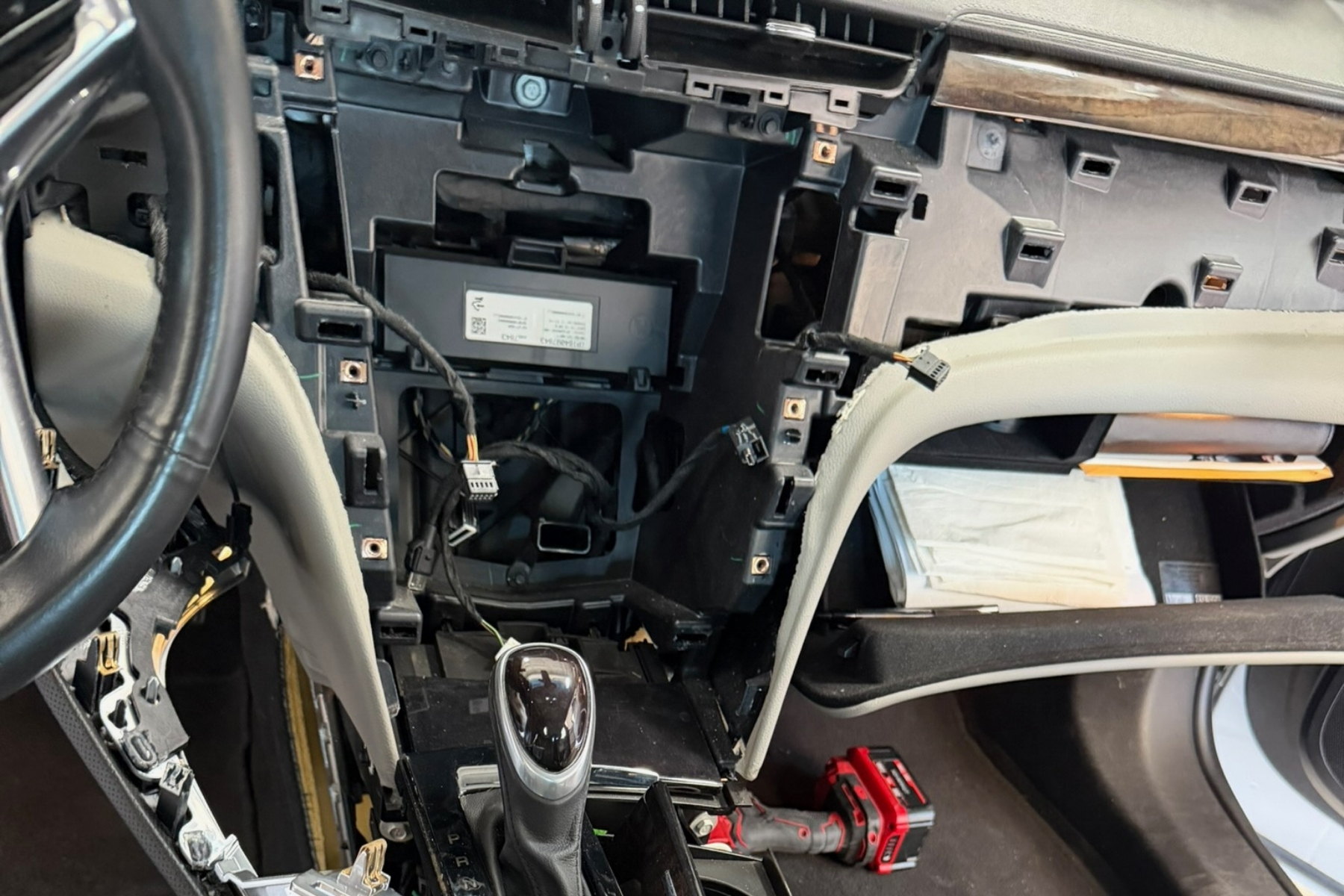
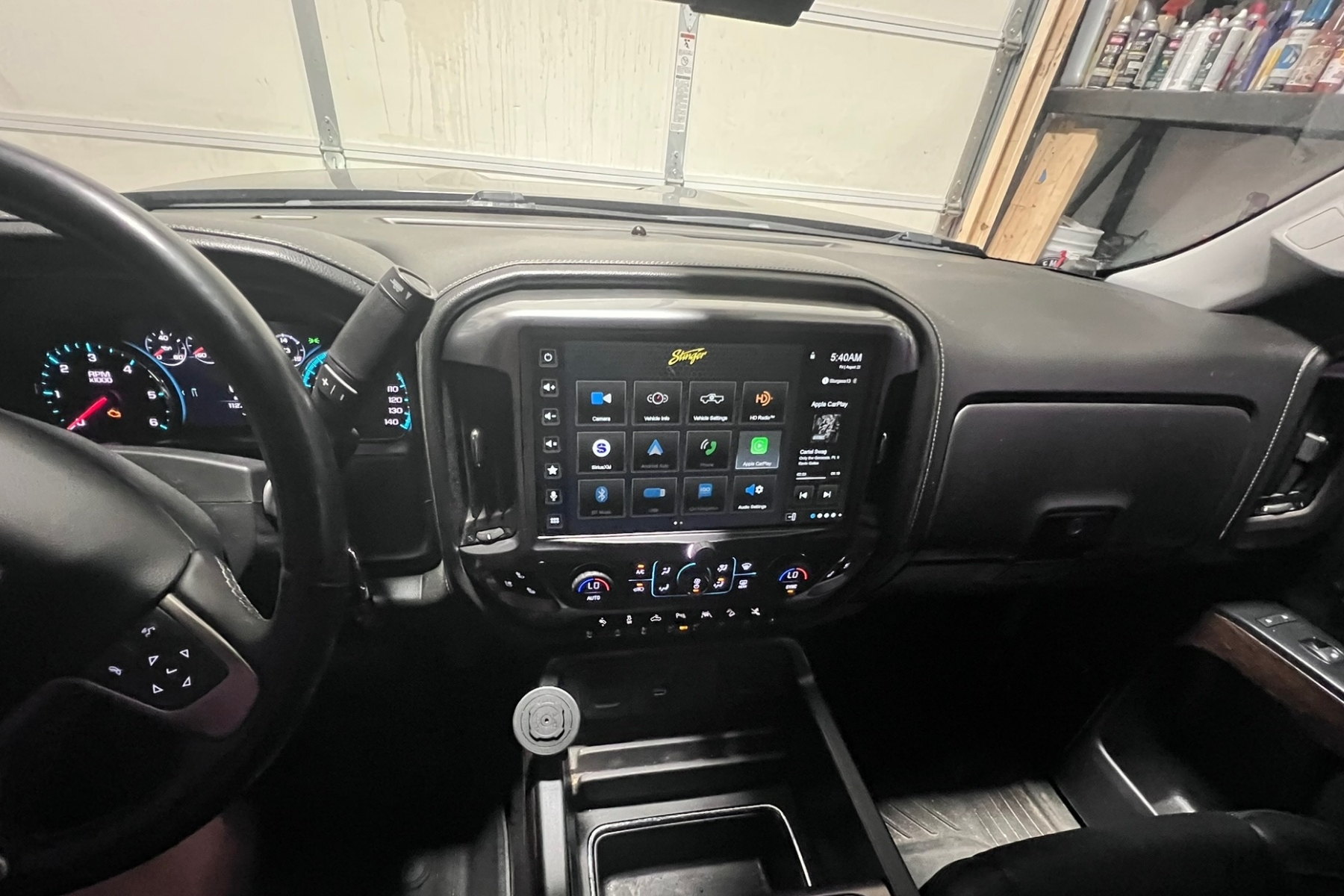
The head unit drives every decision below it — source, signal, screen, control, and connectivity. We work with single-DIN and double-DIN aftermarket units, digital media receivers that drop the CD slot in favor of streaming and USB sources, and head units with built-in CarPlay and Android Auto. For late-model vehicles where the factory radio is bonded to other systems, we use vehicle-specific dash kits and integration modules to replace it cleanly — or, where it’s the better path, retain the factory radio and add auxiliary integration around it.
Selection is consultative. We look at vehicle compatibility, factory features you want to keep (steering-wheel controls, amplified systems, fiber-optic networks, factory displays), and the system below. Then we fabricate the dash kit, terminate the wiring harness, and bench-test integration before the unit ever goes back into the dash. If your priority is CarPlay or Android Auto specifically, our dedicated CarPlay & Android Auto retrofits page covers the wireless and wired retrofit paths in detail.
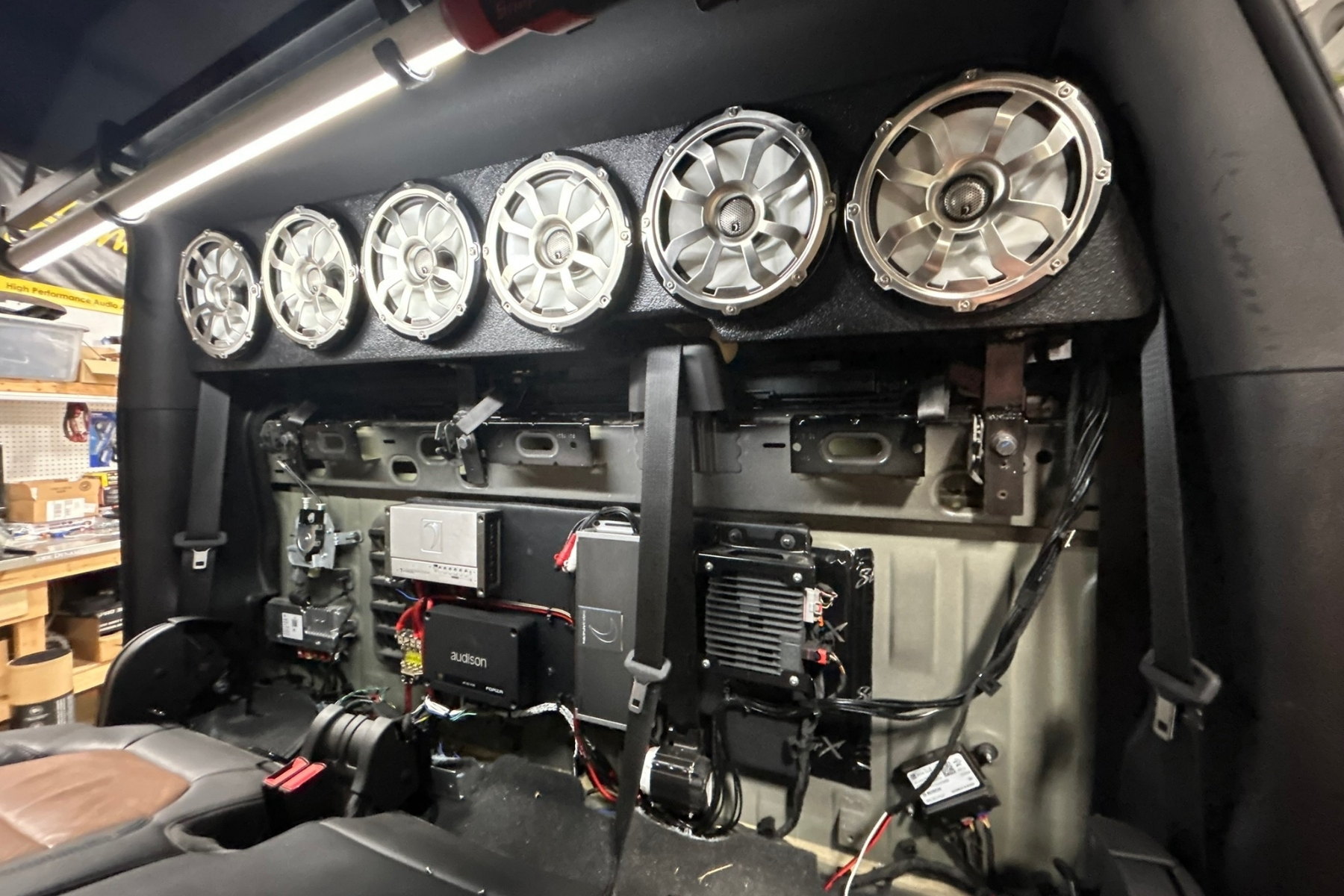
Speakers do more work than any other component in the system — they’re where electrical signal becomes the sound you actually hear. We install both component sets, which separate the woofer and tweeter so the system images cleanly across the dashboard, and coaxial speakers, which combine both drivers into a single unit for straightforward upgrades. Two-way and three-way configurations cover most goals; sizes range from 5.25” through 6.5” and 6×9 to fit factory openings or fabricated mounts.
Install locations matter as much as the speakers themselves. Front doors are the standard for staging; dash speakers fill out the upper image; rear deck and parcel-shelf speakers add fill; kick panels can move the soundstage forward in vehicles that need it. We measure each opening, fabricate spacers or mounting baffles where needed, deaden the panel behind every speaker so the driver isn’t fighting sheet metal, and time-align the system if the head unit or DSP supports it. Speaker brand options span our authorized brands — including Hertz, JBL, Kenwood, and Audison — and we recommend based on your vehicle, your target output, and the rest of the system.
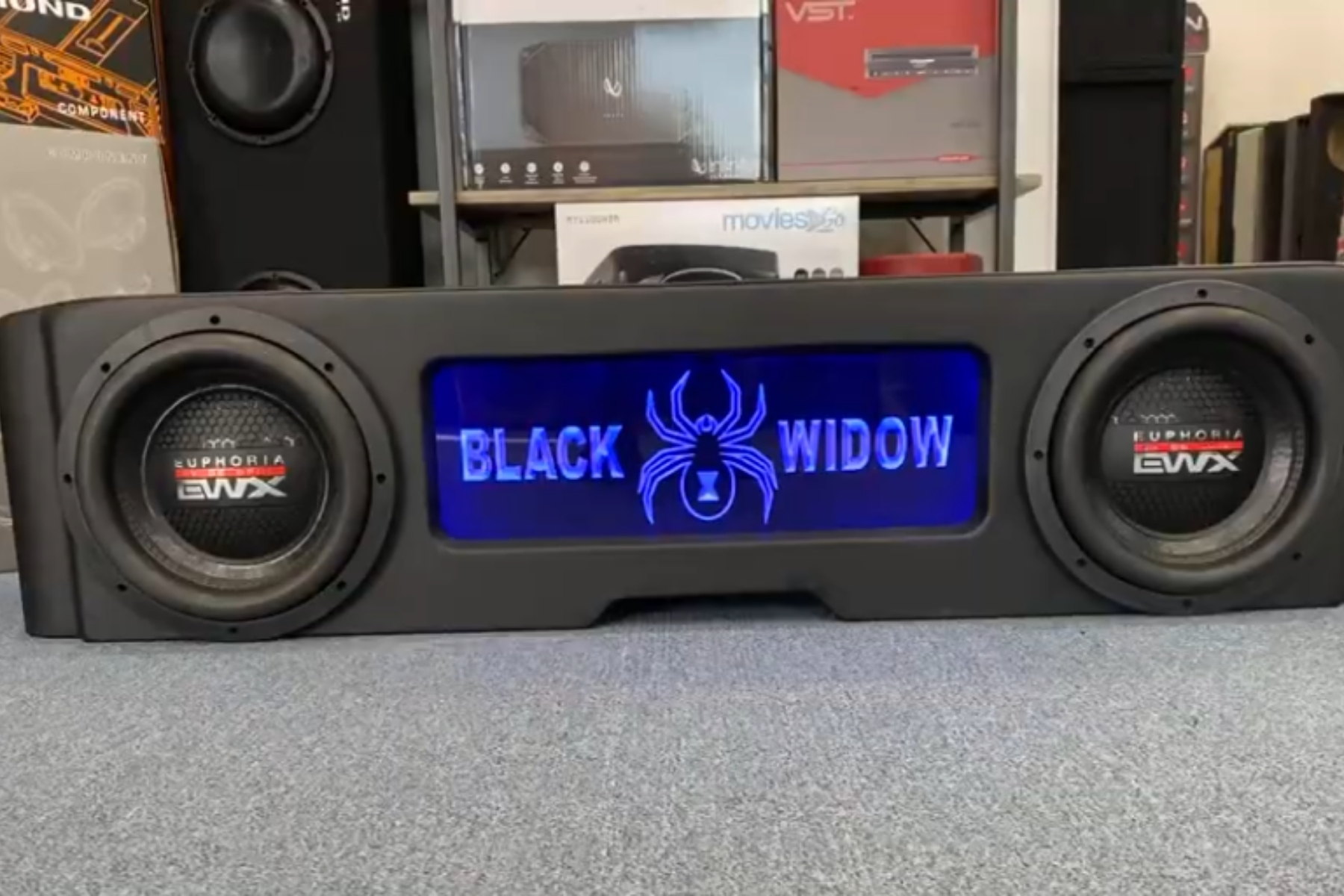
Subwoofers handle the low end the rest of the system can’t reach, and the enclosure they sit in determines how that low end actually sounds. Off-the-shelf boxes are sized for averages — they fit in a trunk, but they rarely match your specific subwoofer’s spec sheet or your vehicle’s cabin volume. We fabricate enclosures in-house: sealed for tight, accurate response; ported for higher SPL and bigger sound; bandpass when an SPL build calls for it. Enclosure volume is calculated to the subwoofer manufacturer’s recommendations rather than estimated.
Materials and placement get the same treatment. MDF is the standard for most builds; fiberglass-formed enclosures fit into curved spare-tire wells, kick panels, and other tight vehicle-specific spaces; vehicle-fit panel work hides the install when that’s the goal. Subwoofer sizes run from 8” through 18”, single or dual-voice-coil configurations, single-sub or multi-sub setups — all are on the table. Placement options include trunk-mount, under-seat shallow-mount, in-cabin upfiring, and downfiring spare-tire-well builds. Whatever the choice, the enclosure is built for your vehicle and your subwoofers, not assembled from a shelf. Subwoofer brand options live on our authorized brands page.
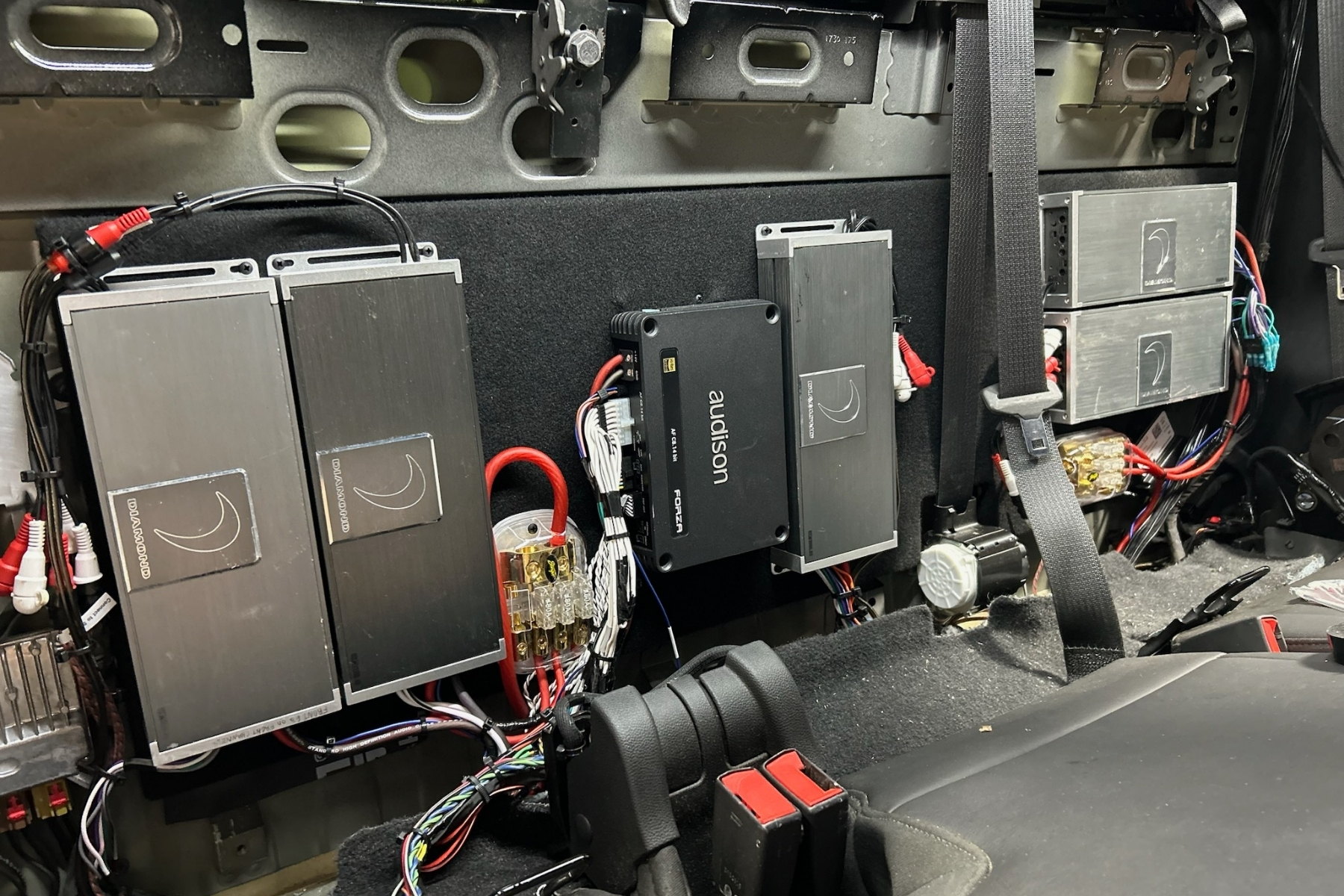
Amplifiers turn line-level signal into the power your speakers and subwoofers need to actually perform. We install monoblock amps — typically Class D, mono-output — to drive subwoofers efficiently; multi-channel amps (2, 4, 5, or 6 channels) to drive speakers; full-range amps for mixed systems; and integrated DSPs with built-in amplification for systems that need signal processing in the same chassis.
Sizing matters more than badge wattage. We match RMS output to the speakers’ and subwoofers’ RMS power handling, not peak — peak numbers look impressive on a box, but RMS is what the components actually live with. The install side is where pro work shows: amp racks built or selected to mount cleanly, big-3 grounding upgrades from battery to chassis to engine block, dedicated power runs in the correct gauge from the battery, fuses sized to wire (not amp draw), distribution blocks for multi-amp builds, and signal cables routed separately from power so the system stays quiet. For higher-power builds, we cross-link with our 12-volt custom solutions work — custom wiring, electrical upgrades, and fabrication that go beyond a standard amp install. Amplifier brand options live on our authorized brands page.
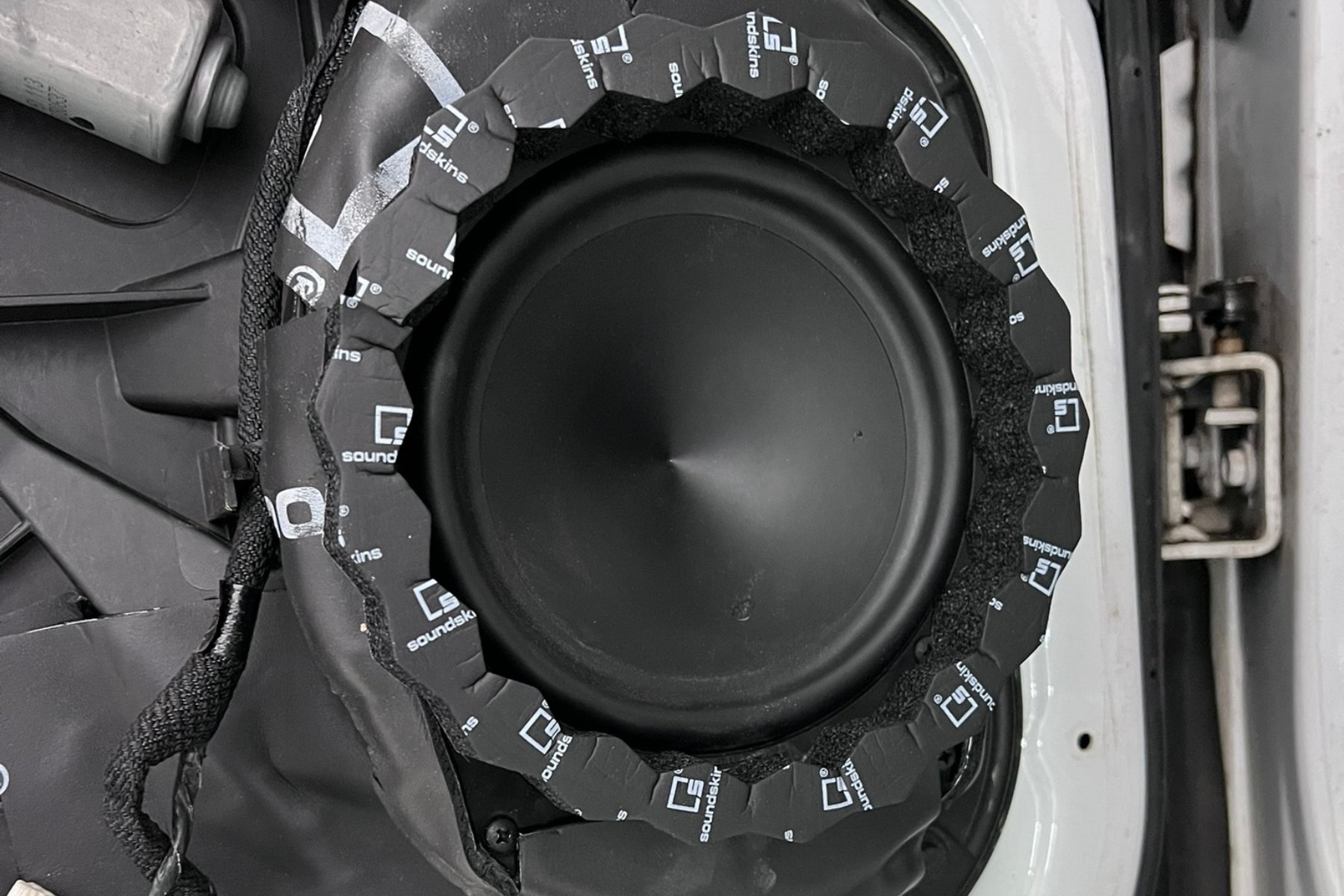
Sound deadening is the upgrade you don’t see, and it’s one of the most underrated parts of any serious build. It does two things at once: it makes the audio system measurably better by giving speakers a solid panel to push against instead of resonant sheet metal, and it makes the vehicle itself quieter by absorbing road, wind, and engine noise that would otherwise leak into the cabin.
We treat with three layers, used together or independently depending on the goal. Constrained-layer damping mats (CLD) bond to metal panels and kill panel resonance. Mass-loaded vinyl (MLV) acts as a barrier to block low-frequency road noise. Closed-cell foam decouples panels from trim so vibration doesn’t transfer. Treatment areas span door panels (essential for door-mounted speakers), floor (kills undercarriage road noise), trunk and rear deck (subwoofer area), firewall (engine), and roof (rain and wind hush). Full-vehicle treatment is the premium path; targeted door-only treatments handle audio-focused budgets. Either way, deadening multiplies the perceived value of every speaker and subwoofer upgrade in the same vehicle.
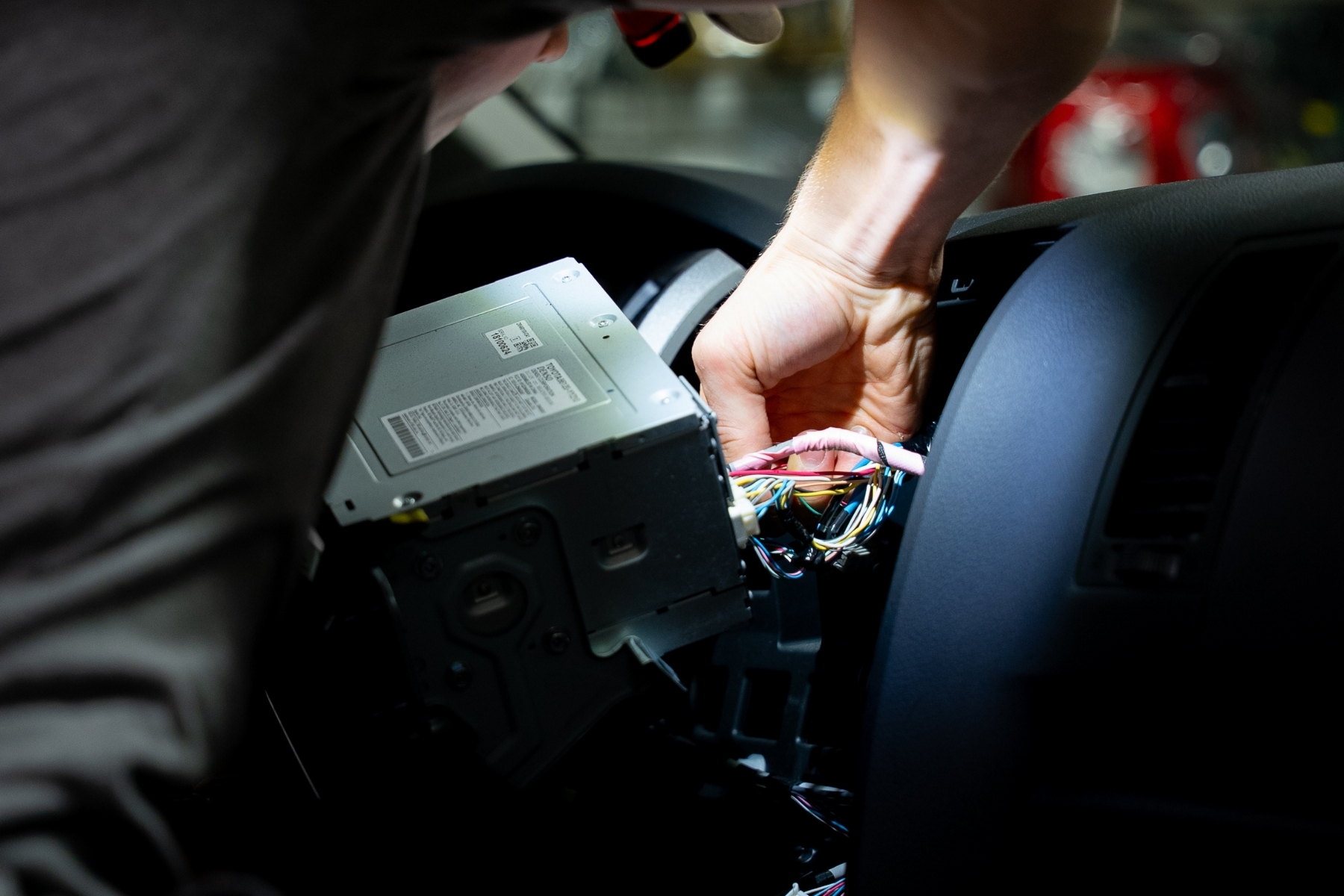
Modern vehicles aren’t standalone radios anymore. The factory head unit talks to the vehicle network — CAN bus protocols, factory-amplified signal paths, backup camera and display logic, navigation overlays, and branded systems from Bose, Harman/Kardon, B&O, and others. An upgrade that ignores all of that breaks features, throws codes, or, in newer vehicles, voids parts of the warranty.
We integrate, we don’t bypass. That means vehicle-specific harnesses that preserve steering-wheel controls, line-output converters and signal-clean processors that pull a clean signal off the factory amp before it hits the aftermarket gear, CAN-bus interfaces that let the upgraded system communicate with the rest of the vehicle, and T-harness kits that allow plug-and-play work without cutting factory wiring. Factory backup cameras stay routed to factory displays where the customer wants that retained — see our backup camera and vehicle safety page for the broader treatment of safety integration. For factory-display retention with CarPlay or Android Auto wireless overlay, see the dedicated CarPlay & Android Auto retrofits page. Everything that was working before stays working; the system around it gets better.
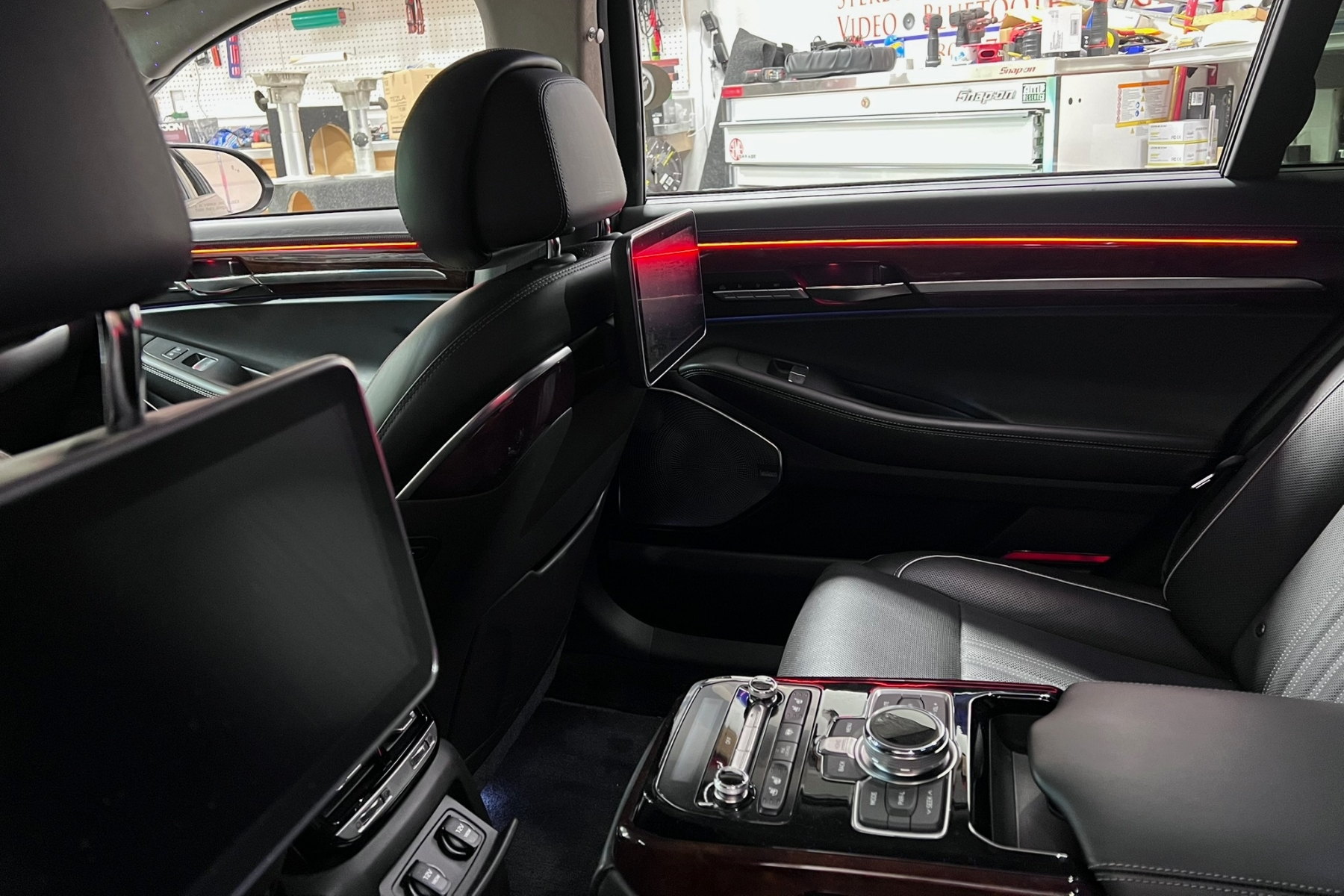
Audio is the core of what we do, but vehicles spend long hours moving people, and video and rear-seat entertainment make those hours easier. We install headrest monitors for individual rear-seat viewing, overhead and flip-down DVD or media systems for shared rear-passenger screens, tablet integration brackets that mount factory or aftermarket tablets cleanly, and full multi-screen rear-seat entertainment packages with a central media source.
Integration with the front audio system is part of the install. The head unit can drive video output to the rear screens, or rear sources can run independently so front passengers keep their music while the back watches a movie. Source options include DVD or Blu-ray, HDMI input, USB media, and streaming-capable head units. For families, road-trip vehicles, and commercial or fleet vehicles, rear-seat entertainment turns the cabin into a different kind of vehicle. For dashboard upgrades on the front-passenger side, see our CarPlay & Android Auto retrofits page.
Our shop is at 4262 Augusta Rd, Lexington, SC, with regular customers from across Columbia and the wider Midlands. If you’re closer to Columbia and want directions or local-specific information, visit our Columbia car audio coverage.
Custom dashboards, fabricated subwoofer enclosures, clean amp racks, and full-system builds from recent vehicles.
 FINISHED DASHBOARD BUILD
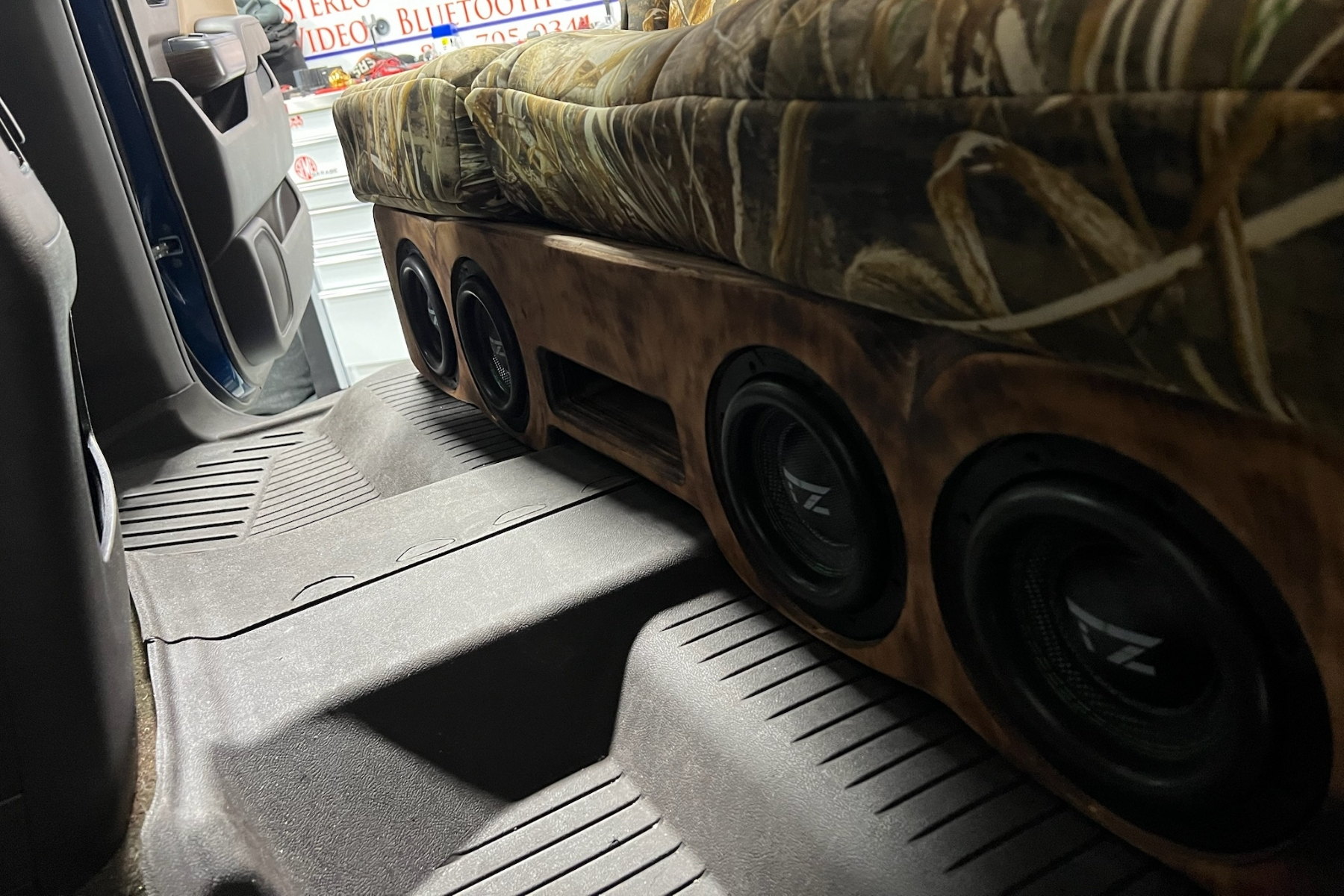 CUSTOM SUB ENCLOSURE
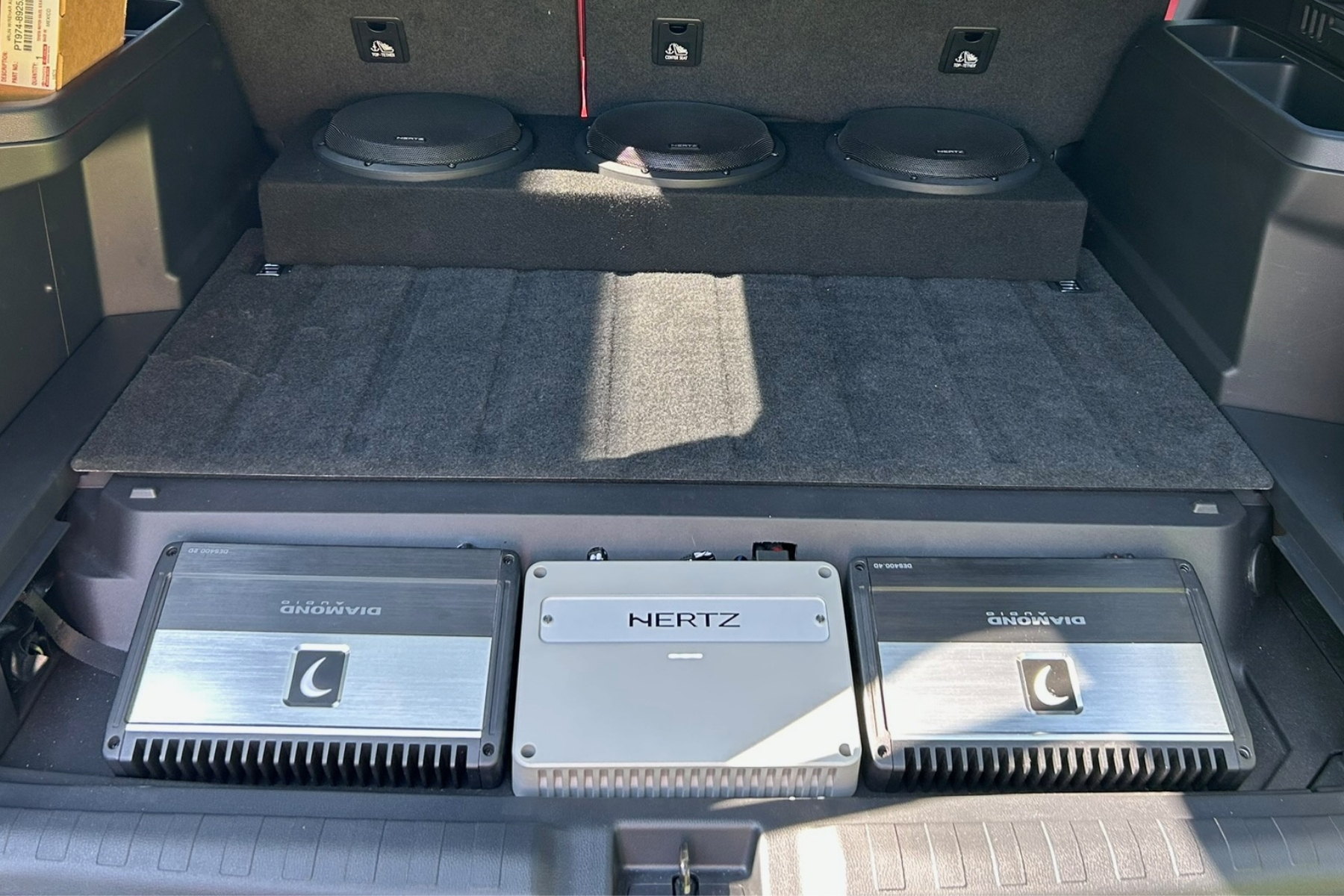 CUSTOM AMP RACK
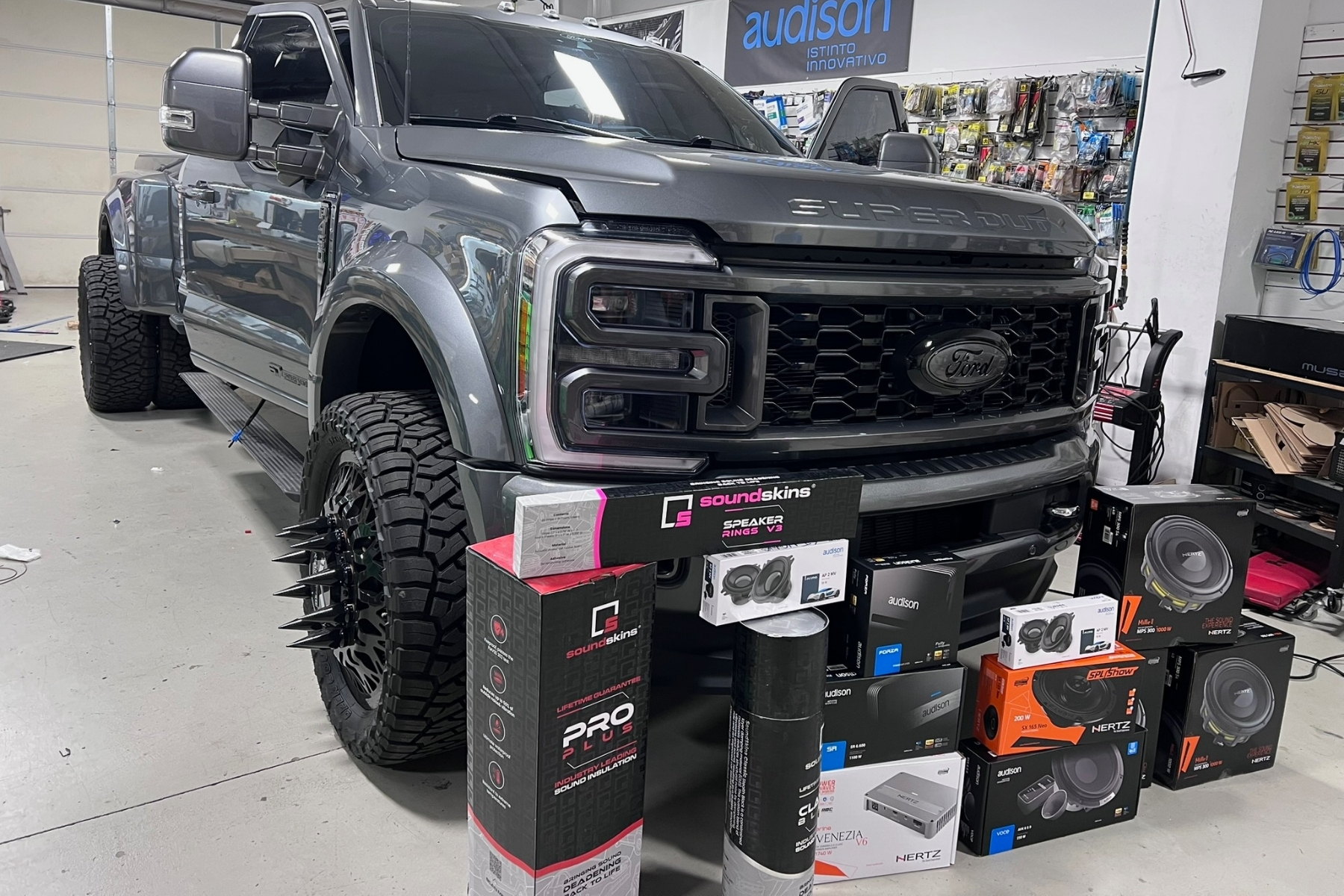 FULL TRUCK SYSTEM
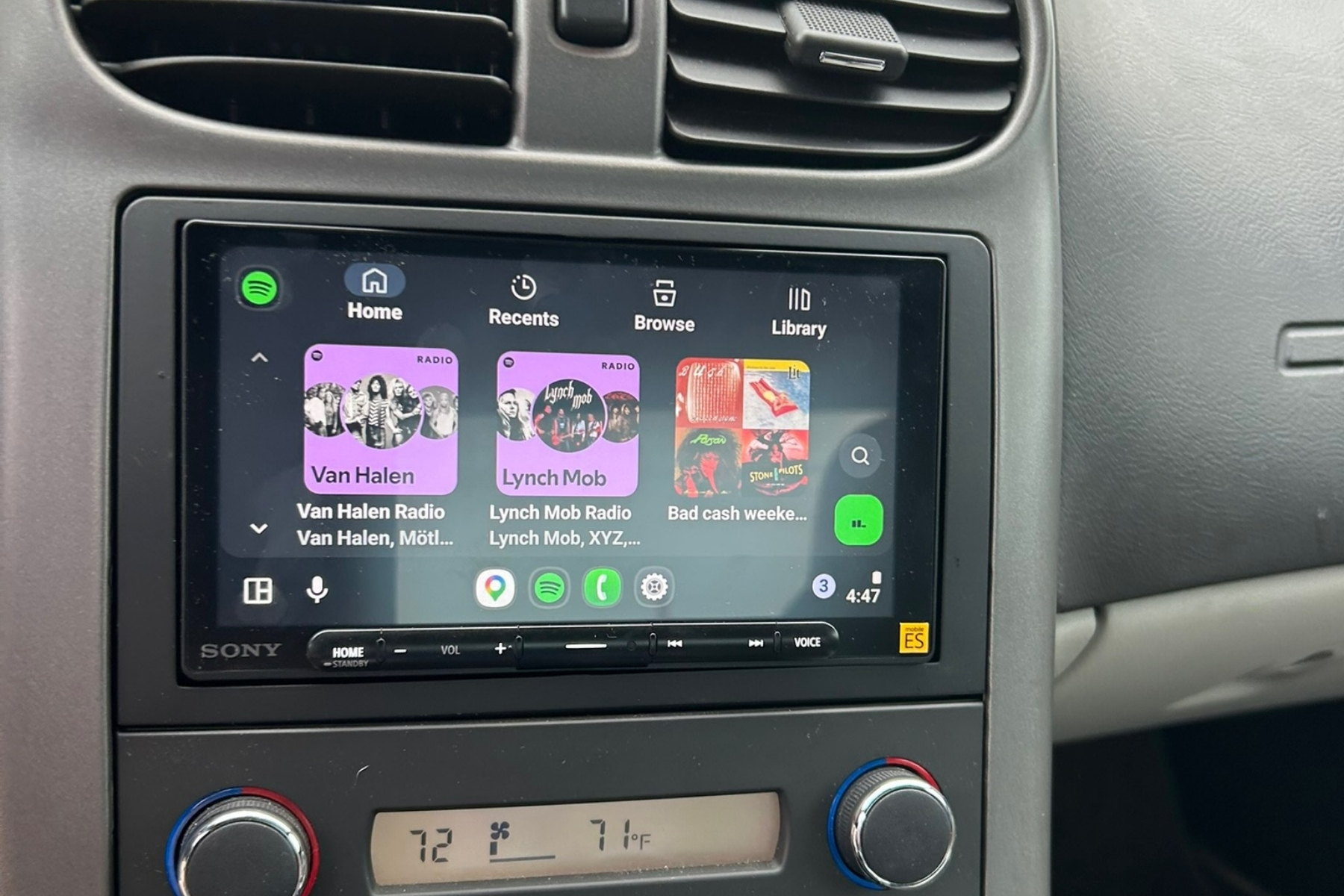 FACTORY INTEGRATION BUILD
Cost varies with the vehicle, the components, and how much fabrication or integration the install requires. A head unit replacement on a straightforward vehicle is on one end of the range; a full system with custom enclosure, multi-amp rack, and deadening is on the other. We provide detailed quotes after a short consultation — bring the vehicle by or send us the details and we’ll spec the work and the price together.
Most single-component installs (head unit, speakers, or subwoofer) finish in a single day. Full-system builds, custom fabrication, and complex factory-integration jobs can take longer — sometimes multiple days for a complete build. We’ll give you a realistic timeline at the quote stage so you can plan around vehicle availability.
Yes — and for many late-model vehicles, it’s the right path. We use line-output converters, signal processors, and vehicle-specific integration modules to add aftermarket amplifiers, subwoofers, and speakers around a retained factory head unit. The Factory Integration section above covers the technical side; the practical result is upgraded sound without losing factory features or voiding warranty.
Two reasons. First, modern vehicles are networked — factory radios talk to backup cameras, steering-wheel controls, parking sensors, amplified systems, and the vehicle’s main computer. A DIY install that ignores that network can break features or trigger warranty issues. Second, the install craft itself matters: dash kit fitment, wiring discipline, fuse sizing, grounding, signal routing, enclosure volume, deadening application — none of it is visible from the outside, but all of it determines whether the system sounds right and lasts.
We’re authorized for several car-audio brands including Audison, Hertz, JBL, Kenwood, and Stinger. The full list lives on our authorized brands page, along with brand-specific specialty notes.
Yes — installation work and the components we supply are warrantied. Specifics depend on the components selected and the manufacturer terms; we cover those details at the quote stage so you know exactly what’s covered before the install begins.
In-person consultations, consultative system design, and full transparency before the work begins. Bring your vehicle by or send us the details and we’ll spec the build with you.