Lighting customization spans a lot of territory — interior accent, exterior accent, off-road utility, RGB control, and headlight customization all live under the same heading, and most builds touch more than one. We work across every category, with the same discipline applied to each: clean wire routing, properly fused circuits, switch control that feels OEM, and integration with the rest of the vehicle’s electrical system. The finished lighting reads as part of the vehicle, not as something bolted on top.
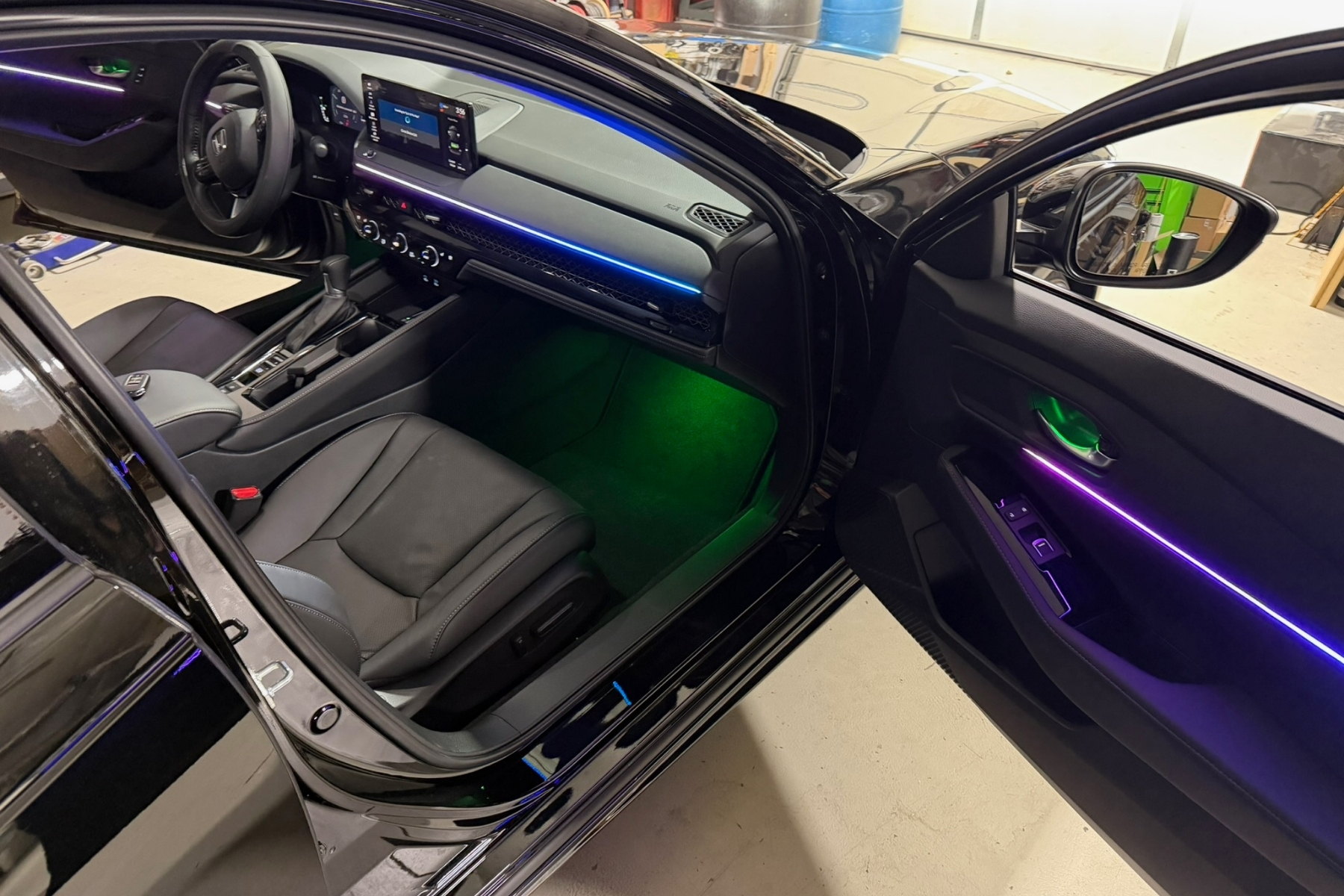
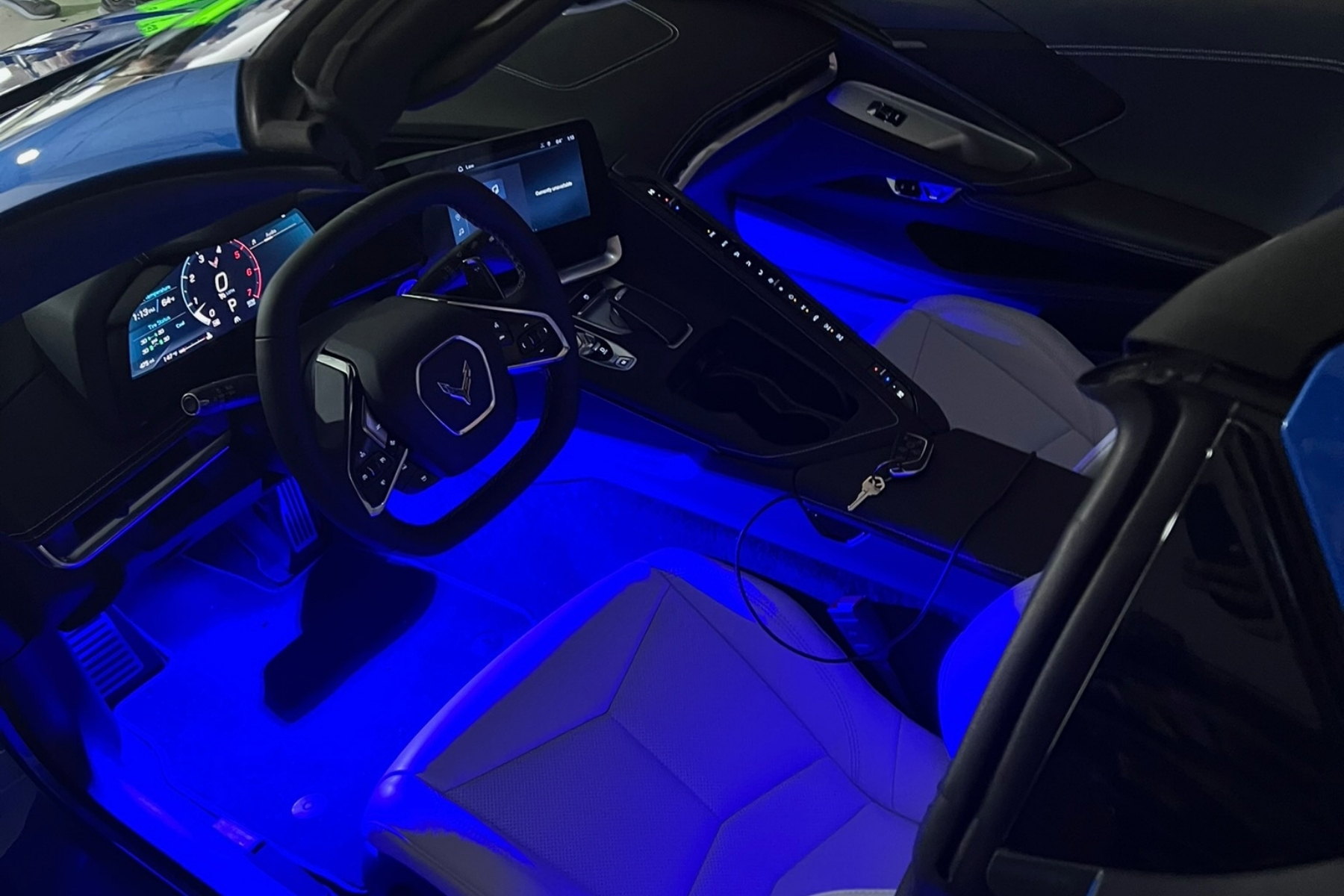
Interior accent lighting brings the cabin to life after dark without becoming a distraction. Common builds include LED replacements for factory dome bulbs (cleaner, color-correct light at the same draw), footwell lighting at the driver and front passenger positions, dashboard accent strips, door panel accent integration, trunk and cargo lighting for late-night loading, and ambient lighting tied into the factory dimmer.
Install considerations matter as much as the lighting choice. We tap power from the correct circuit — ignition-switched for accent lighting that should turn off when the vehicle does, constant for cargo work-lights that need to run independently, dimmer-integrated for dome and ambient builds that should respond to factory brightness controls. Wire routing follows the vehicle’s existing harness paths through the dash, A-pillar, and door pillars so no panels show install damage. Brightness gets calibrated for nighttime cabin use specifically — bright enough to be useful, not so bright that it reflects off the windshield or wears down the eye on a long drive.
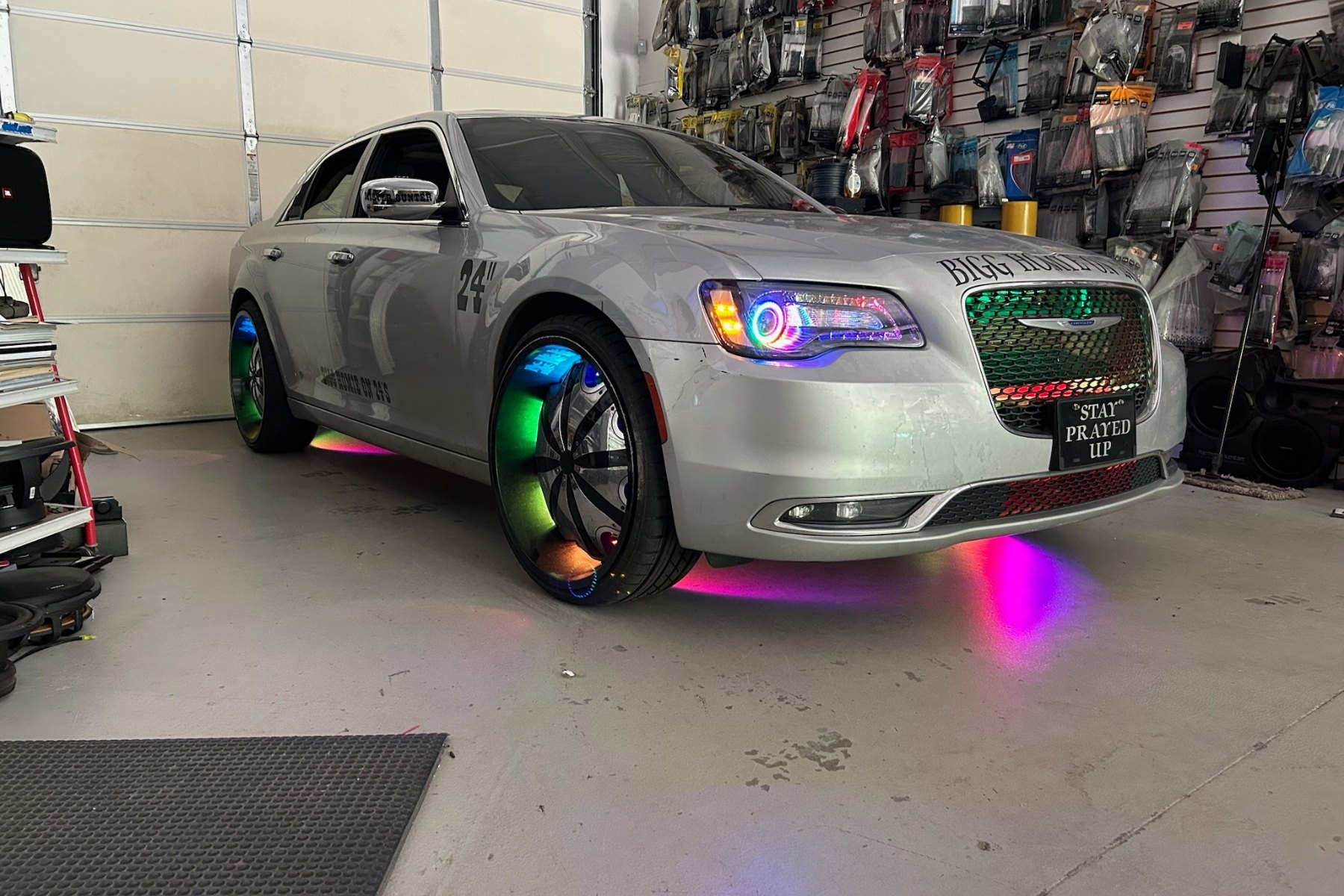
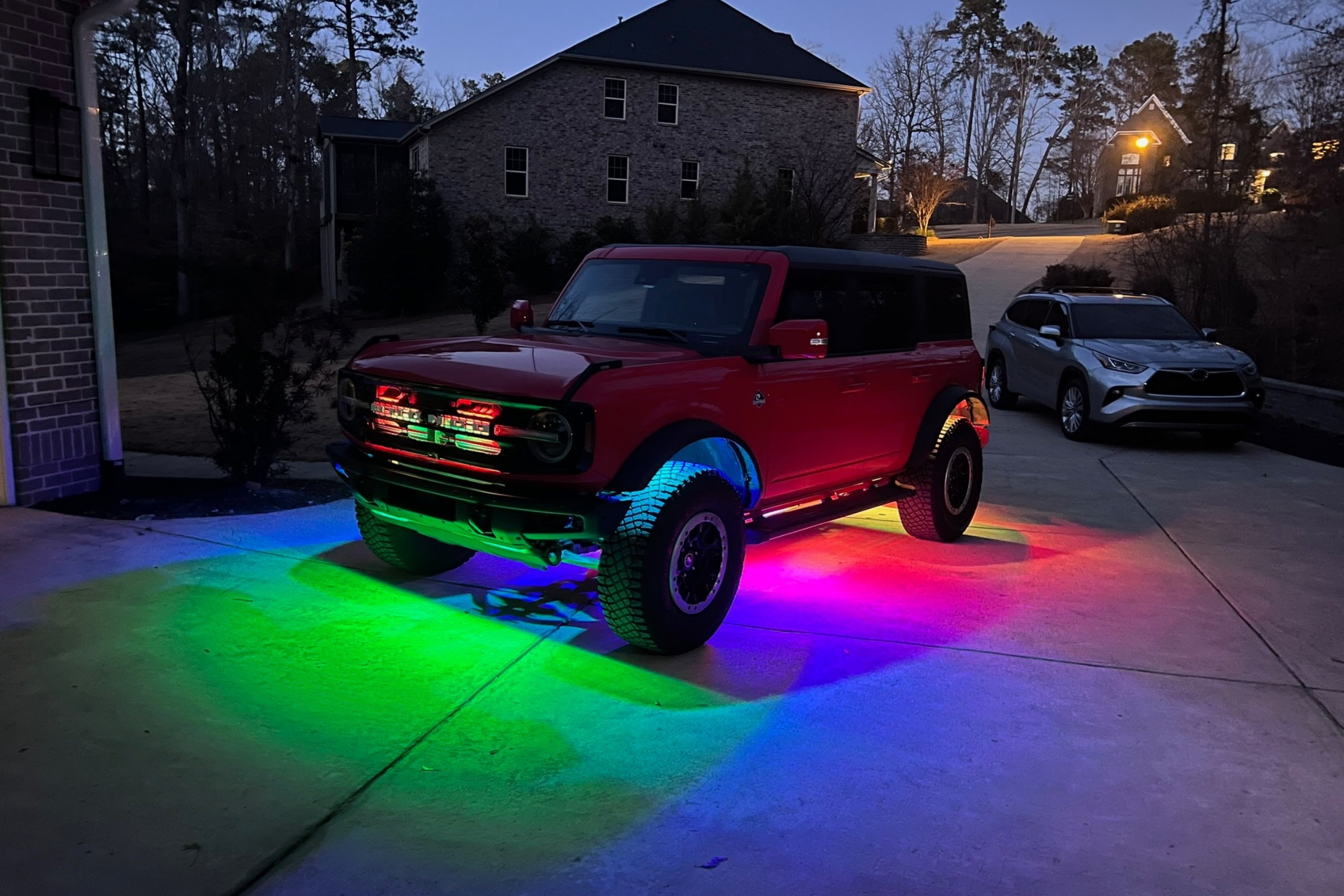
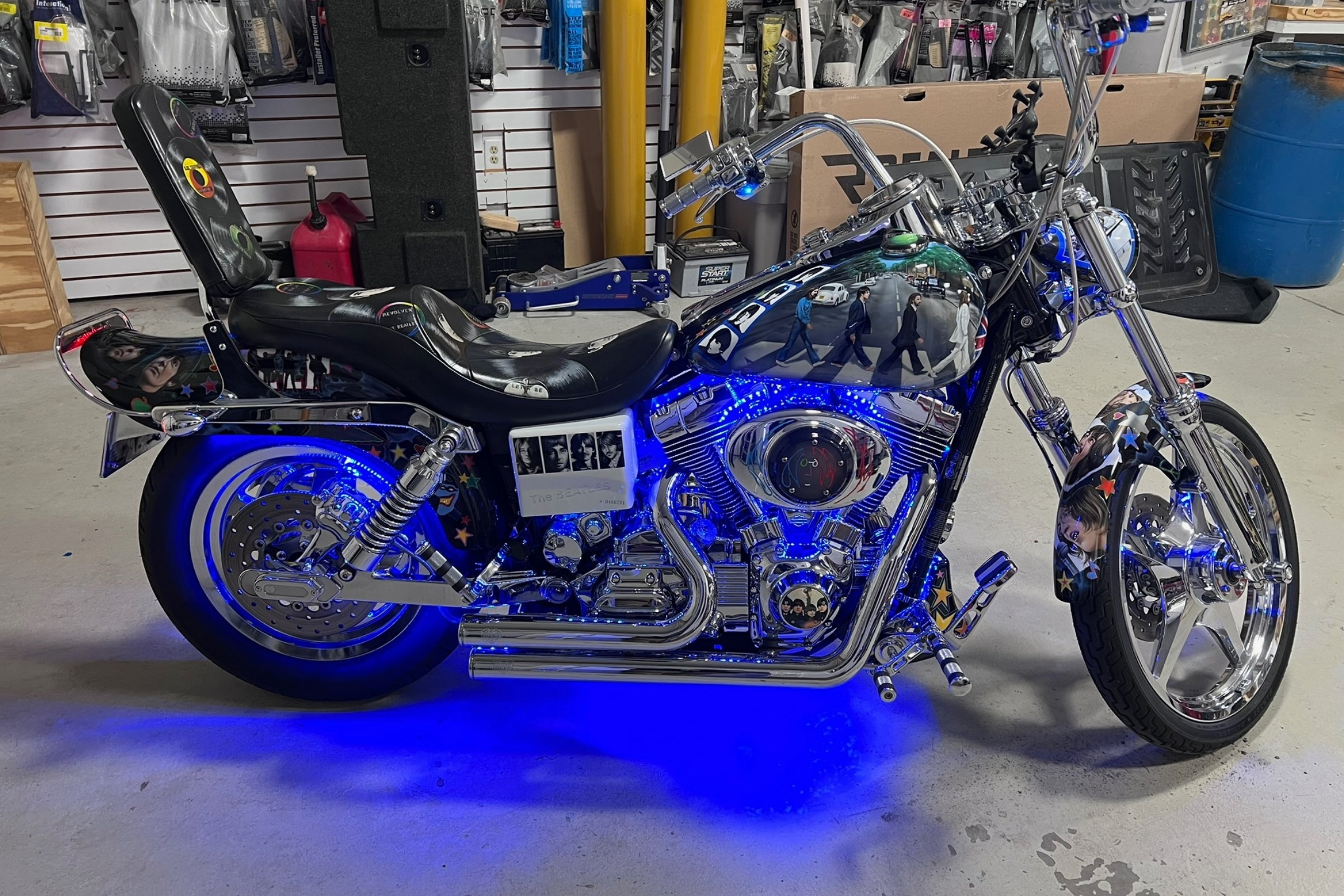
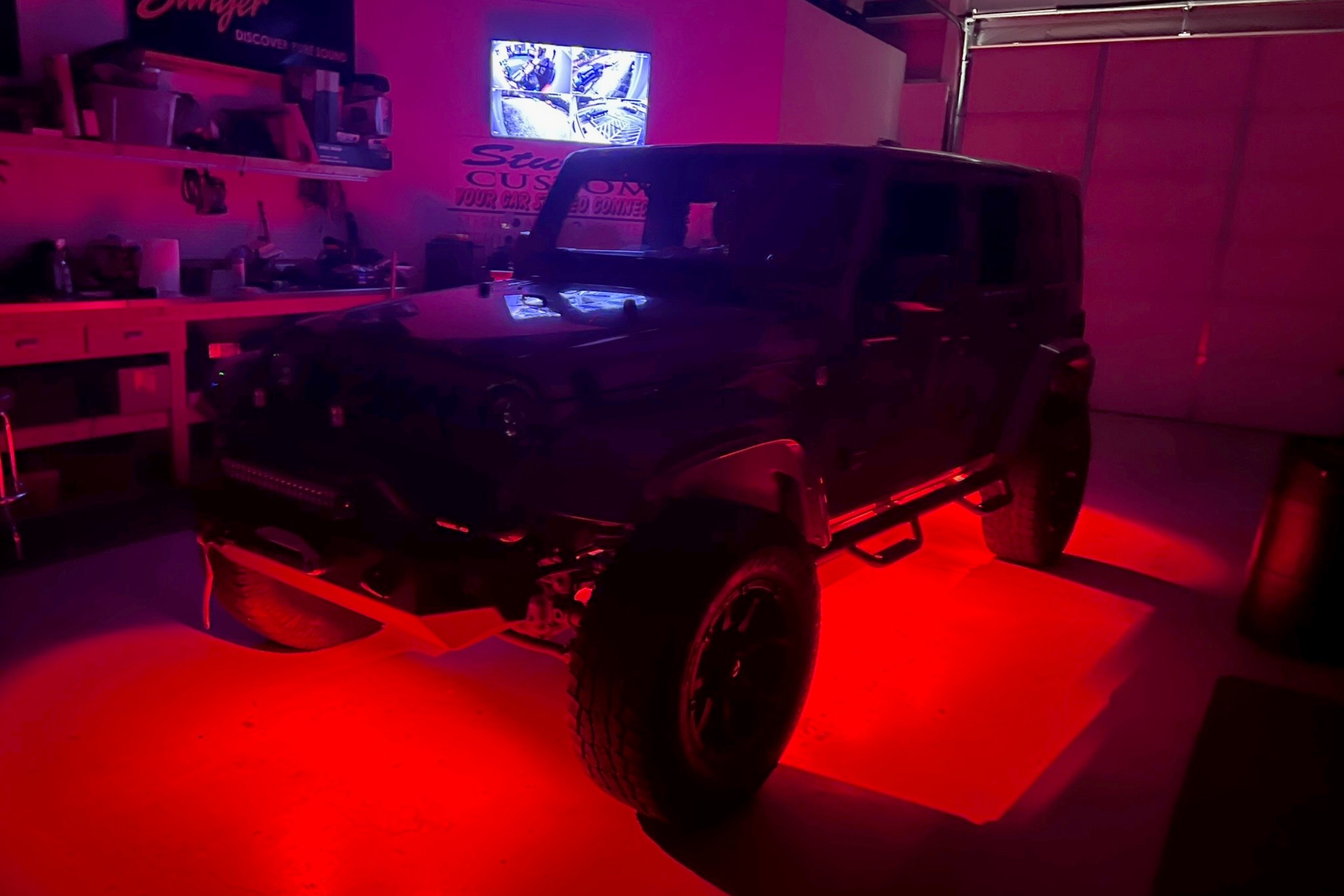
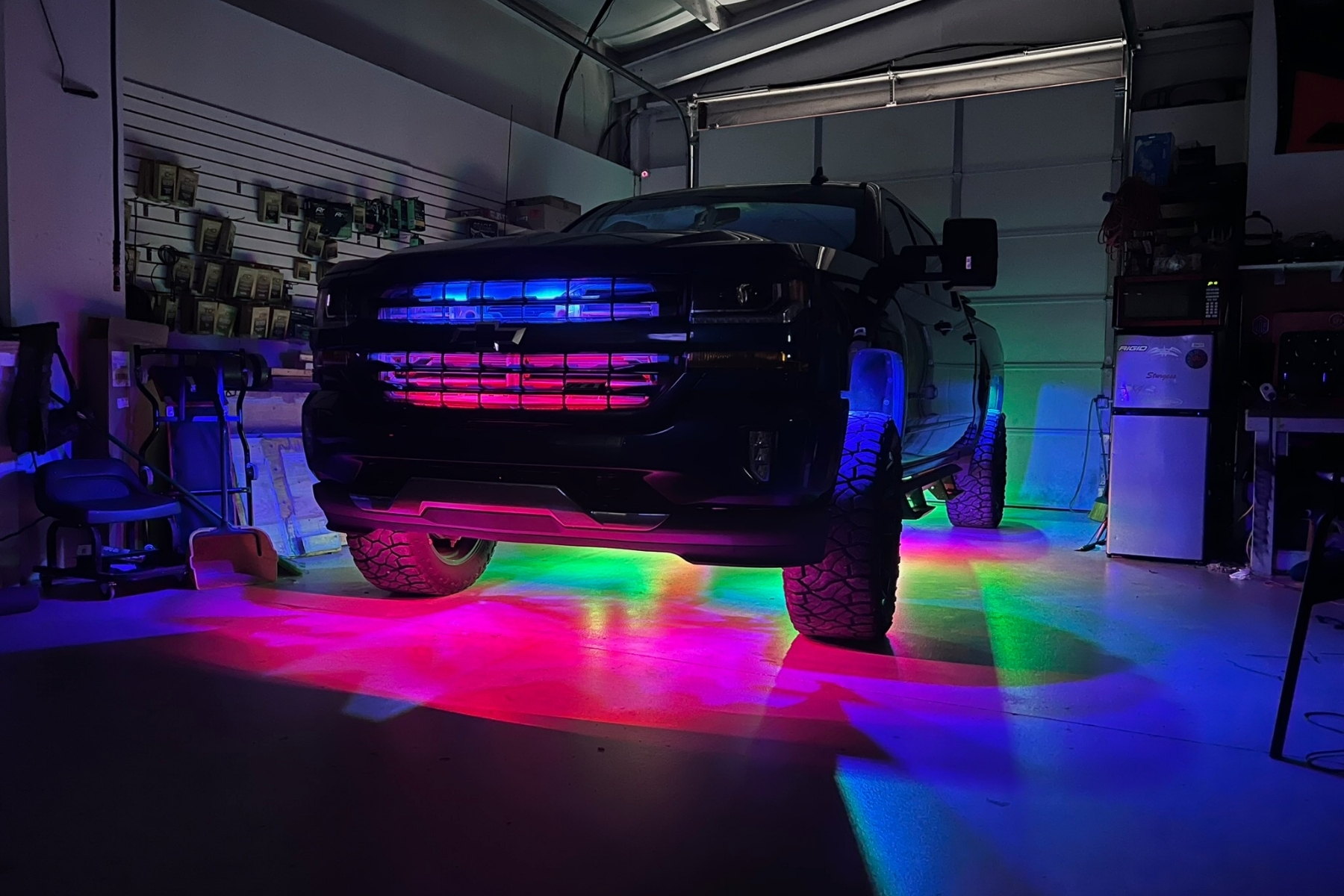
Exterior accent lighting works at the same level as interior accent — quiet integration with the vehicle’s design language, not spectacle. Common builds include rocker panel accent, undercarriage lighting (where state law permits), grille accent integration, wheel well lighting, badge and emblem backlighting, and light-up door sills. Most exterior builds run a single color, with color-changing RGB available as a separate control-system layer (see RGB Control below).
Exterior installs face conditions interior installs don’t. We work with IP67- or IP68-rated weatherproof components for any lighting exposed to rain, car-wash water, or road spray; UV-resistant cable and housing materials so the install doesn’t degrade in two summers; mounting hardware that respects body-panel integrity. State-specific underglow color restrictions apply to lighting visible while the vehicle is in motion, and we build to comply with applicable South Carolina regulations. For custom Harley exterior accent integration — a common cross-shop alongside Harley audio builds — see our Harley-Davidson audio and customization work.
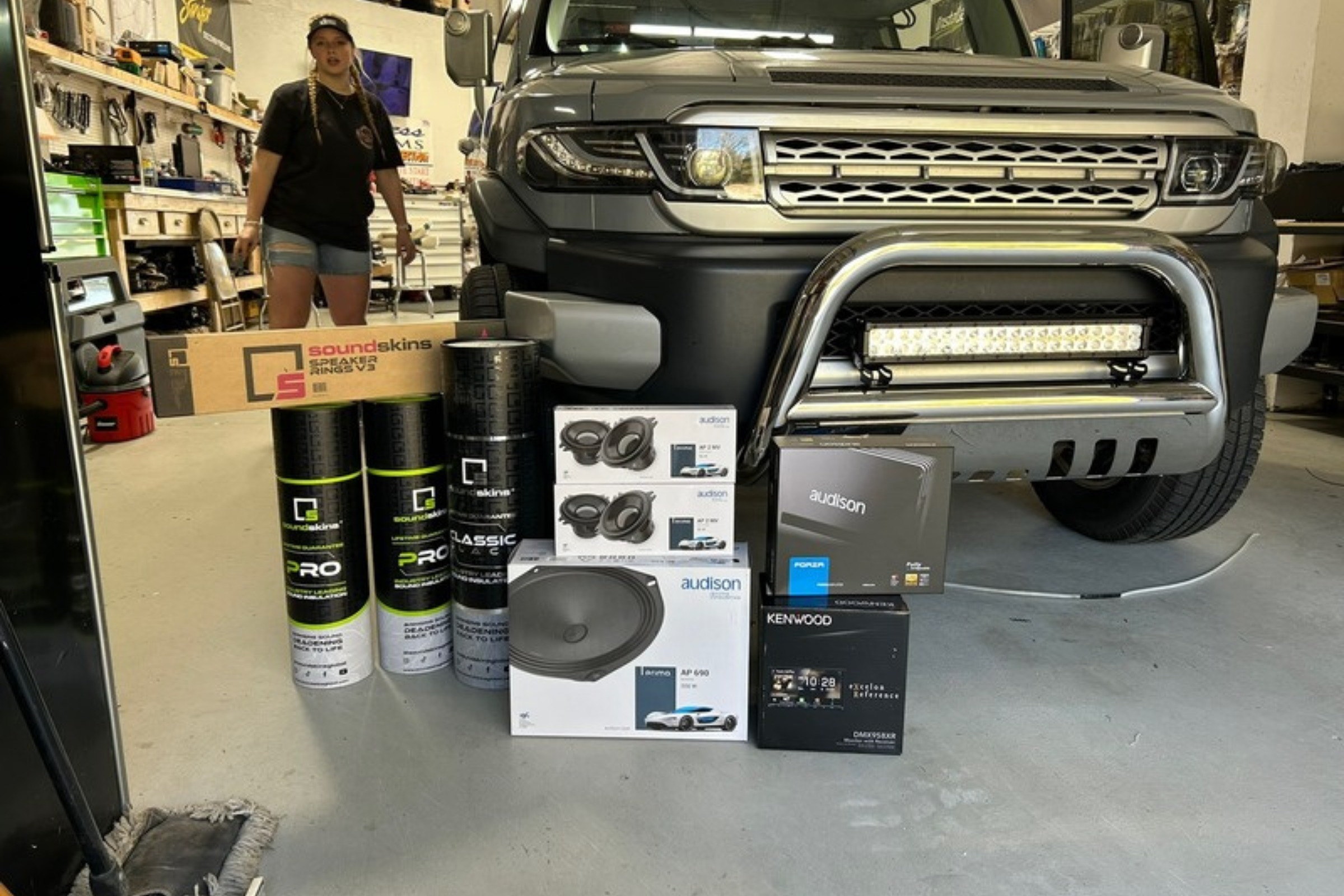
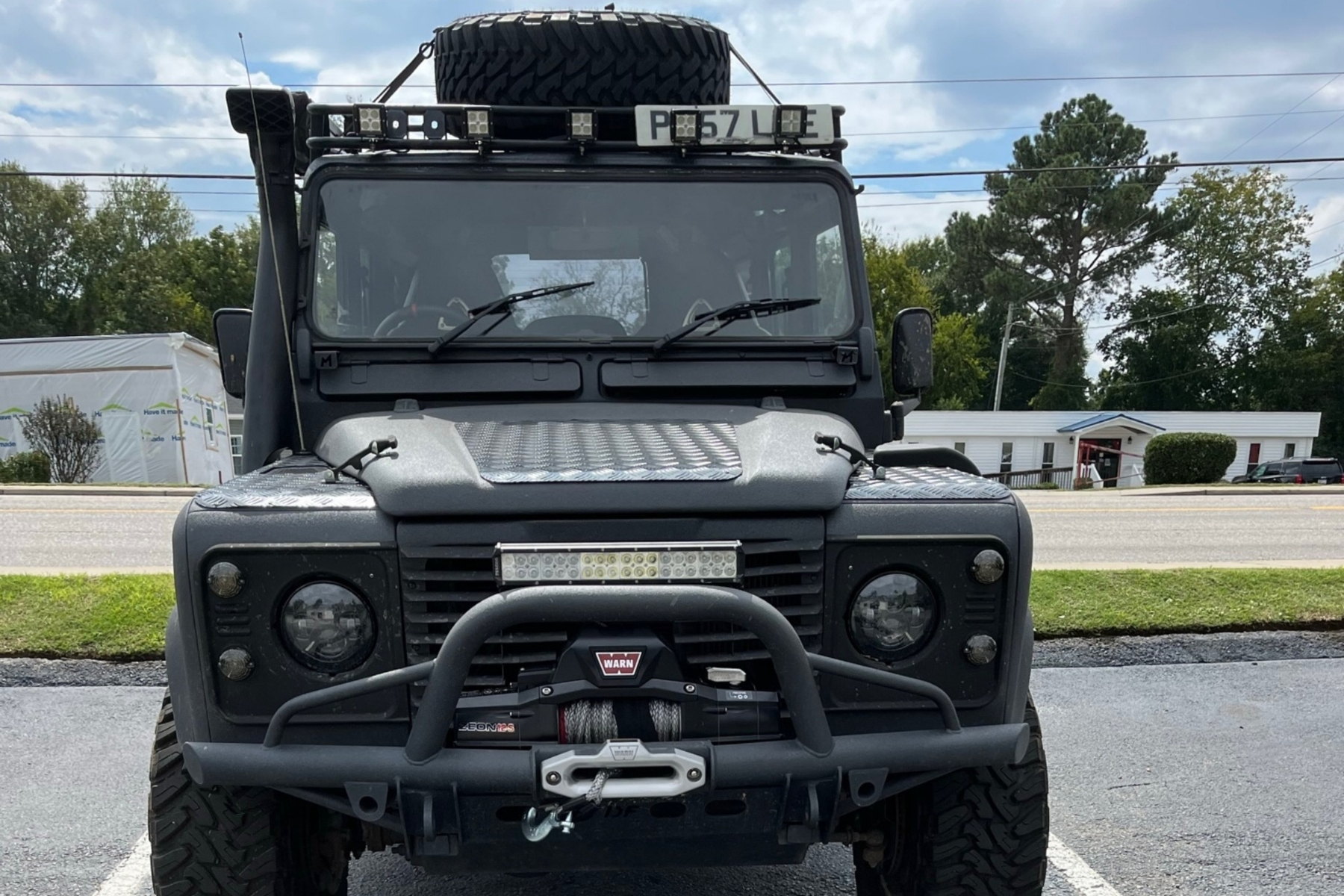
Off-road lighting is utility before it’s customization — the bars, pods, and rock lights need to do real work in real conditions. Common builds include front-mounted light bars (single-row or dual-row, curved or straight depending on bumper geometry), A-pillar and bumper-mounted pods (spot beam for distance, flood beam for cornering and trail width, combo where useful), rock lights for under-vehicle wheel-well illumination at slow trail speeds, ditch lights for low-speed approach visibility, and aftermarket reverse lights for backing into camp or out of a tight launch.
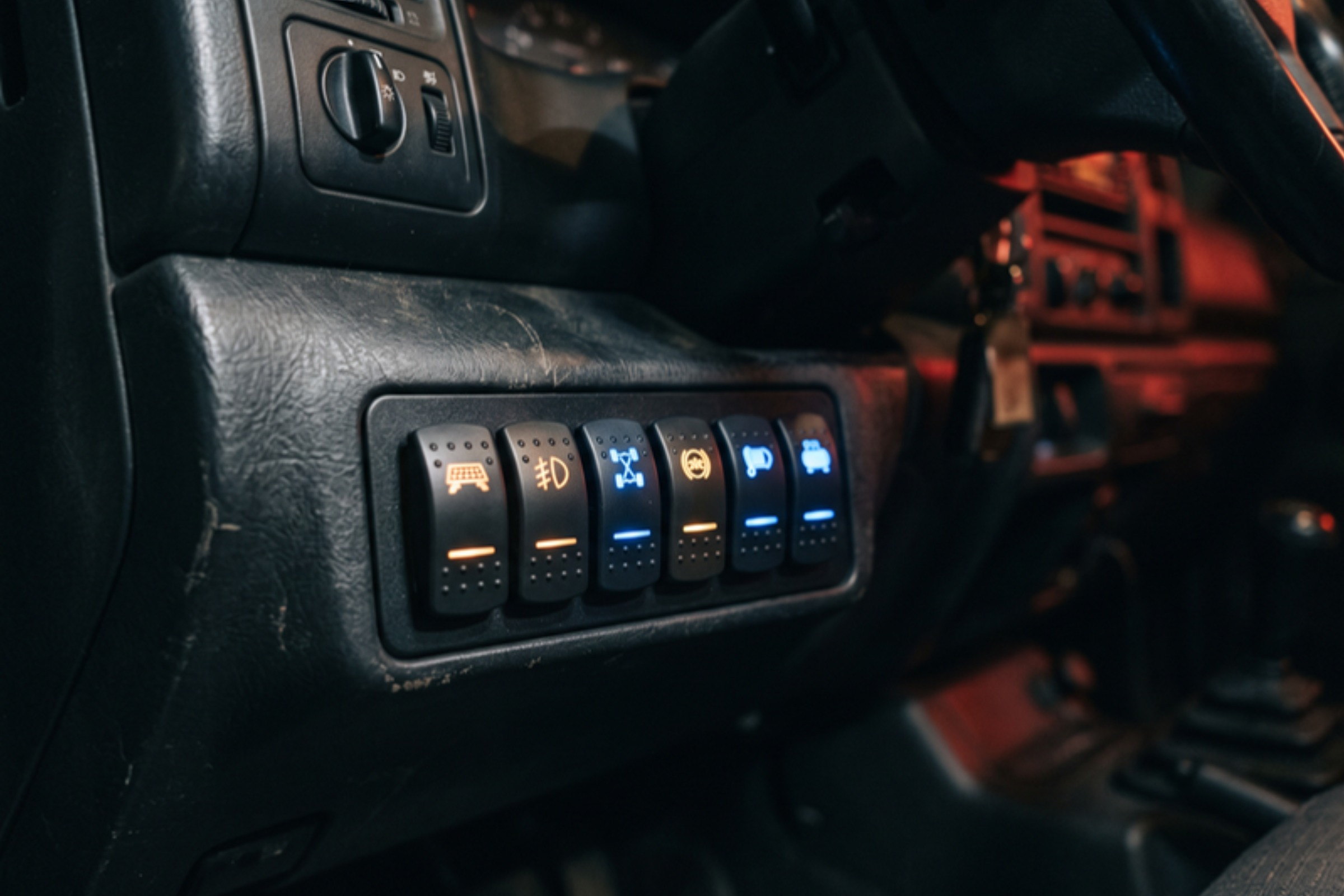
The install layer is where off-road lighting succeeds or fails. Off-road bars draw significant current — OEM wiring won’t carry it, and we run dedicated fused circuits with appropriately-sized relays for any high-amperage zone. Mounting hardware has to match the load profile of the bumper, roof rack, or A-pillar location. Switch control integrates through OEM-style dash controls. Sealed connector ratings handle mud, water immersion, and dust. And street-legal compliance — covers required in most states on highway-driven off-road bars — gets handled at install rather than left for the customer to figure out later. For off-road lighting on UTV, ATV, golf cart, and side-by-side platforms, see our powersports customization and lighting work.
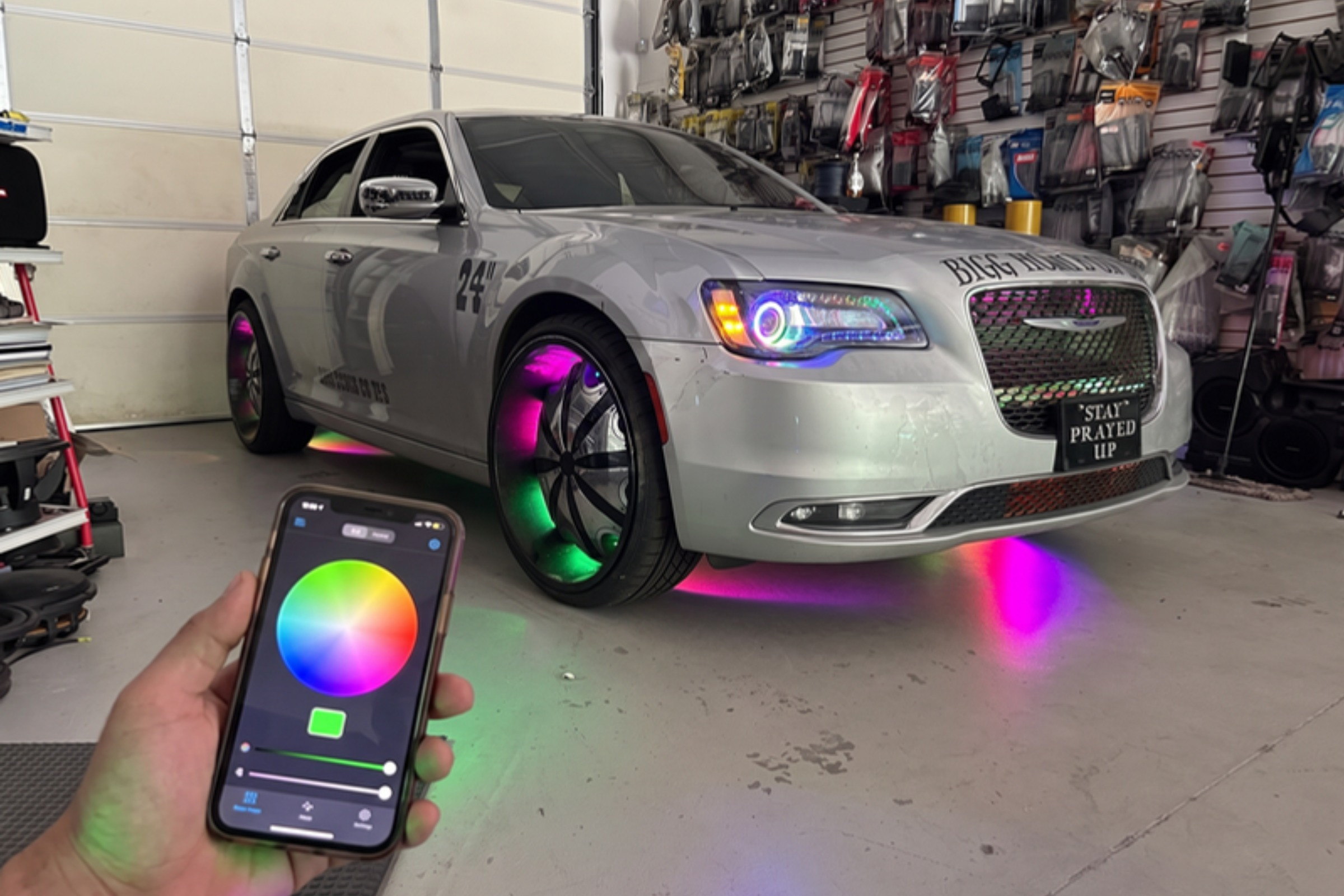
RGB is a control layer that sits on top of interior accent, exterior accent, and underbody lighting categories — not a separate lighting type so much as a way to manage color across whatever lighting zones the build runs. We install across three implementation tiers: entry-level Bluetooth-controlled RGB strip kits (single-zone, phone-app control); mid-tier app-controlled systems with zone separation (independent color and brightness per zone); and integrated systems with dedicated dash-mounted switch panels, scene memory, and color calibration verified across multi-zone builds.
The work that matters on RGB installs is integration, not color drama. Power draw across multiple zones gets budgeted against the vehicle’s electrical system. Controllers are placed where they’re protected and serviceable. Each zone gets its own wiring run so it can be controlled independently from any other zone. Color calibration across LED strips from different manufacturers gets verified during install — different driver chips produce different “whites,” and a build that doesn’t calibrate ends up with mismatched zones that read as cheap. The goal is RGB that’s controllable and consistent, not RGB that’s loud.
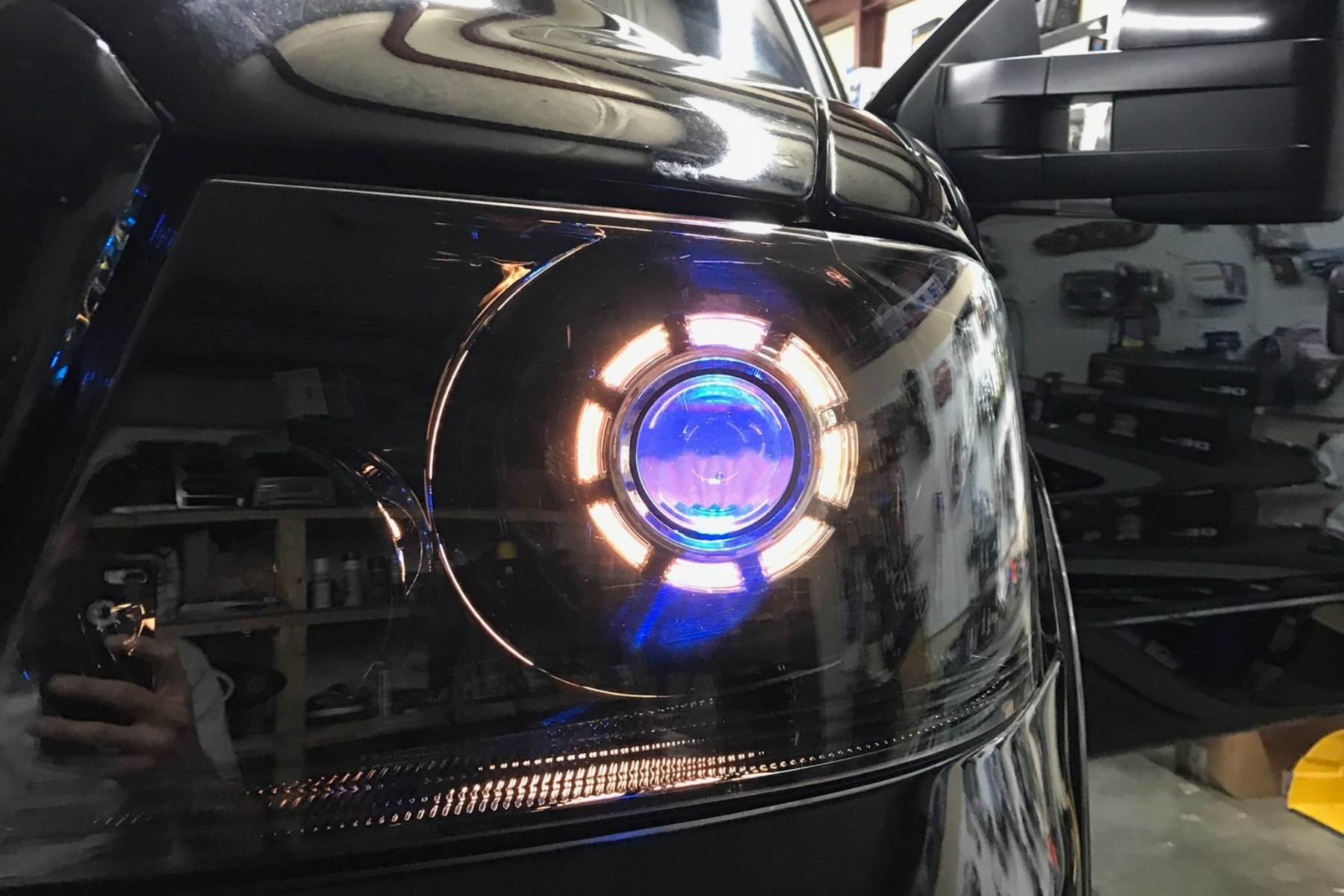
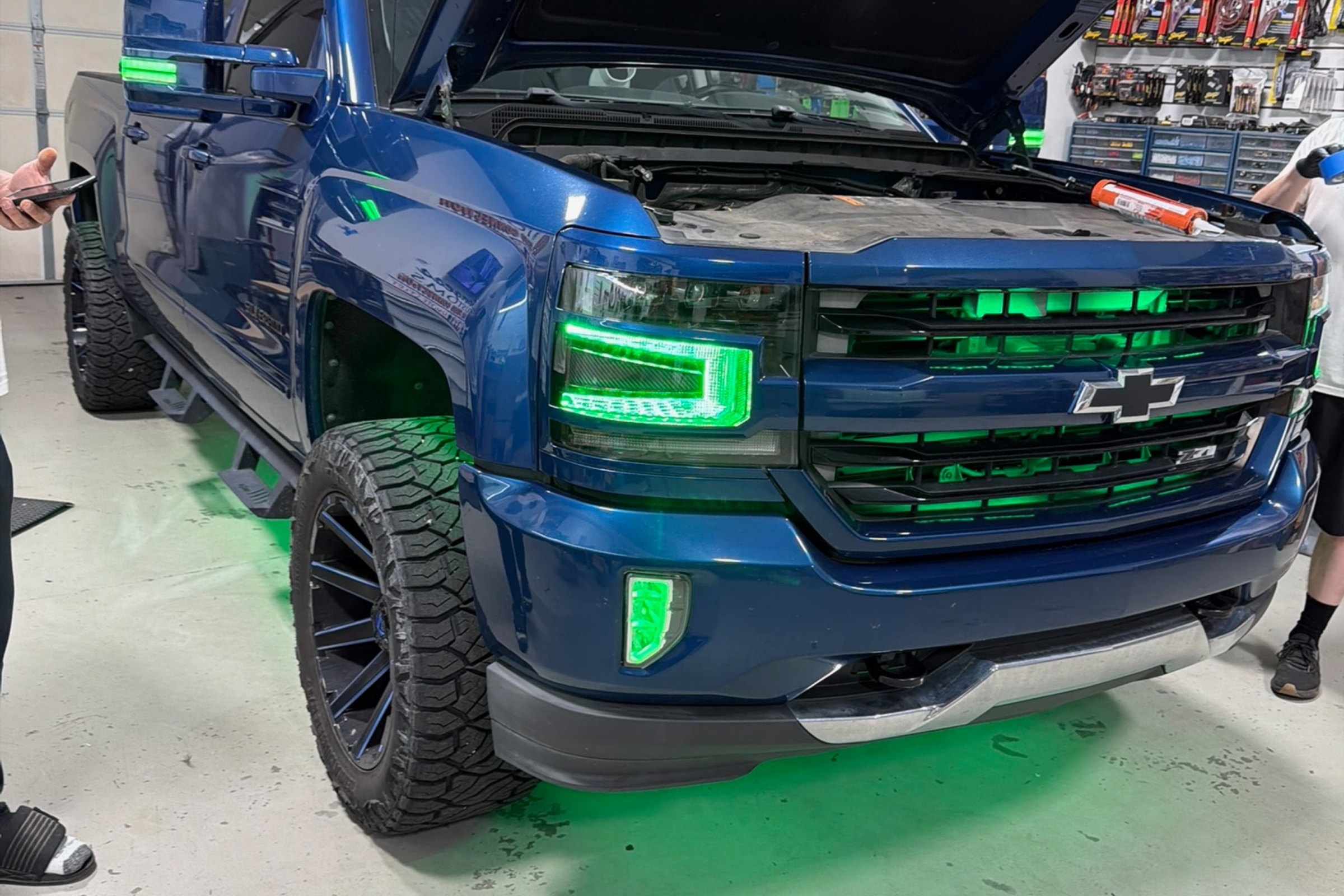
Halo headlight builds and front-end customization sit at the intersection of design and DOT compliance. Common builds include full projector retrofits with halo rings (replacing the factory headlight assembly with a custom unit), halo additions to existing factory headlights (opening the factory assembly to add rings without replacing the housing), daytime running light integration on vehicles that didn’t ship with it, sequential turn signal integration, and color-changing halo rings on vehicles where state law permits.
Halo work involves headlight assembly disassembly and resealing — the factory units bond shut with sealant, and they have to be oven-warmed to open, modified internally, and re-sealed to factory weatherproof standards or better. CAN-bus error code prevention matters on modern vehicles, which report headlight changes as fault codes without proper resistor or decoder integration. DOT compliance applies throughout: halos can’t impede DOT-compliant headlight beam patterns, certain color choices and sequential turn signal configurations are state-restricted, and we build to applicable standards. For RV interior and exterior lighting integration that often accompanies a halo or DRL build on the same vehicle, see our RV lighting and audio customization work.
Ten recent installs across the five lighting zones — interior accent, exterior accent, off-road utility, RGB control, and halo headlight builds. Click any thumbnail for the full-size view.
We work across five lighting categories: interior accent (footwell, dashboard, ambient, dome upgrades), exterior accent (rocker, undercarriage, grille, badge backlighting), off-road utility (light bars, pods, rock lights, ditch and reverse lights), RGB control systems (single-zone Bluetooth through multi-zone app- and switch-controlled builds), and halos and headlight customization (projector retrofits, halo additions, DRL and sequential signal integration). The Gallery section above shows recent builds across all five categories.
Most of it is — built correctly. State-specific rules govern certain categories: South Carolina restricts the colors of underglow visible to the front and rear while driving; off-road light bars driven on the highway typically require covers; halo and headlight modifications must preserve DOT-compliant beam patterns and lawful turn signal colors. We build to applicable state and DOT regulations, and we cover the per-category compliance during the consultation so you know what your specific build can and cannot include.
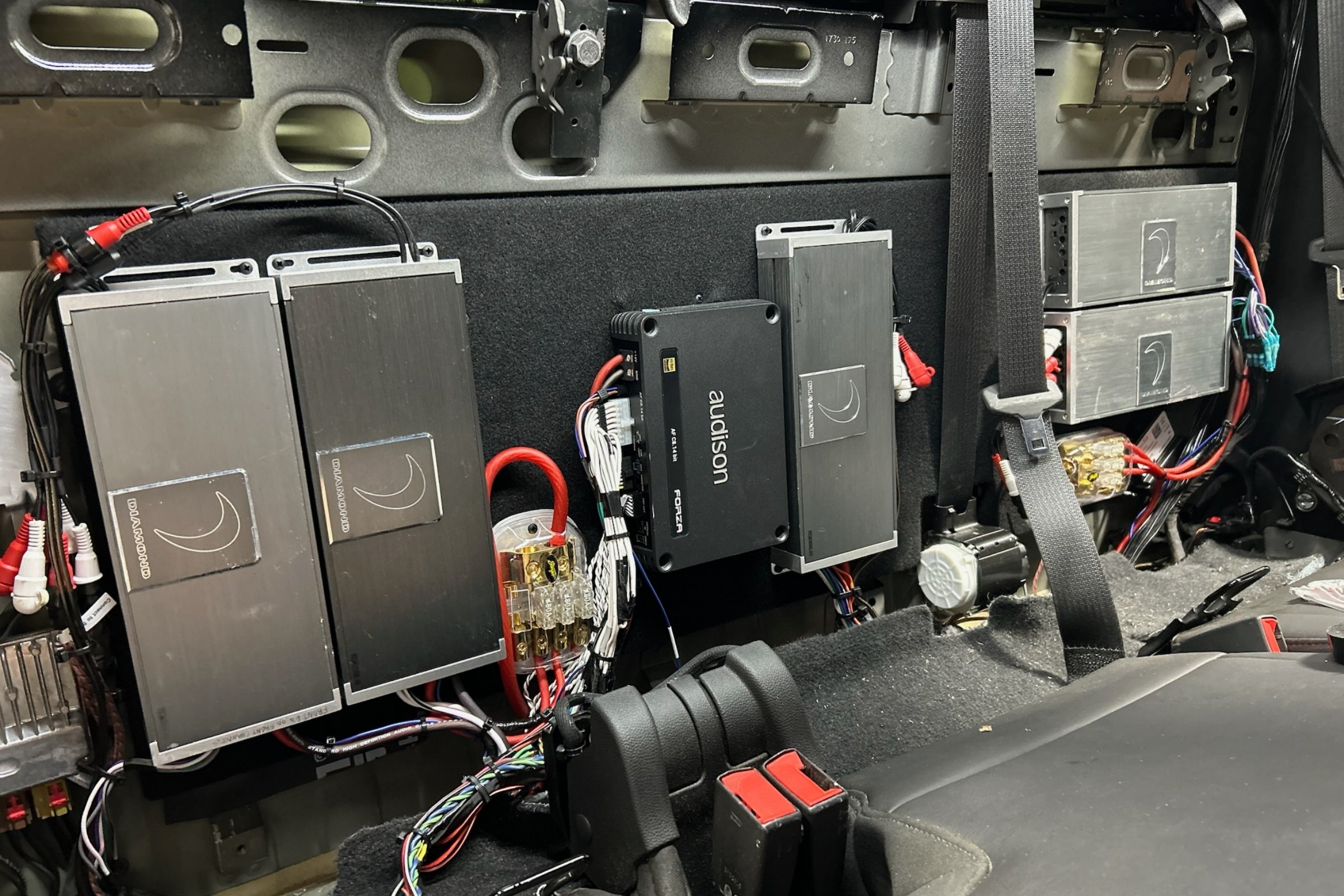
Not when the install is engineered for it. We calculate total electrical load across audio, factory equipment, and any new lighting zones before specifying components, run dedicated fused circuits so high-current zones (off-road bars, multi-zone exterior accent) don’t load the factory wiring, and use relays where appropriate to keep switch-control circuits low-current. Battery and alternator capacity get reviewed during the quote stage if the build approaches the vehicle’s electrical-system limits.
Most current RGB systems support phone control as standard. Entry-level Bluetooth RGB kits run through a single manufacturer app; mid-tier systems add zone separation so you can control each lighting area independently; premium systems combine app control with a dedicated dash-mounted switch panel and scene memory. We pick the tier based on how many zones the build runs and how much daily control you actually want — phone-only is convenient but slower than a hardware switch for everyday on/off.
Yes — lighting principles transfer across vehicle types, with platform-specific considerations for each. For Harley-specific exterior accent and custom build integration alongside audio work, see our Harley-Davidson audio page. For RV interior and exterior lighting alongside audio and 12V work, see RV audio and customization. For UTV, ATV, golf cart, and side-by-side lighting (often paired with off-road audio), see powersports customization.
Component warranties pass through from the manufacturers — each lighting brand carries its own terms. Installation workmanship is covered by the shop. We walk through the specific warranty terms at the quote stage so you know exactly what’s covered before the install begins.
Have a custom lighting question we haven’t answered here? Reach out and we’ll work through it with you.
In-person consultations, consultative design, and the time to walk through which lighting categories fit your vehicle and your goals. Bring the vehicle by or send us the details and we’ll spec the build with you.