
Custom systems engineered for the lake — built to survive sun, spray, and full seasons of use across Lake Murray and the Midlands.
Marine systems aren’t car systems in tougher housings. They’re a different build entirely — different components, different power planning, different mounting discipline, different waterproofing standards. We build for the boat you actually own, the way it actually gets used, and the conditions it actually sees on Lake Murray, in the Midlands, and beyond.
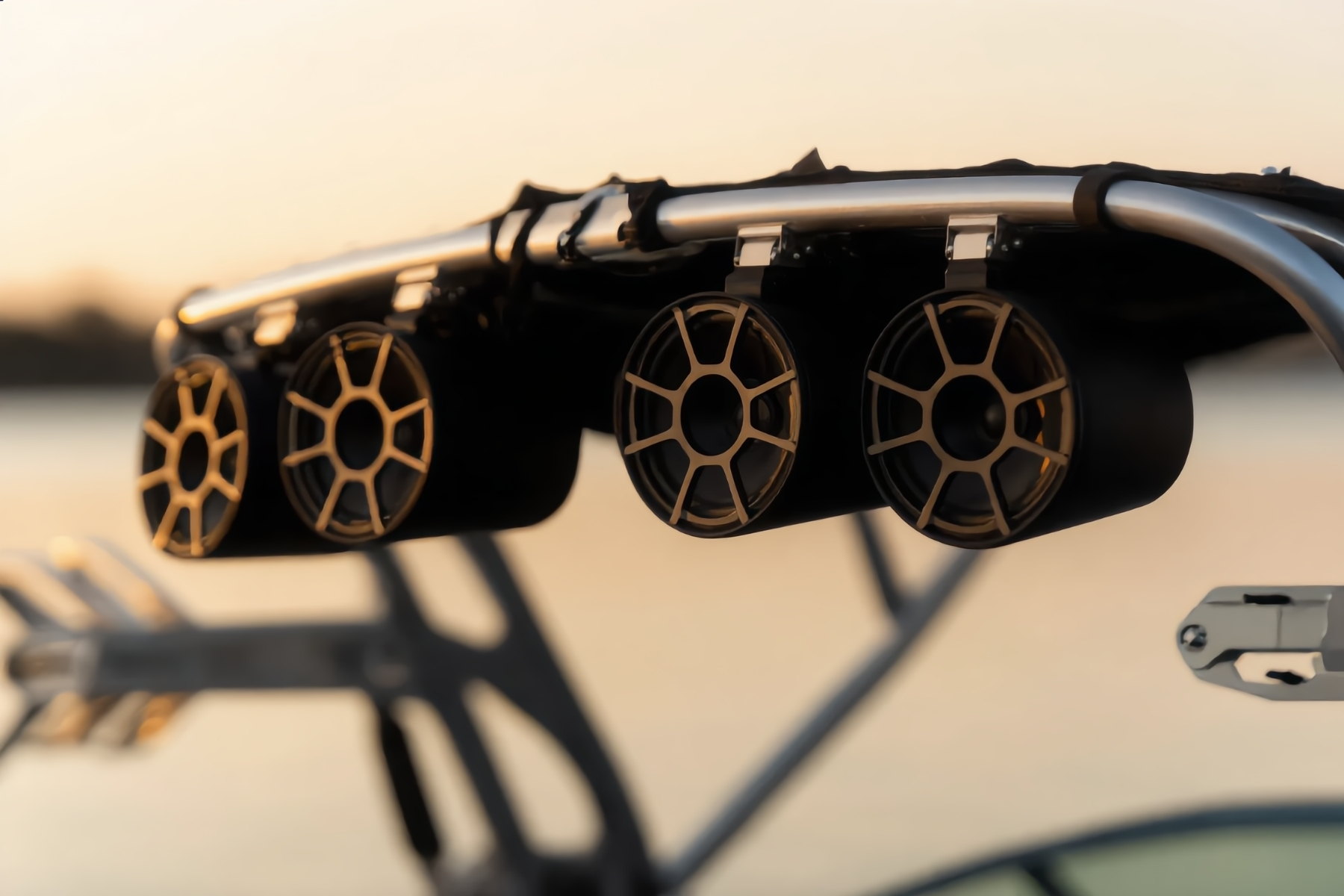
Wake and ski boats live in a different audio environment than any other boat type. The tower has to throw sound past the riders, over the engine, and across the wake — typically through horn-loaded or surface-mount tower cans, often with integrated LED lighting and high-output amplification matched to the cabin’s overall volume target. Inside the boat, helm, seating, and swim-platform zones each carry their own speaker layout so the audio works at the dock, underway, and during rest periods between sets.
Build decisions cascade from the tower out. Tower clarity over a running engine demands real amplifier headroom; subwoofer integration — whether tower-adjacent or floor-mounted — extends low-end without forcing the towers to do work they shouldn’t. Waterproof remotes, MFD source switching, and smartphone control keep the rider and the driver in charge of their respective zones without trading control back and forth.
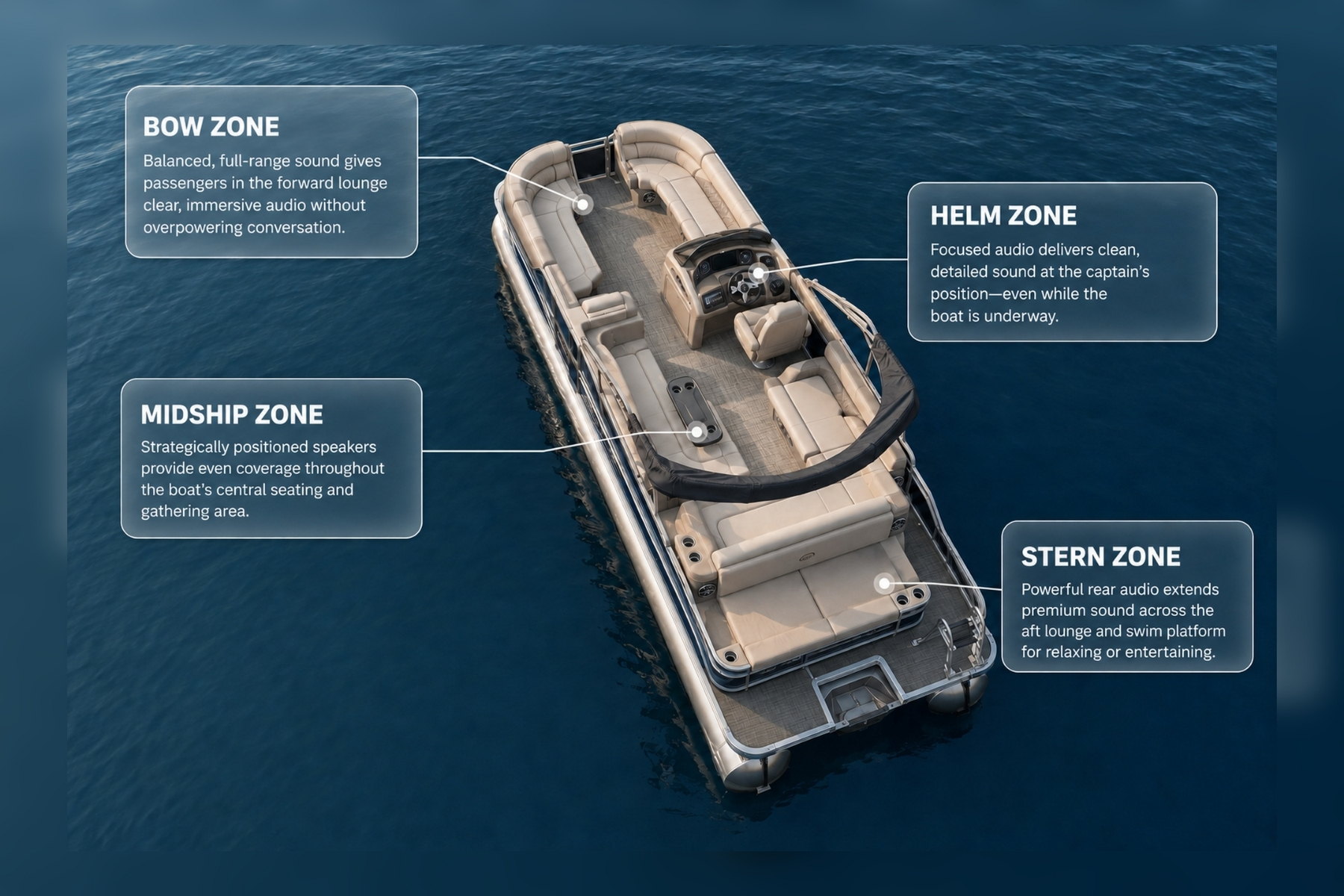
Pontoons are social boats — the audio system has to cover everyone on board comfortably without forcing helm-volume compromises for bow passengers (or vice versa). We design pontoon systems around multi-zone speaker layouts: helm, mid-deck, bow, and stern or swim-platform zones each calibrated for their seating area, with helm-mounted head units or MFD integration giving the driver control over the full system.
Pontoon enclosures hide more than they reveal: subwoofers live inside furniture cavities, amplifiers tuck under helm consoles or in protected compartments, and wiring routes through console pillars and along aluminum tubes. The use pattern is different from wake boats — pontoons cruise, anchor at sandbars, and sit at the dock — so the system has to support party mode and conversational mode equally well, without the tower-clarity demands that drive wake-boat amp sizing.
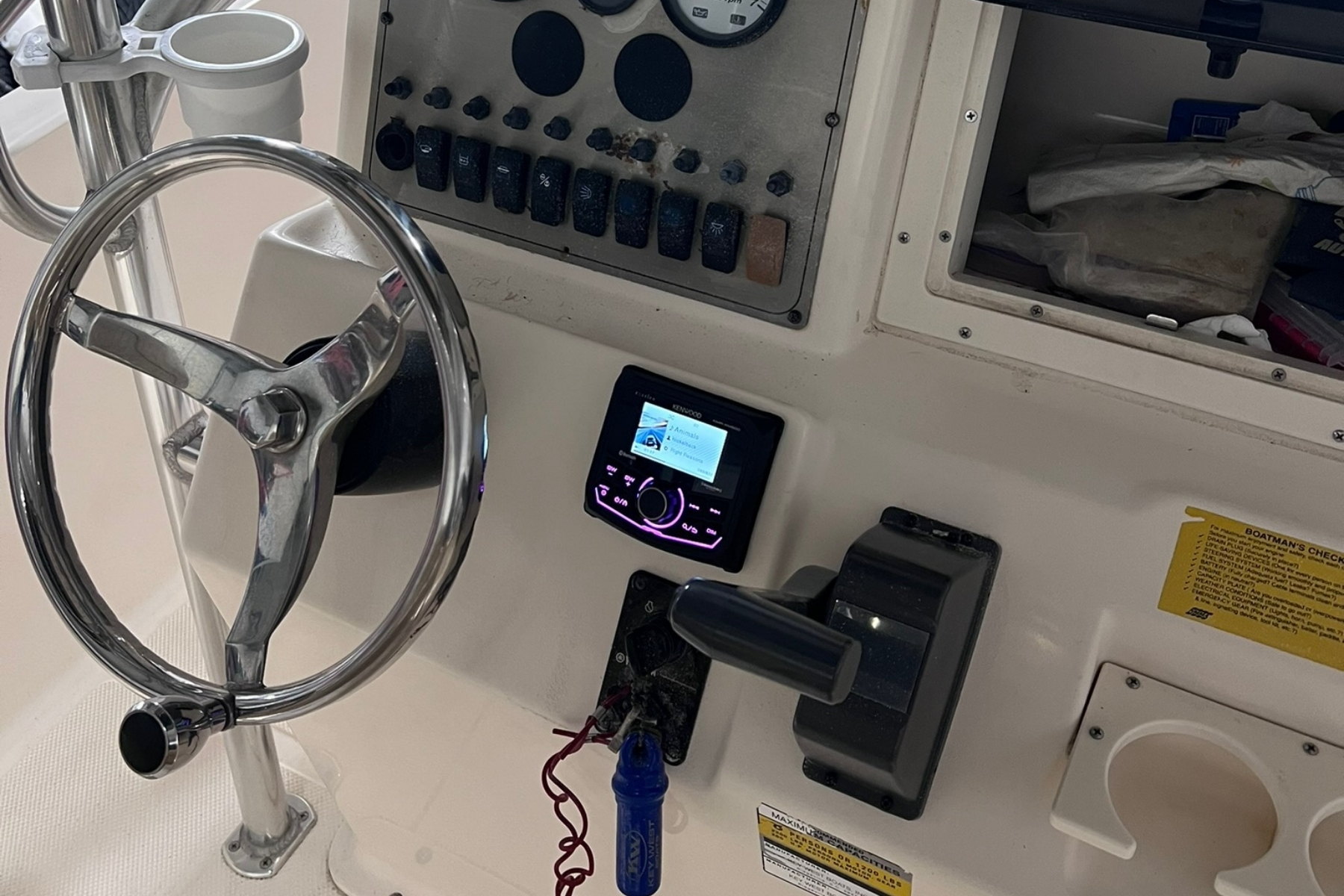
Fishing boats demand the most aggressive marine-grade decisions in any build. Center consoles run open-cockpit — salt or freshwater spray, sun, and helm exposure are constants — so T-top speaker mounting, sealed helm enclosures, and corrosion-resistant hardware everywhere are baseline requirements, not upgrades. Bass boats compress the same demands into a smaller deck: low-profile speakers, vibration-tolerant mounting for trailer transit, and helm head units that survive both on-water exposure and overnight cool-down cycles.
Most fishing-boat installs share the helm with sonar, GPS, and chart-plotter electronics — so audio source switching has to coexist with MFD-driven navigation without competing for the helm’s electrical budget. We plan total electrical load up front, including trolling motors and any high-draw electronics, to make sure the new audio system doesn’t eat into the systems the boat actually needs to fish.
Sailboats are extended-stay environments. The system has to perform at the helm pod, in the cockpit, and below deck in the saloon and nav station — often for hours or days at a time, often on house-battery power rather than shore power. Speaker placement on deck has to clear the traveler, the running rigging, and the coaming geometry; cabin speakers integrate with the saloon layout and the nav station’s existing electrical and instrument bus.
The power discipline is the meaningful difference from any power-boat build. Sailboat cruising budgets are calculated; a high-current audio system can shorten a passage. We size amplifiers, head units, and speakers around realistic battery-bank loads, integrate with existing NMEA networks where appropriate, and design for shore-power-when-available, house-bank-when-not operation. Cockpit Bluetooth control from a phone keeps the deck unencumbered while underway.
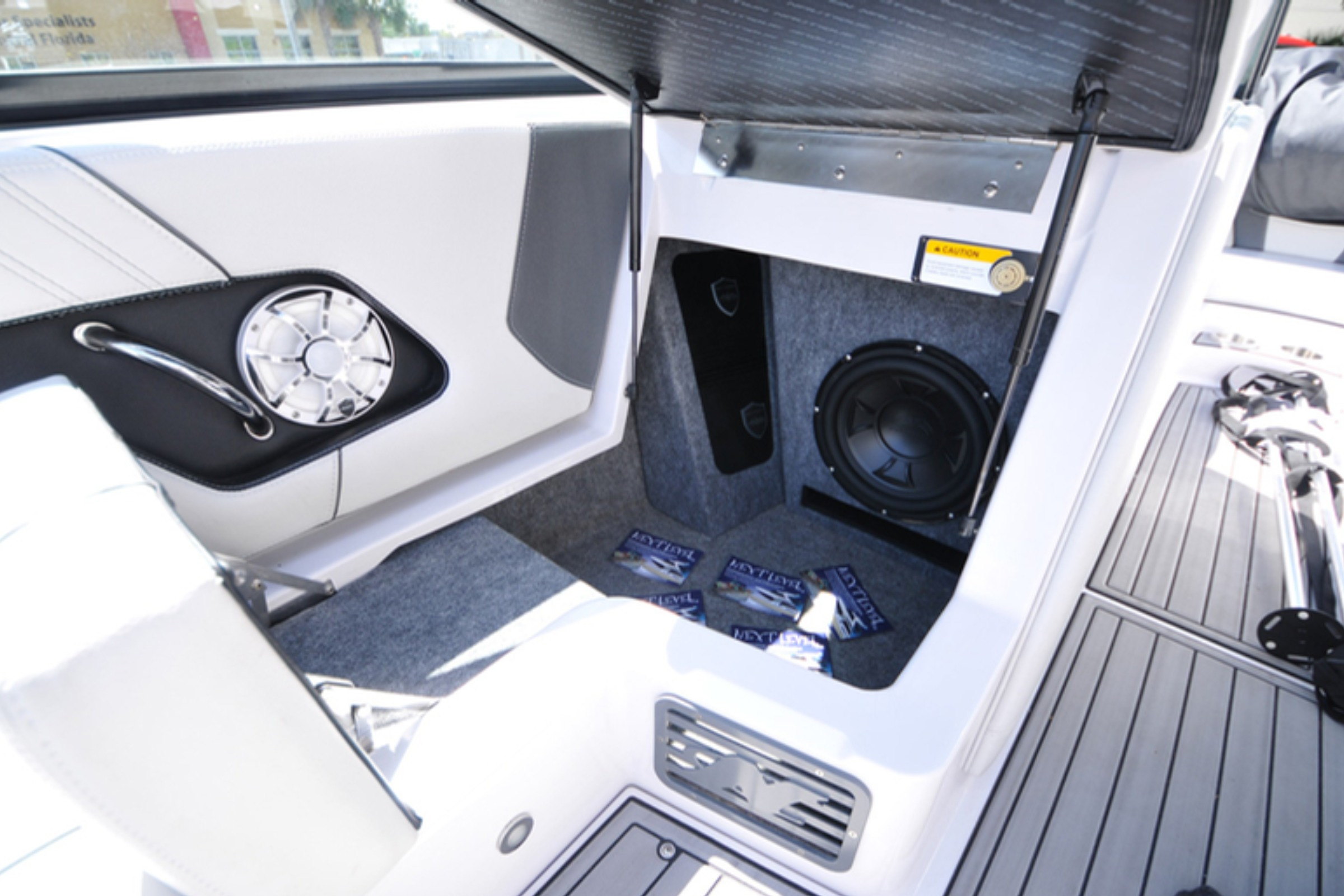
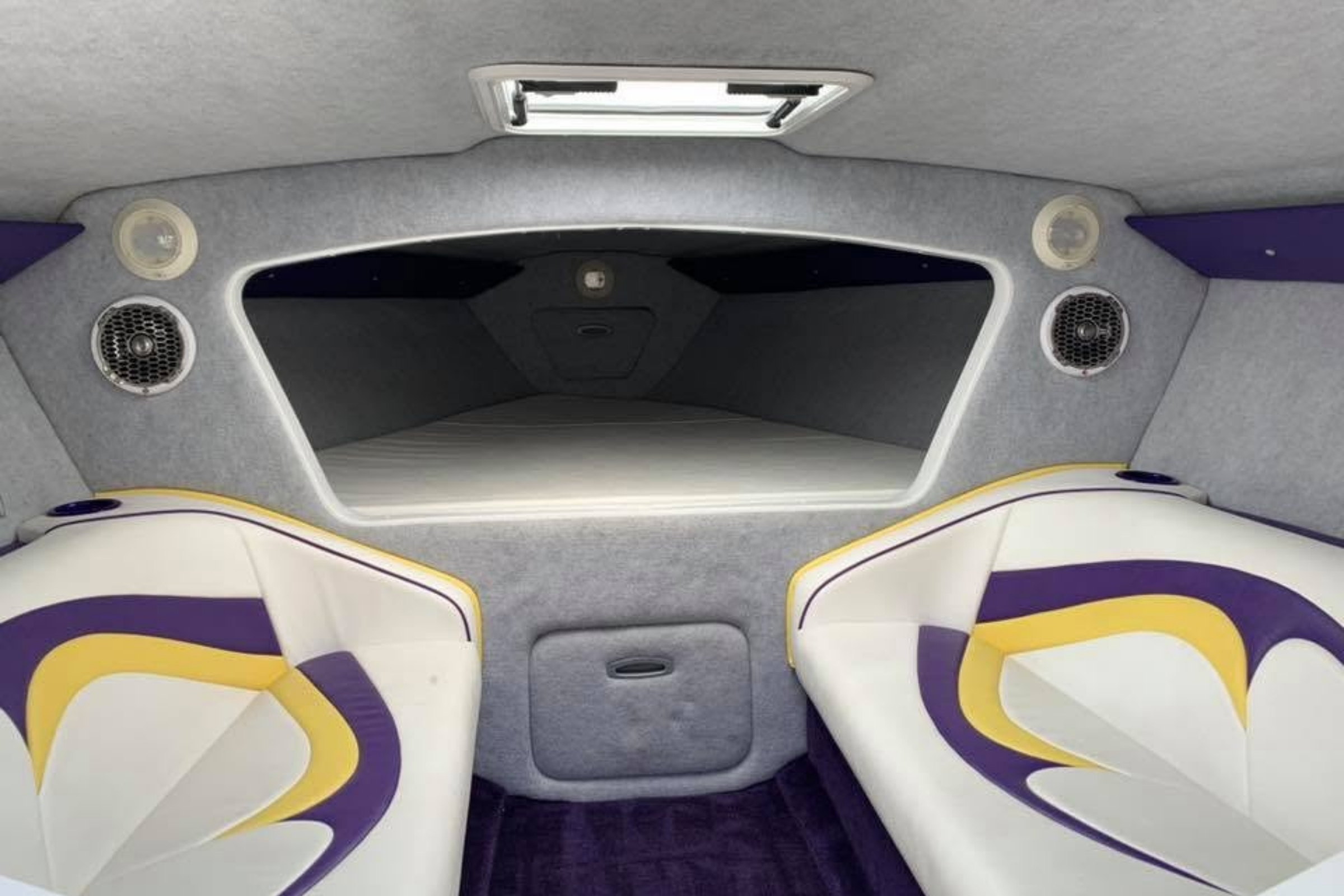
Yachts and cabin cruisers carry full-vessel multi-zone systems by default: helm, salon, galley, cockpit, master cabin, swim platform — each zone with its own speaker tuning and source switching. At this build level, premium component-tier expectations apply throughout, integration with existing entertainment systems (TV, satellite, distributed audio over network) is standard, and amplifier sizing has to support both quiet salon listening and outdoor cockpit playback during cruise.
Long-term durability matters more on these vessels than on any other category. Yachts and cruisers often sit dockside in direct marina sun for weeks at a time between use, so UV stability, dock-side temperature cycling, and humidity tolerance shape component selection from the start. Marine-grade isn’t a feature here — it’s the floor.
The cross-cutting engineering that separates a real marine install from a “car install on a boat” — applied on every build, regardless of boat type.
“Weather-resistant” and “all-terrain” are marketing terms — borrowed from automotive product lines for components that survive light rain but not sustained marine exposure. Marine-grade is a different specification entirely: IPX ingress-protection ratings appropriate to splash and submersion zones, UV-stabilized cone materials and grille treatments that don’t chalk or color-shift after seasons in the sun, and 316 stainless or marine-grade brass hardware throughout — not zinc-plated steel that will rust on the trailer.
Every cable penetration through a deck, bulkhead, or console gets sealed correctly — not caulked over, sealed with the right product for the right joint. Vibration-resistant mounting hardware appropriate to constant on-water movement keeps fasteners from backing out a season later. None of this is visible from outside the finished install; all of it determines whether the system reaches its third season looking and sounding the way it did at install. Marine-relevant brand authorizations live on our authorized brands page.
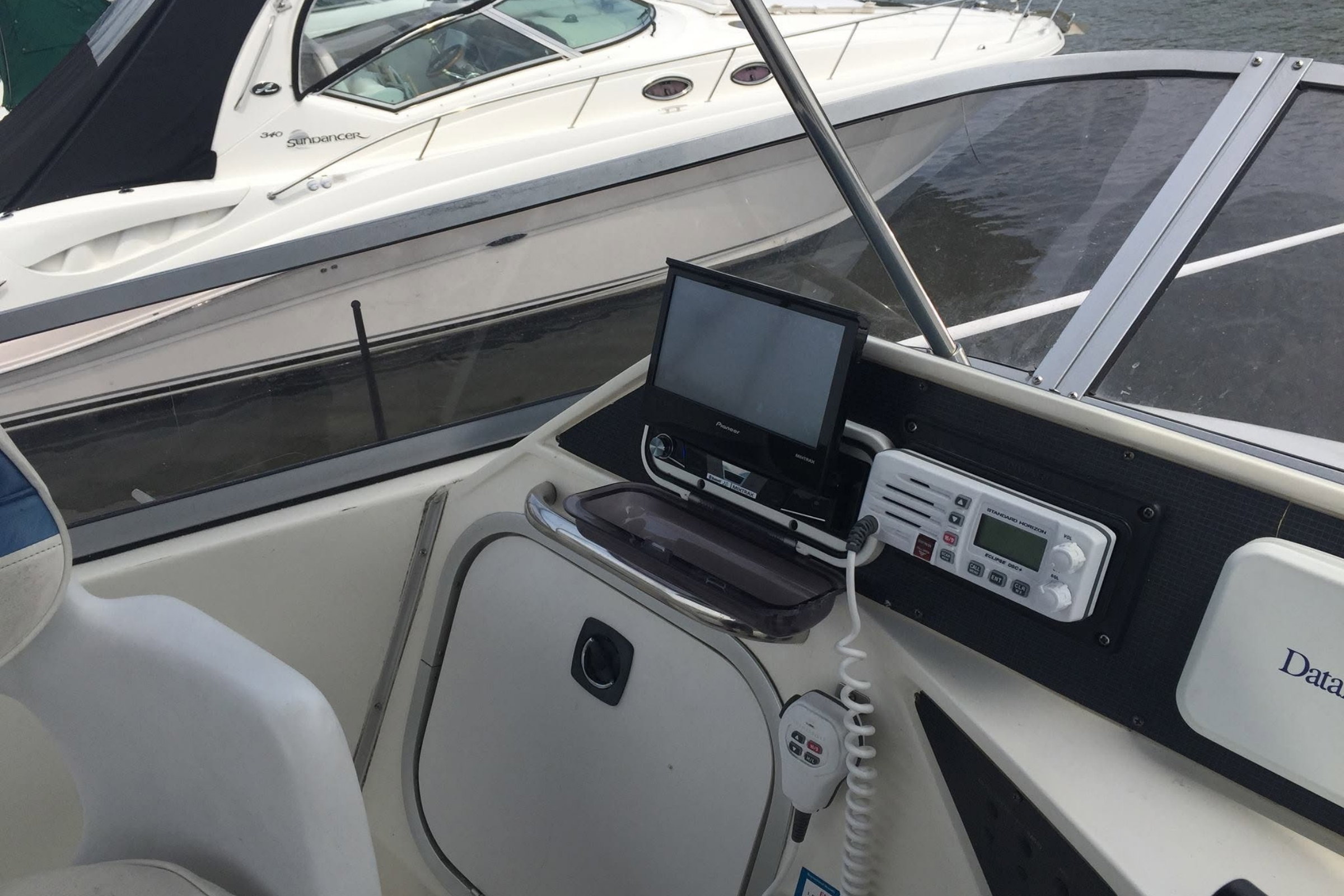
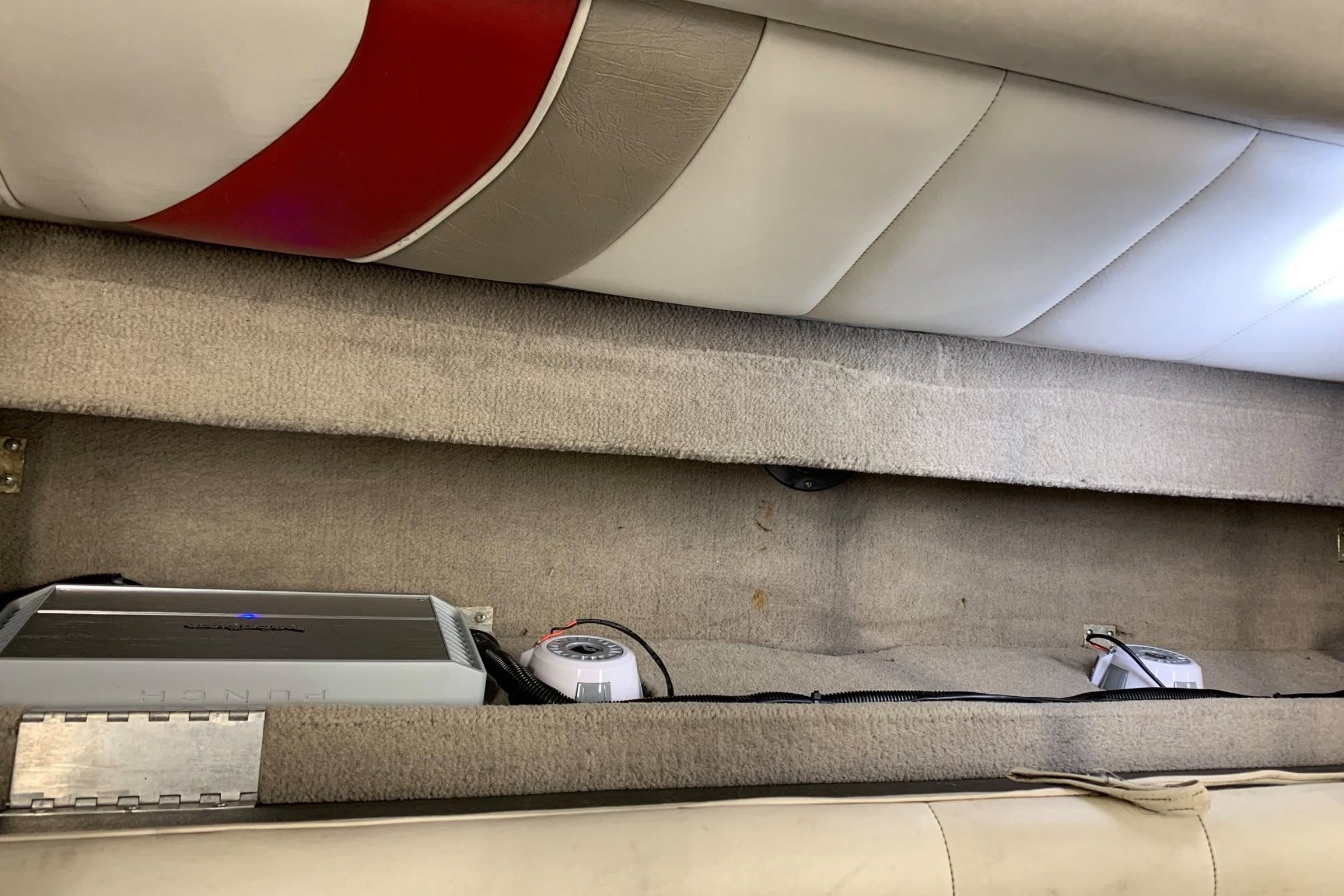
Where the amplifier lives on a boat is one of the highest-stakes long-term-reliability decisions in any marine install. Marine amps frequently run in poorly-ventilated compartments — helm bays, under-seat enclosures, dedicated electronics compartments — where heat builds and can’t escape the way it does in a car under-dash install. We pick placement deliberately: ventilation paths considered, heat-sink orientation aware of the compartment’s air movement, distance from engine compartments respected, and waterproof terminal protection at every connection.
Just as important: positioning to avoid bilge-water exposure, even on boats not equipped with auto-bilge systems. Water in a bilge isn’t an emergency until it reaches an amplifier — then it’s a complete rebuild. Proper amp placement on a boat assumes some water will get into the compartment over the life of the install and engineers around that assumption from day one.
Marine power planning is its own engineering layer, separate from the audio components themselves. We treat it that way. Cranking and house-bank battery separation matters — a properly engineered audio system runs off the house bank so a long playback session at anchor doesn’t compromise the start of the engine on the way back to the ramp. AGM vs. lithium choices, voltage-drop calculations on long cable runs from helm-area amps to stern speakers, and alternator charge-rate considerations all factor into the build before any speakers go in.
Battery isolators and charge relays handle multi-bank boats. Protective fusing at the battery and at each amp input is non-negotiable. We calculate total load for the way the boat actually gets used — cruise-day playback, sandbar anchor, or dockside extended playback — so the system supports the use case without accidentally draining bilge pumps, navigation electronics, or the engine-start circuit.
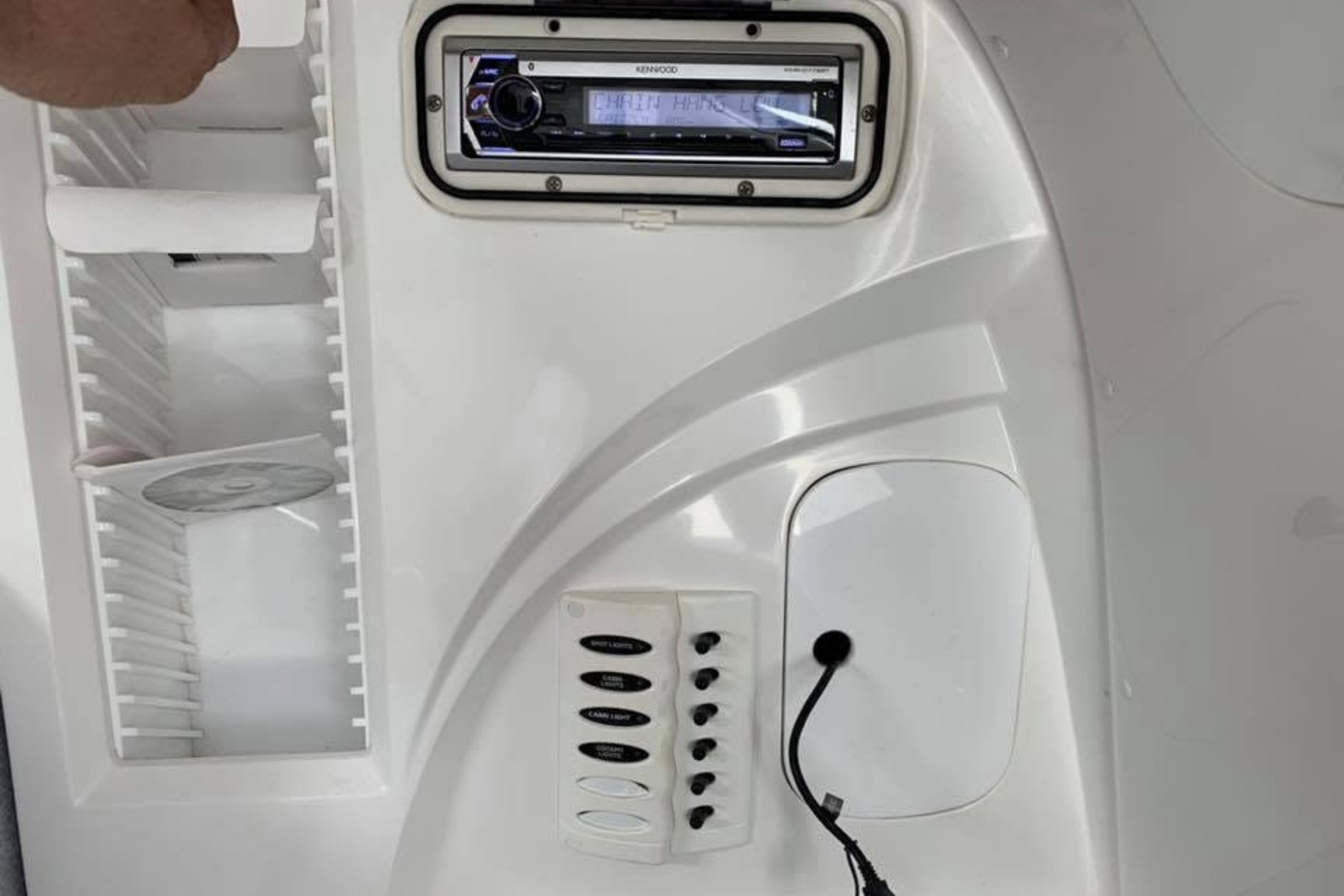
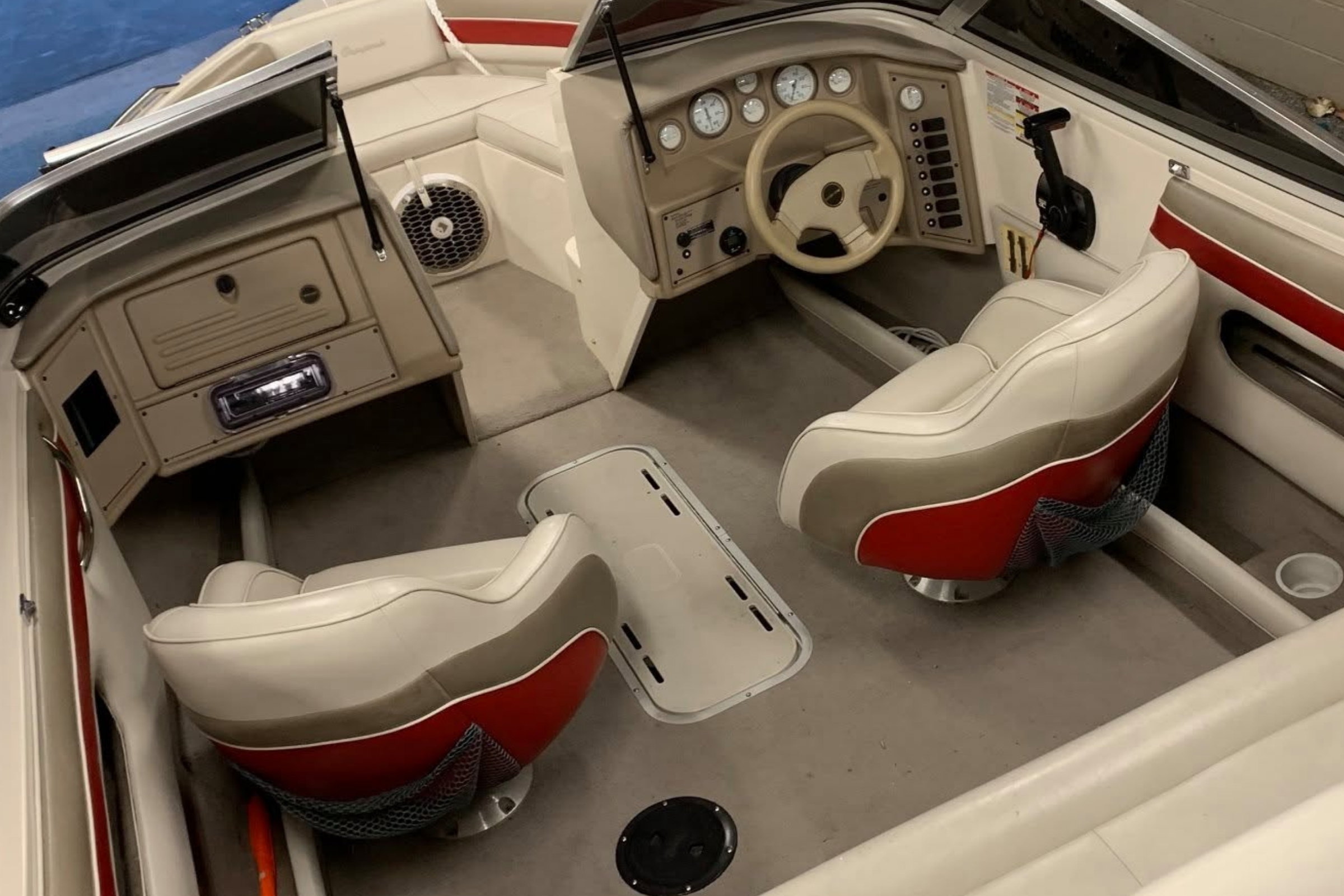
Most factory marine radios are upgradeable rather than rip-and-replace. Modern boat helms often run audio through the chart-plotter or MFD — Garmin, Simrad, Lowrance — and the smart move is integrating with the existing source rather than displacing it. NMEA 2000 audio source-switching, helm-pod auxiliary control retention, and steering-wheel-mounted controls all stay functional through an integration-first approach.
The decision is rarely binary. Sometimes the factory head unit is the right anchor and the build happens around it; sometimes the helm has to be reworked to accommodate a serious upgrade. We make that call boat by boat — what’s worth keeping, what’s not, why — and we walk through the reasoning during the consultation so you can make the decision with us.
Sturgess Customs sits in Lexington, about fifteen minutes from most of the major Lake Murray launches — Dreher Island, the Lake Murray Public Boat Ramp on SC-6, Bundrick Island, and Shull Island Park. Upper-lake launches near Newberry add a bit of drive. We know the lake: the typical fleet skews heavily toward pontoons and wake boats, with a meaningful fishing-boat presence and a sailboat community on the eastern end. The season runs roughly April through October, and launch-day reliability matters as the season opens — a system that works at the dock in March needs to still work at sandbar gatherings in August.
The audio profile most Lake Murray boaters actually want reflects how the lake gets used: cruise-and-anchor patterns, sandbar gathering audio that has to fight ambient noise without distortion, evening dockside playback that pulls minimum current from the house bank. We design around those use patterns, not around boat-show demo conditions. For lake-house customers who also have powersports vehicles or trailerable rigs in the mix, our powersports audio installs and RV audio upgrades cover the rest of the recreational fleet. Marine customers based closer to Columbia can also see our Columbia coverage for geo-specific orientation.
Wake-boat tower systems, pontoon helm builds, fishing-boat installs, sailboat cockpit integration, and full multi-zone yacht systems from recent projects.
A real marine-grade build holds up across multiple Lake Murray seasons — sun, spray, temperature swings, and dockside humidity all factored in from component selection through final mounting. Car-audio-on-a-boat shortcuts typically start showing problems within a season or two: cone discoloration, grille corrosion, head-unit moisture damage, hardware rust. The visible difference shows up around year two; the longevity difference shows up across the full ownership window.
Most factory marine systems are upgradeable. Head unit, speakers, amplifier — any of the three can be improved without replacing the others. Sometimes a full rebuild does make more sense, particularly on older boats or boats with non-modular factory installs. We make that call after looking at the existing system and your goals — the consultation determines whether integration or replacement is the right path.
The default is shop-based install at our Lexington location. On-water and dockside install scenarios are case-by-case — they depend on the build scope, the marina, and the access. We discuss those options during the consultation so the logistics are clear before the work starts.
Marine-grade components meet specific IPX ingress-protection and UV ratings and use corrosion-resistant materials (316 stainless hardware, UV-stable cone materials, sealed enclosures) throughout. “Weather-resistant” is a marketing term often applied to components that survive light rain but not sustained marine exposure. The difference doesn’t show up at install; it shows up in year two of ownership.
Properly engineered systems don’t — the build includes electrical-load calculation, house-vs-cranking-bank separation, and (where appropriate) alternator-charge-rate adjustments. The goal is audio that runs all day without compromising bilge pumps, engine starting, or onboard electronics. Specifics depend on your boat’s existing electrical architecture and your usage patterns; we work through those during the consultation.
Component warranties pass through directly from the manufacturers — each marine-grade brand carries its own terms. Installation workmanship is covered by the shop. We walk through specific warranty terms at the quote stage so you know exactly what’s covered before the build begins.
Have a marine-audio question we haven’t answered here? Reach out and we’ll work through it with you.
In-person consultations, consultative system design, and marine-grade build standards from the first sketch through the final install. Bring the boat by the shop or send us the details and we’ll spec the build with you.