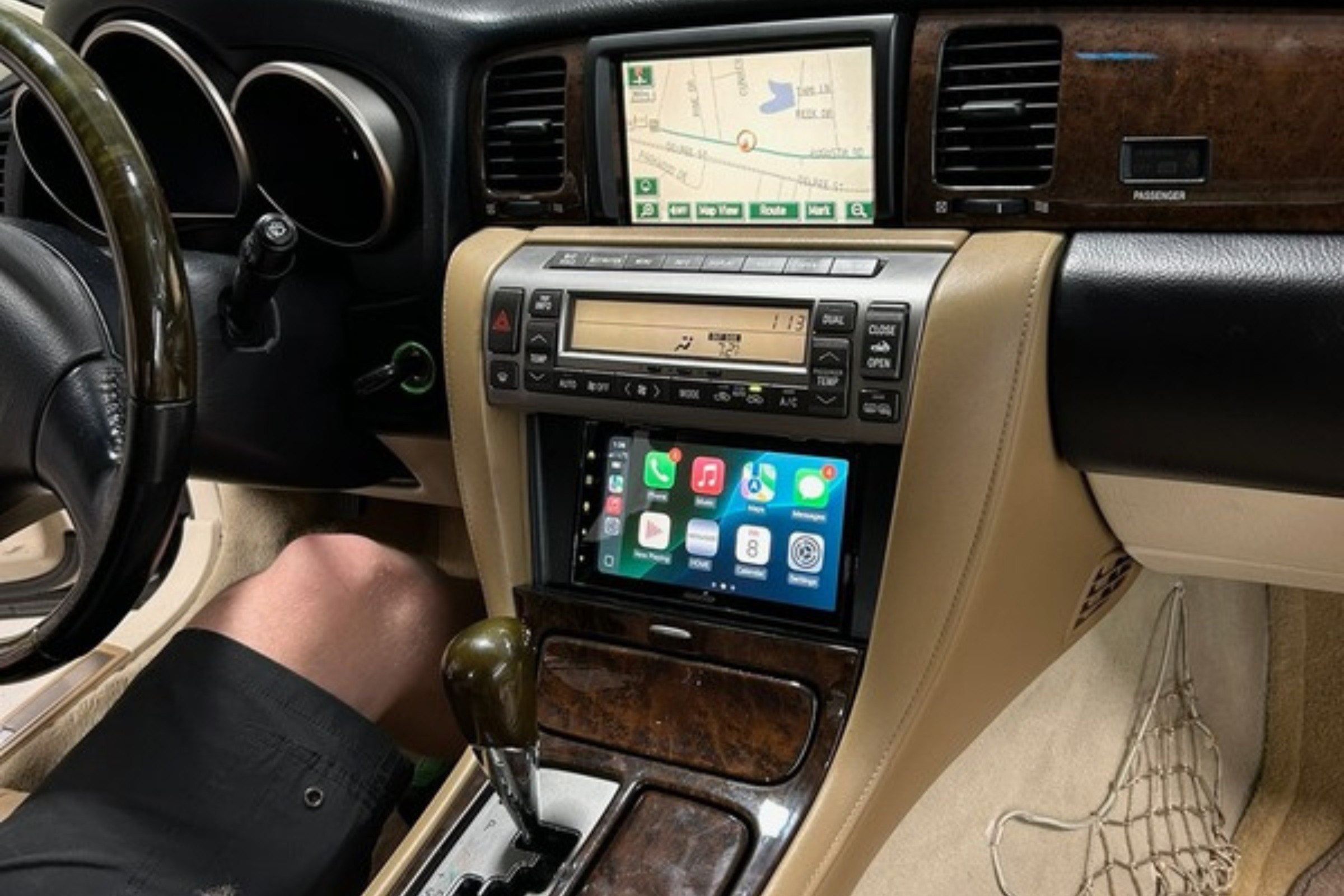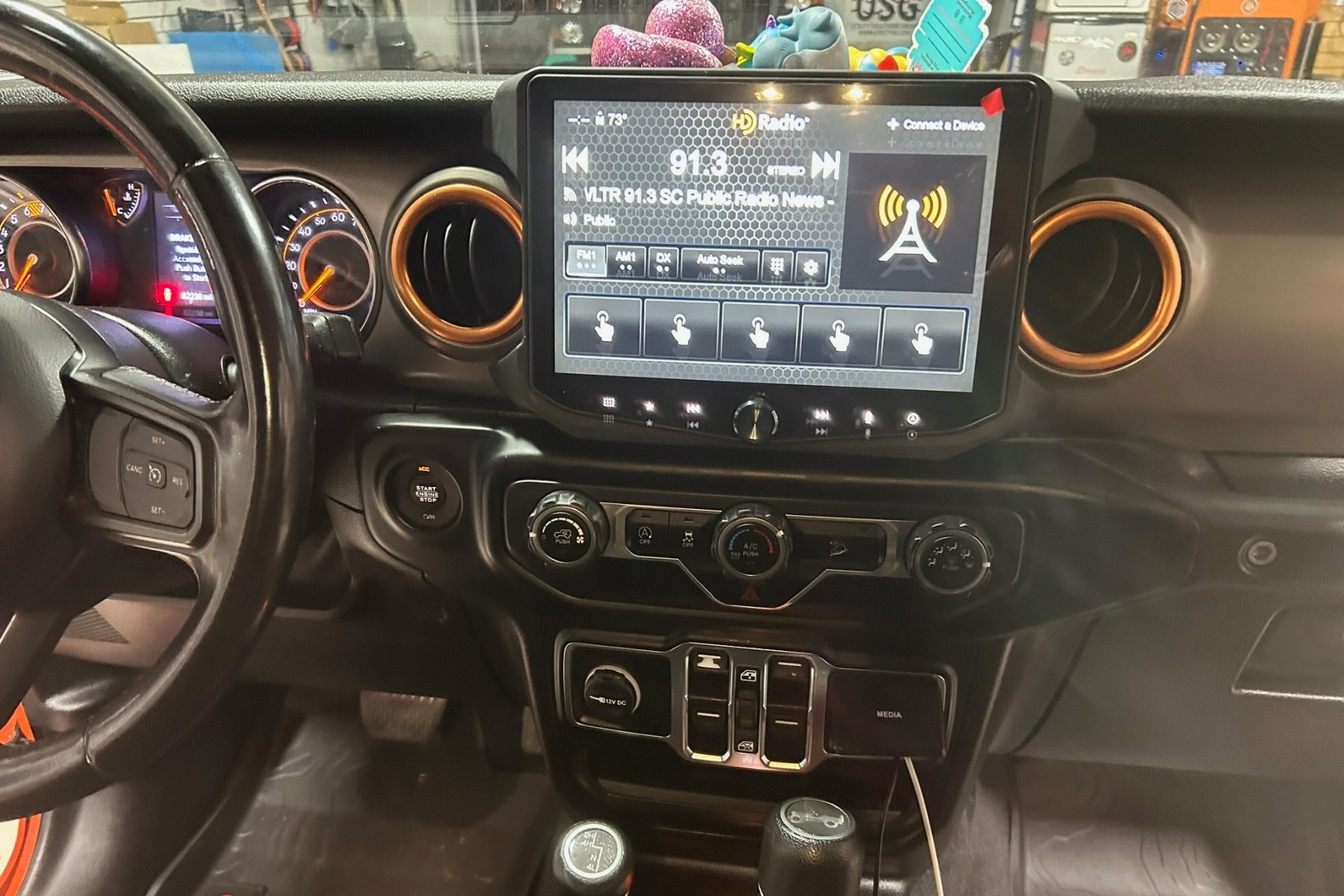
Most CarPlay and Android Auto retrofit requests start with the same situation: a vehicle you like, a factory radio that predates phone integration, and an upgrade path that feels like it should already exist. It does — but the right path depends on what’s in your dashboard today. We work in three install pathways, each chosen for your specific vehicle and existing system: keep the factory radio and integrate around it, replace it with an OEM-style touchscreen head unit, or convert factory wired CarPlay or Android Auto to wireless. The finished result reads as factory-correct, not aftermarket.
Compatibility shapes the right pathway. Below, the three install routes we use — organized by what’s already in your dashboard, not by what we’d like to sell you. We confirm which one fits your specific vehicle before quoting.
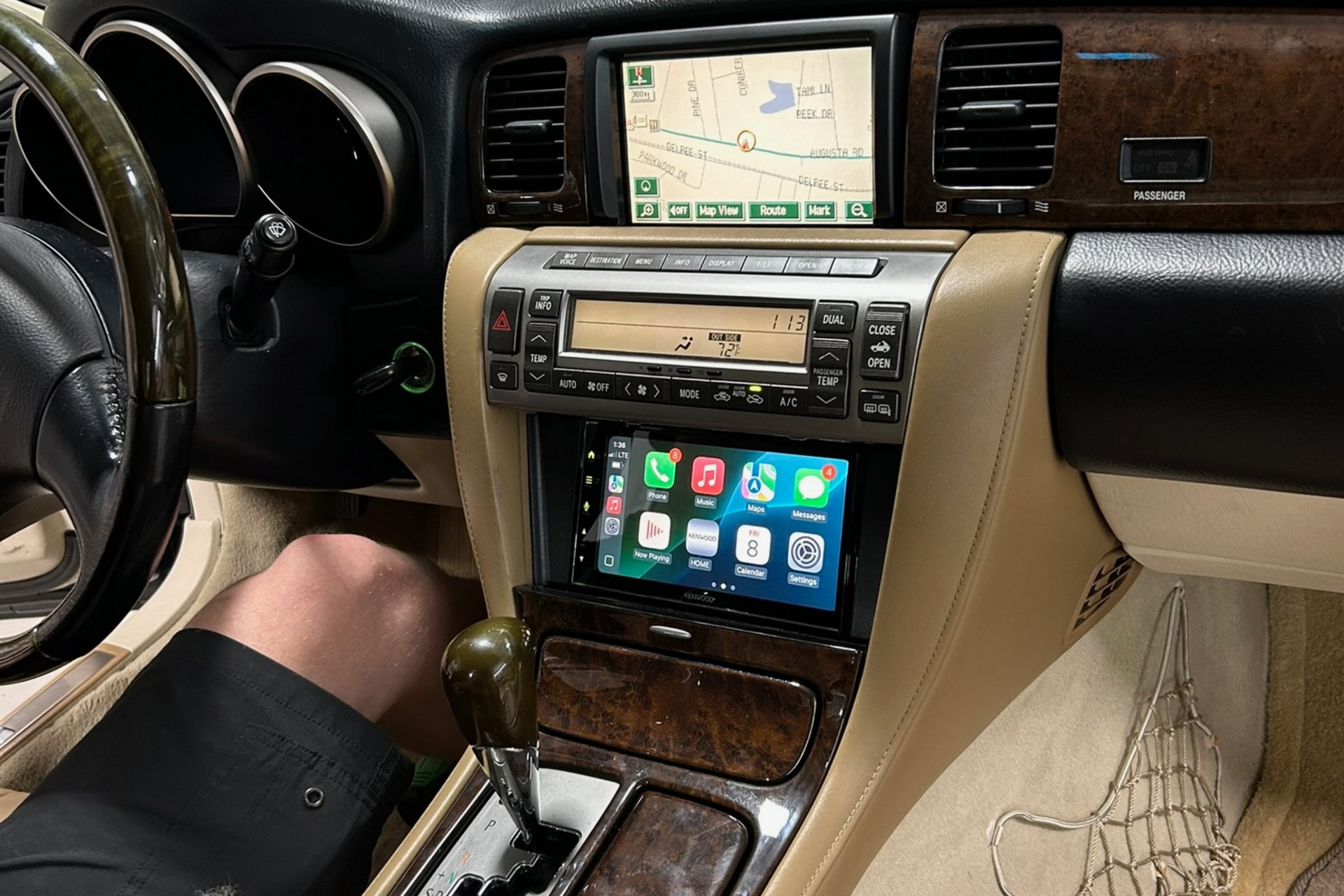
The first pathway works when your factory radio is mechanically and electrically intact and your vehicle has a known-compatible integration module available. We install the module behind the factory dashboard — the visible radio stays in place — and route CarPlay and Android Auto through your factory display. Audio continues through your factory amplifier and speakers, your steering-wheel controls stay live, and the factory features tied to the radio (backup-camera display, climate-panel coexistence, factory voice prompts) remain intact.
This pathway is where most factory-correct outcomes live. Many vehicles built within the last decade also support wireless CarPlay and Android Auto through factory-radio integration — your phone connects automatically when you start the vehicle, and you only plug in if you want to charge. For vehicles whose factory radio lacks Bluetooth altogether, the integration module typically adds Bluetooth and CarPlay/Android Auto in a single install.
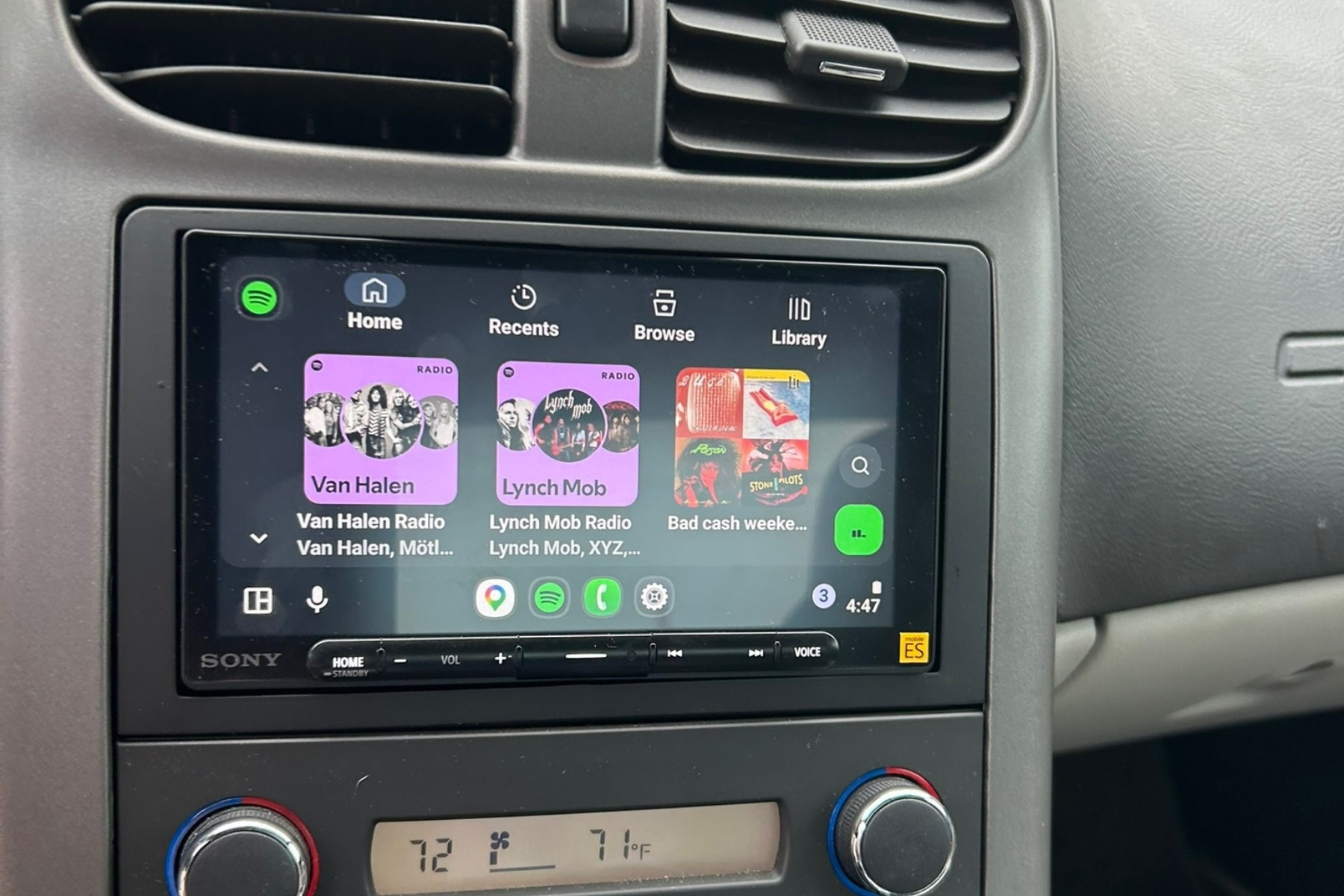
The second pathway applies when the factory radio is too old, too limited, or too tightly coupled to other vehicle systems to support an integration module cleanly. In that case, we replace the head unit entirely with a modern aftermarket touchscreen that includes CarPlay and Android Auto natively — wired, wireless, or both depending on the unit selected.
Dashboard fitment is the visible test of this pathway. We work with vehicle-specific dash kits that match your factory trim profile so the finished install reads as factory-correct rather than aftermarket — no protruding bezels, no visible gaps, no color mismatch. Steering-wheel-control retention modules keep your factory buttons functional with the new head unit. Backup-camera interface modules route your existing camera (factory or aftermarket) onto the new display. Factory amplifier interface modules preserve premium factory sound systems where present. Aftermarket touchscreen upgrades sit at the intersection of CarPlay/Android Auto retrofit and our broader head-unit and stereo installation work; if you’re considering a fuller audio upgrade alongside the modernization, both decisions get made together at the quote stage.
The third pathway is the simplest — and only applies to vehicles that already have factory wired CarPlay or Android Auto. In that case, we install a wireless adapter that converts the existing wired interface to wireless. Your factory radio doesn’t change, your factory display doesn’t change, your factory controls don’t change. The only difference is that your phone connects automatically and stays in your pocket or wireless charging pad instead of plugged into a cable.
This pathway is fast, vehicle-friendly, and unobtrusive. Reliability depends on the adapter selected — we install models with known stable Bluetooth and Wi-Fi handshake behavior, not the lowest-cost-online options that drop connections at highway speed. If you already have factory wired CarPlay/Android Auto and the daily cable connection is the only thing you’d change, this pathway is usually the right answer.
Wired and wireless solve the same problem differently. Use the comparison below to identify which fits your daily driving — and remember that Pathway 01 and Pathway 02 can each be configured wired, wireless, or both, while Pathway 03 is wireless by definition.
Choose wireless if your phone is rarely in your hand at the dash and you want the cable gone. Stay wired if rock-solid reliability through the full drive matters more than the cable convenience, or if your typical drive doesn’t include a charging need.
The integration claim earns its weight by inventorying what doesn’t change. Below, the four factory components and features we preserve during every CarPlay and Android Auto retrofit — each verifiable at the wheel, on the screen, and in daily driving.
Volume, track skip, voice activation, phone answer and decline — the factory buttons on your steering wheel stay functional after the retrofit. This is the most visible operational test of a clean integration: the controls you’ve used for years still do what they always did, only now they’re talking to CarPlay or Android Auto instead of (or alongside) your factory audio source. On Pathway 1, retention is structural — the integration module routes through the factory radio’s existing control logic. On Pathway 2, a steering-wheel-control retention module bridges your factory buttons to the new head unit. Either way, you don’t lose what you already used.
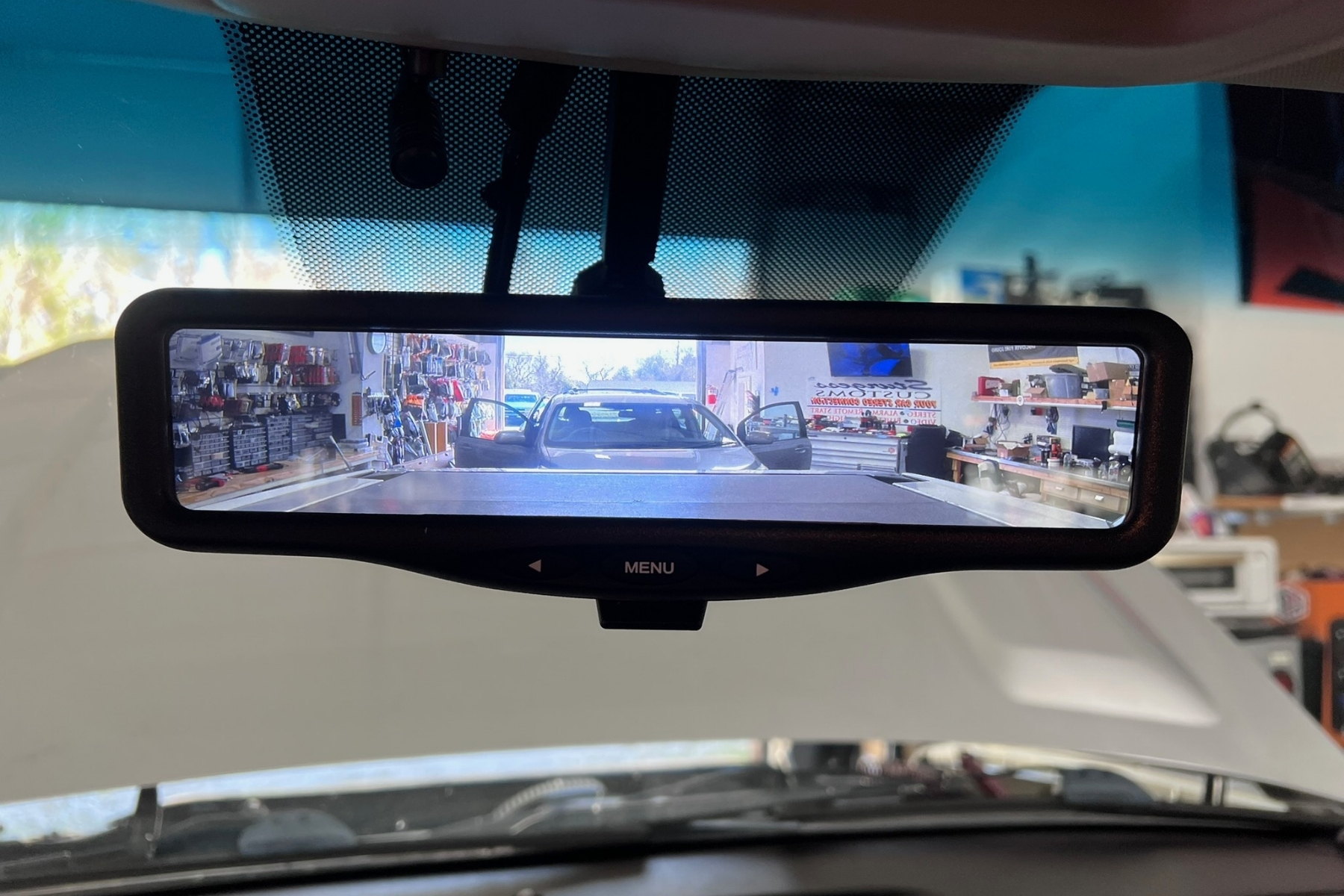
Your factory backup camera continues displaying on the factory or aftermarket head unit after the retrofit. This matters operationally and structurally: modern retrofits cannot disrupt safety-feature continuity, period. On Pathway 1, the factory display and factory backup-camera relationship remains untouched — the integration module sits beside that chain, not in it. On Pathway 2, a backup-camera interface module routes your existing camera signal onto the new head unit, with the rear-gear-shift trigger preserved so the camera appears automatically when you shift into reverse. Aftermarket backup-camera additions, factory-camera signal cleanup, and broader safety-system integration extend into our dedicated backup camera and vehicle safety integrations.
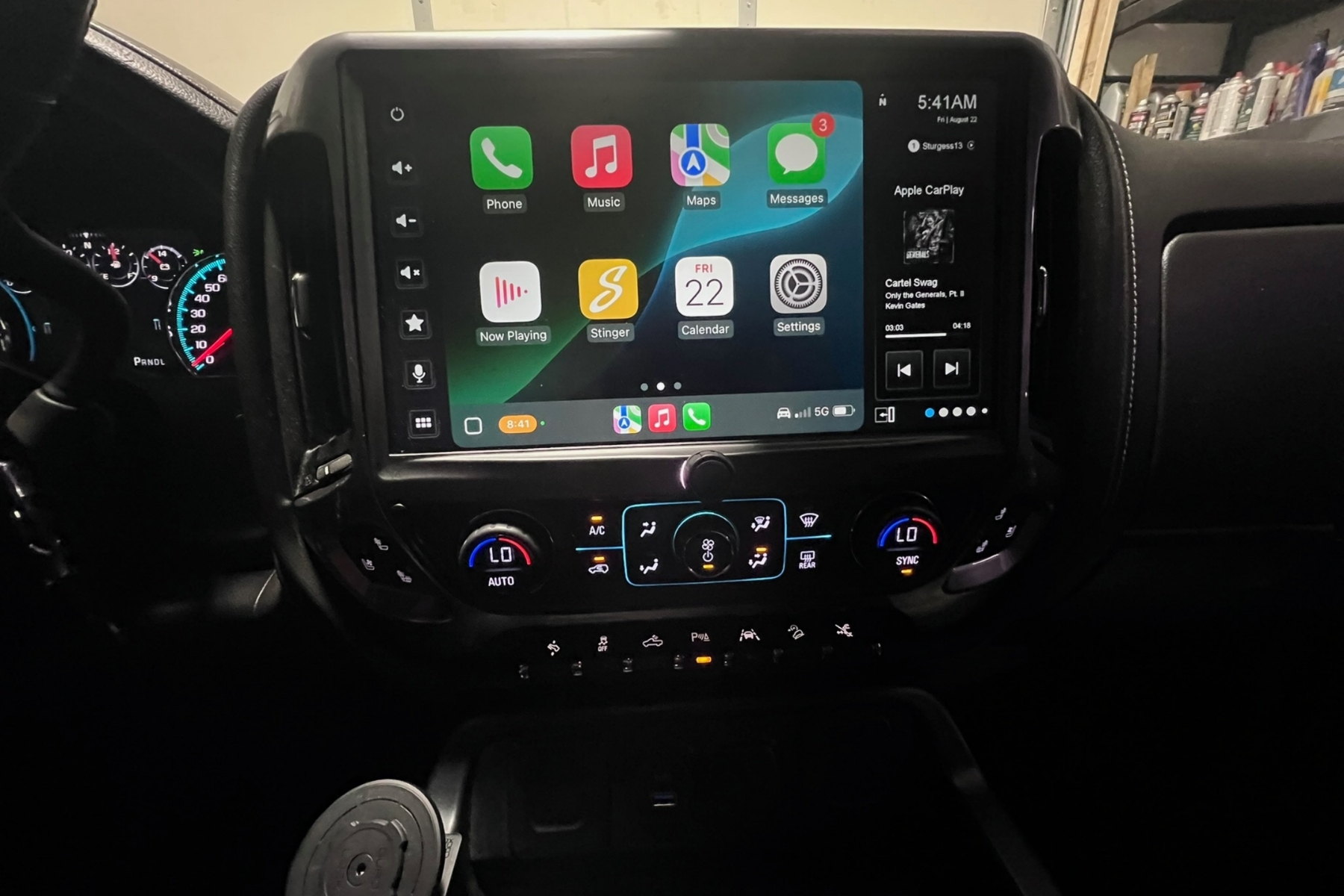
On vehicles that combine the infotainment display and the climate-control panel into one unit — common on many GM, Ford, Stellantis, and import platforms from the last decade — the retrofit preserves the climate controls intact. CarPlay and Android Auto take their place on the infotainment side; the dual-zone temperature, fan, heated-seat, and defrost controls stay where they were, doing what they did. We don’t override factory display functions to make room for the integration; we work alongside them. The dashboard still operates the way you learned it.
On Pathway 1, CarPlay and Android Auto audio routes through your factory radio, factory amplifier, and factory speakers — the same audio path your factory radio always used. We don’t bypass or replace your factory audio chain to add phone integration. This matters most on vehicles with premium factory audio systems (Bose, Harman/Kardon, JBL, branded packages) where the factory tuning is part of what you bought. CarPlay/Android Auto becomes a new source in your existing audio system rather than a parallel audio chain — and the factory sound signature you’re used to stays the factory sound signature.
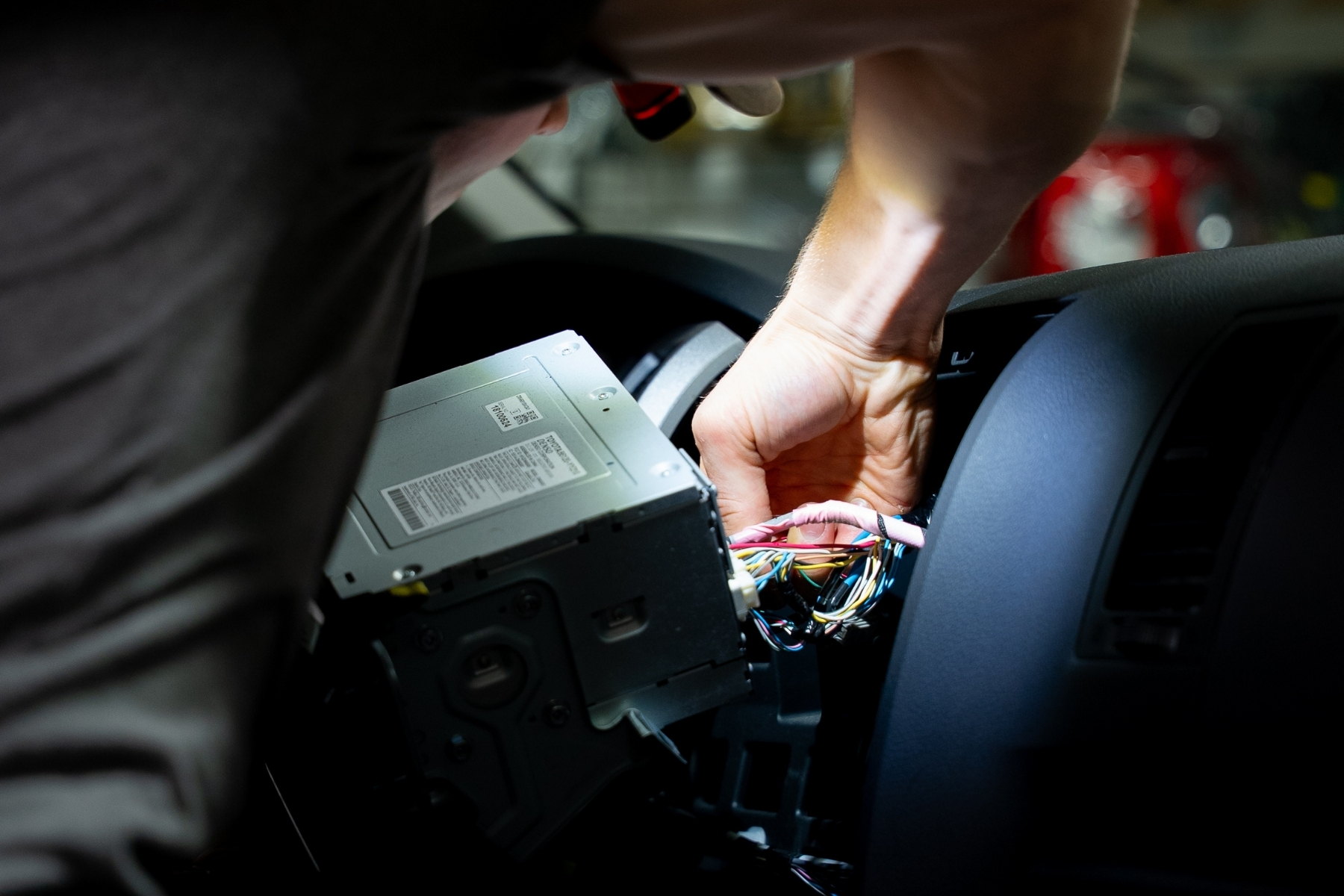
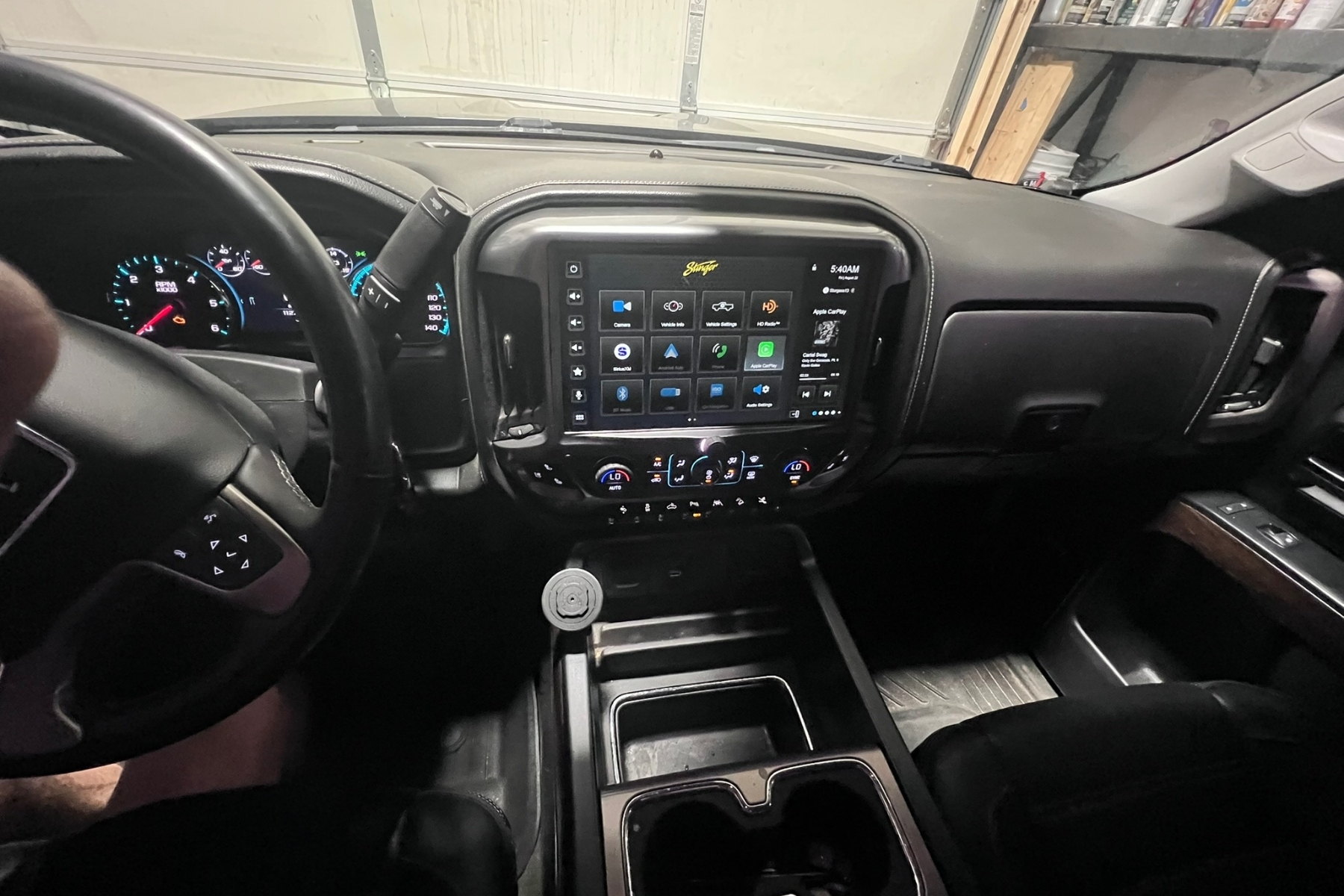
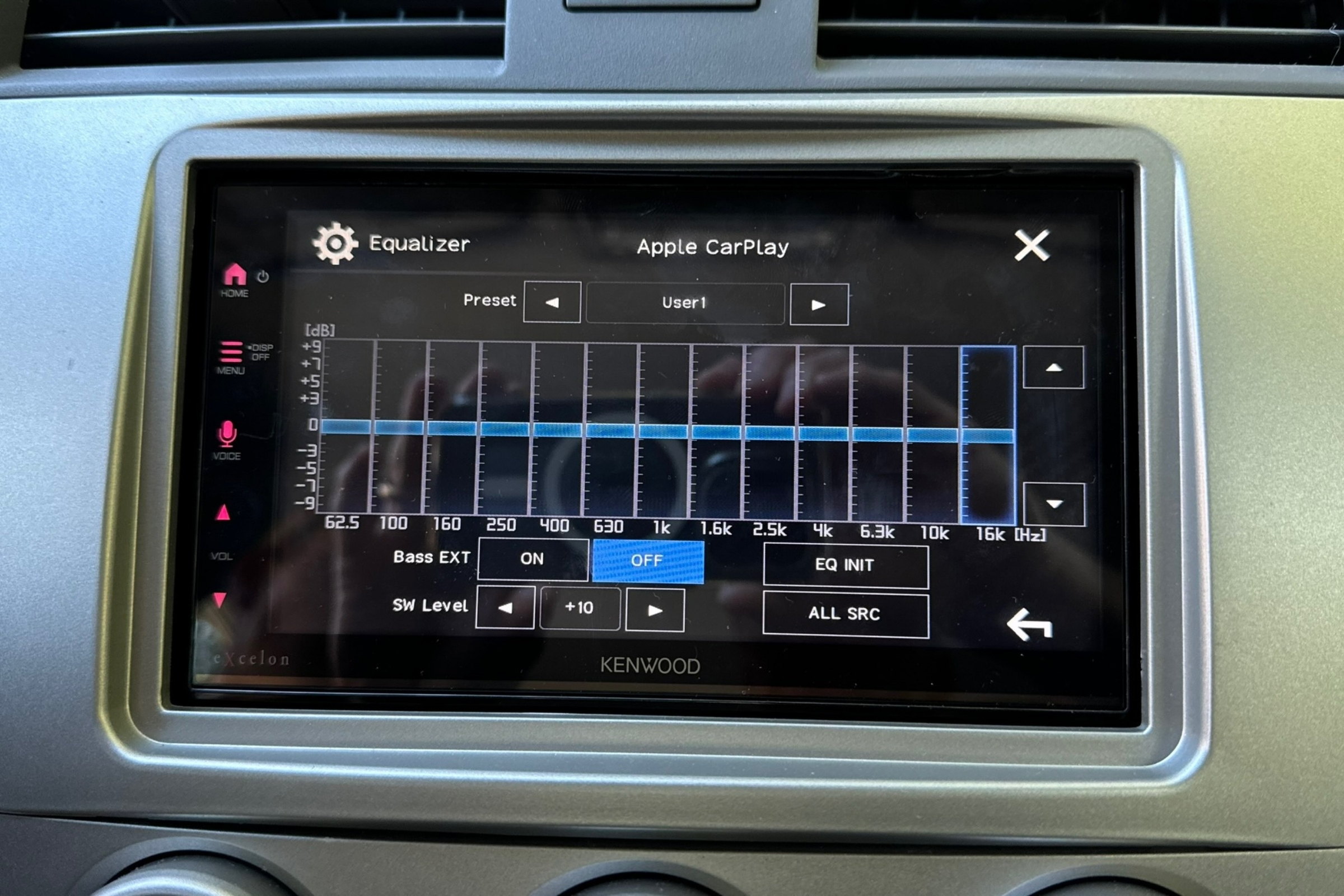
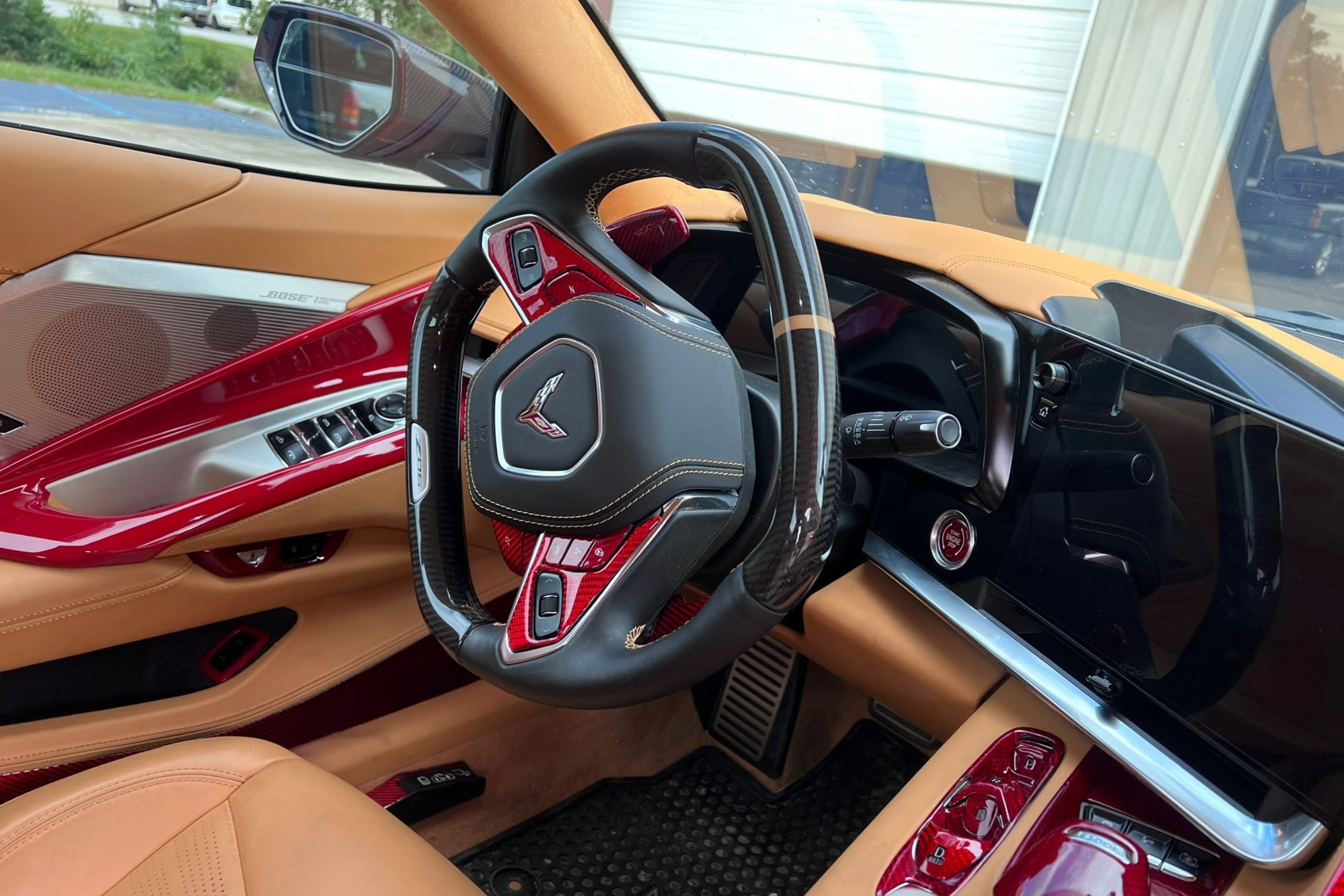
Real customer vehicles with CarPlay and Android Auto retrofits across the three pathways — factory-radio integration, aftermarket touchscreen upgrades, and wireless adapter conversions.
Often, yes — through Pathway 1 (Factory Radio Integration) above. Compatibility depends on your specific vehicle year, make, and model, and on whether a known-compatible integration module exists for your factory radio. We confirm compatibility per vehicle before we schedule the install. If integration isn’t available for your factory radio, Pathway 2 (Aftermarket Touchscreen Upgrade) is usually the route.
Not always. If your factory radio supports integration modules (most factory radios from the last 10–15 years on common platforms), we can add CarPlay and Android Auto without replacing the visible radio — see Pathway 1. If integration isn’t possible or isn’t the right fit, Pathway 2 replaces the head unit with a modern aftermarket touchscreen. We make the call per vehicle and walk through the trade-offs at the quote stage.
Yes. Pathway 1 preserves them structurally (the integration module routes through the factory radio’s existing control logic). Pathway 2 preserves them through a steering-wheel-control retention module. Volume, track skip, voice activation, and phone answer/decline all continue working with CarPlay or Android Auto.
Yes. On Pathway 1, the factory backup camera and factory display continue working as they did. On Pathway 2, a backup-camera interface module routes your existing camera signal onto the new head unit with the rear-gear-shift trigger preserved. If you’re considering camera upgrades or adding additional safety integrations alongside the CarPlay/Android Auto retrofit, our backup camera and vehicle safety integrations cover those decisions in detail.
Often, yes — but it depends on your vehicle and the pathway. Many vehicles built within the last decade support wireless CarPlay/Android Auto through factory-radio integration (Pathway 1). Most modern aftermarket touchscreen head units include wireless natively (Pathway 2). Vehicles that already have factory wired CarPlay/Android Auto can convert to wireless through a wireless adapter (Pathway 3). We confirm wireless compatibility per vehicle before quoting.
We evaluate compatibility per vehicle rather than maintain a fixed support list — vehicle support changes as manufacturers release new integration modules and as adapter compatibility shifts. Send us your year, make, model, and trim and we’ll confirm which pathway fits and what the install scope looks like before scheduling.
We cover installation workmanship on every retrofit. Component warranty terms (head units, integration modules, wireless adapters, retention modules) follow the manufacturer’s terms for each specific product installed. We walk through warranty specifics at the quote stage so you know what’s covered before the install.
We’ll confirm what works for your specific vehicle, walk through the pathway that fits, and quote the install before any work begins. Most CarPlay and Android Auto retrofits reach the install bay within a few business days of quote acceptance — most complete in a single day.