
Hertz-authorized installs for fairing, saddlebag, and tour-pak audio across South Carolina — built for the way you actually ride.
We’re one of few Hertz Authorized Dealers in South Carolina for Harley-Davidson audio — and the credential matters because Hertz’s Powersports and Marine speaker lines are engineered for the conditions Harleys actually live in. Motorcycle audio isn’t car audio in a tougher housing. Engine noise, wind noise, helmet attenuation, road vibration, and weather exposure are constants, not edge cases, and the build has to account for each of them from the first speaker selection through the final mounting decision. Our work covers the speaker zones and platform families documented below.
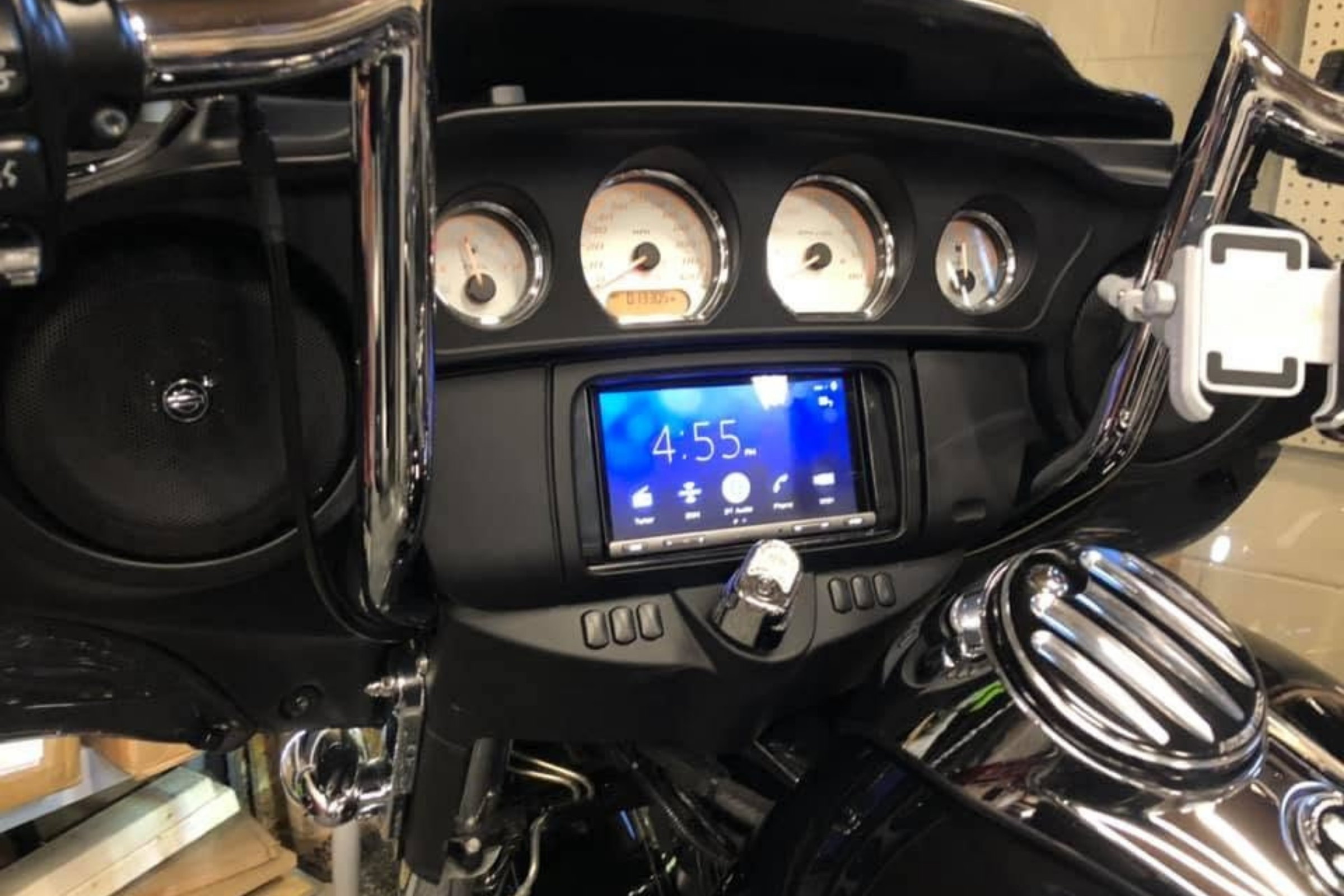
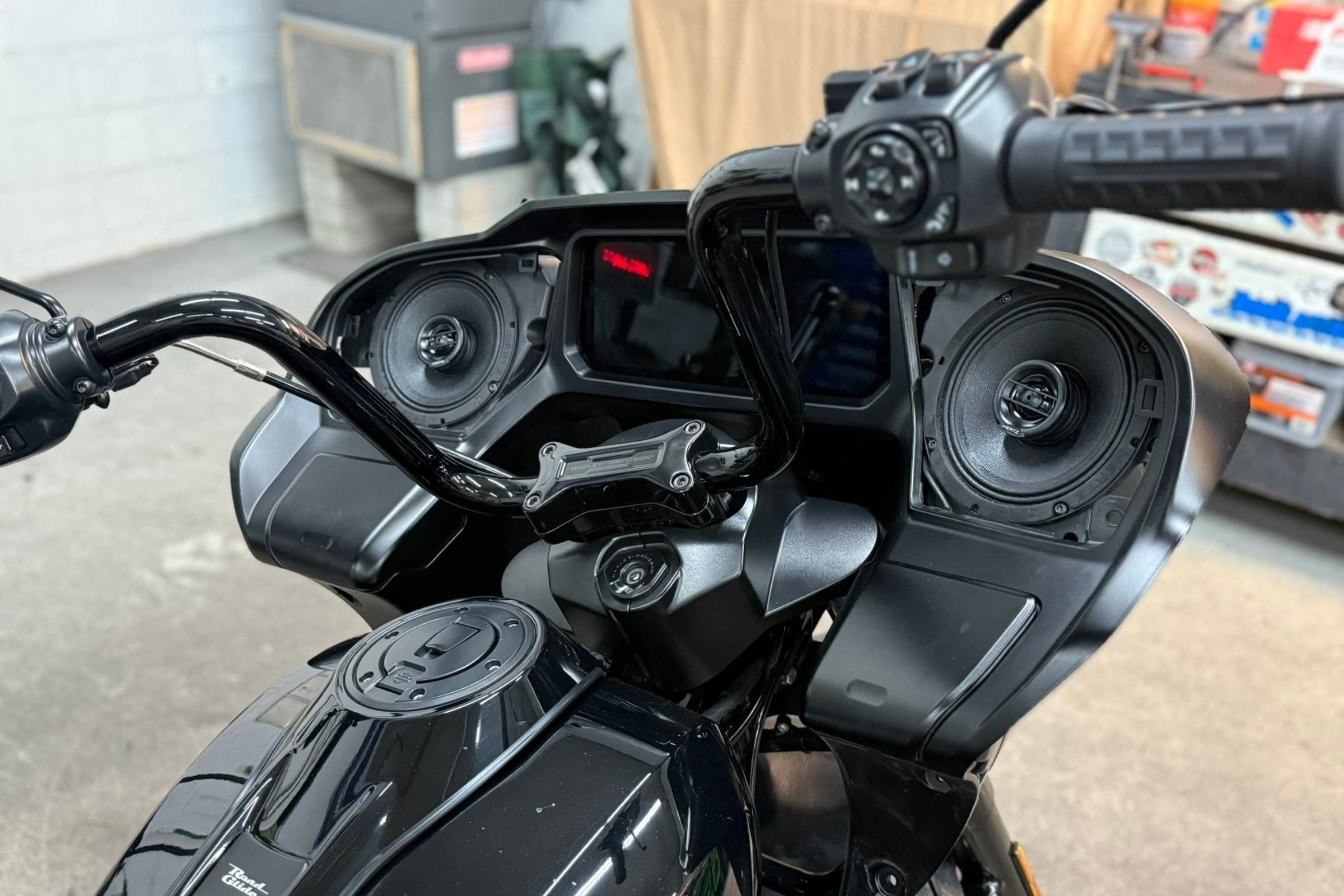
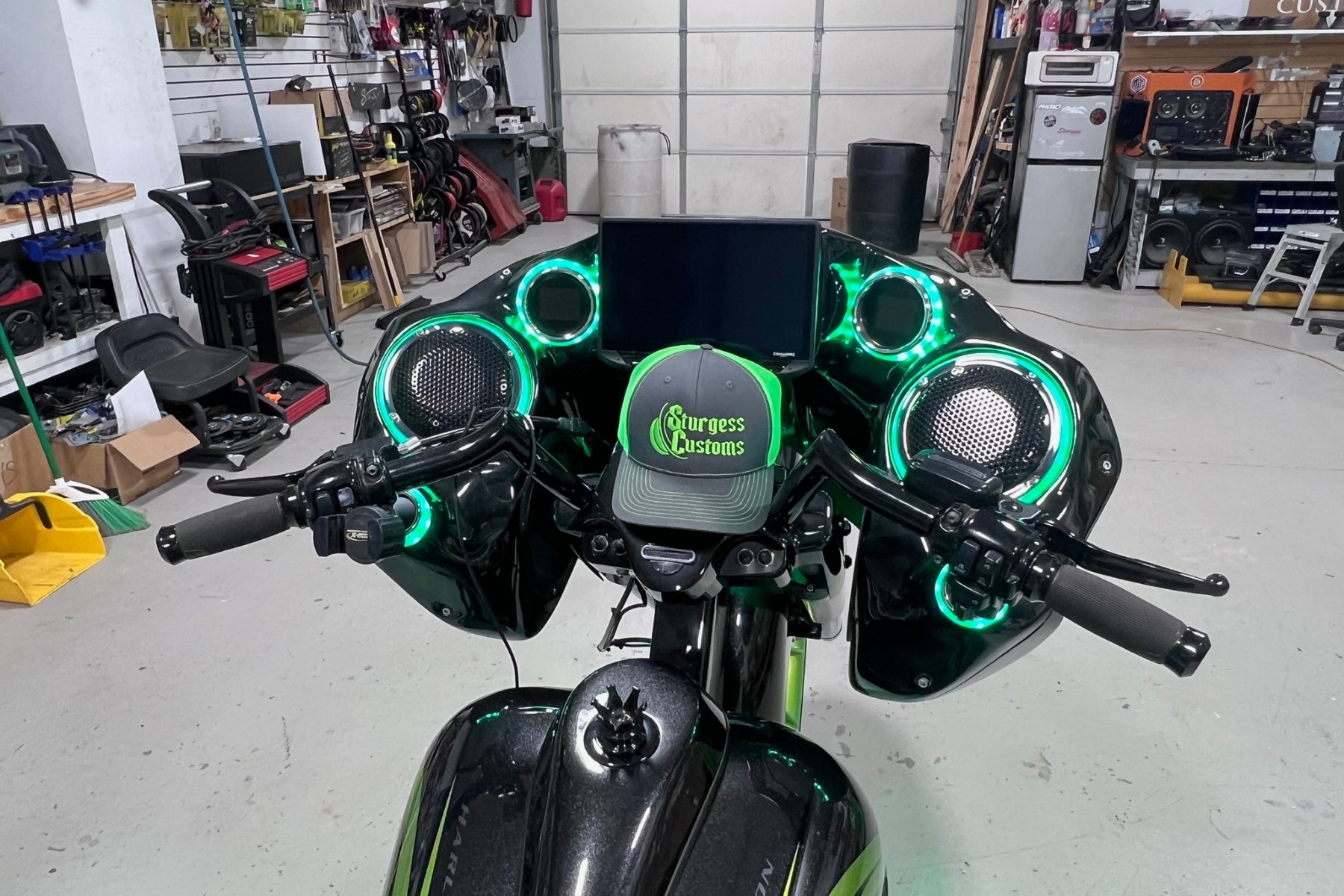
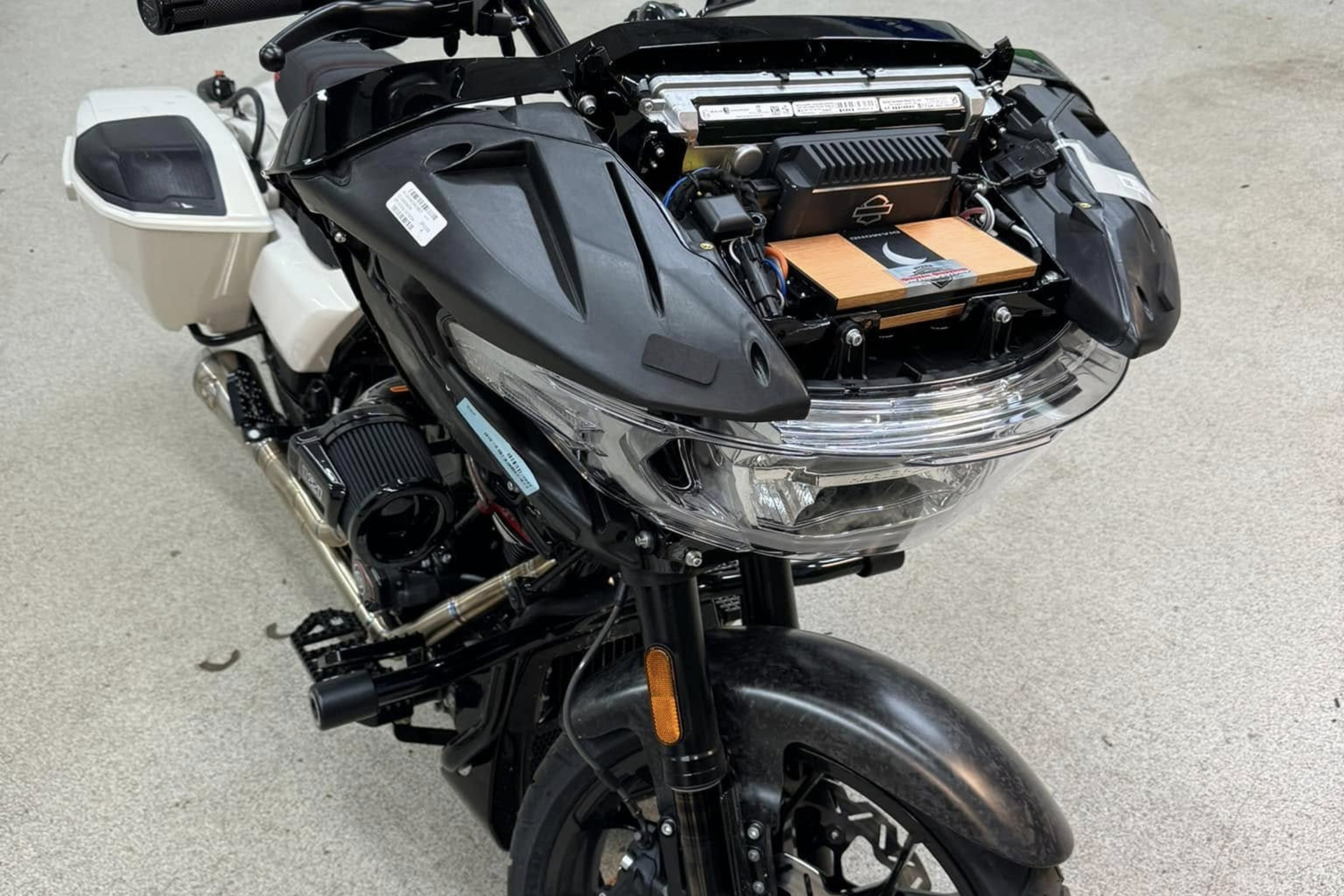
The fairing is the speaker zone closest to the rider’s helmet, which makes it the foundation of any Harley audio build. Factory Boom! Box GT fairing speakers do real work at lower speeds, but they have a ceiling — once highway wind and engine noise climb, factory speakers lose clarity at exactly the moment riders need it most. We install both factory upgrades and full aftermarket replacements, including Hertz Mille Pro and Hertz Powersports lines, calibrated to project clean mid-bass and treble through the rider’s helmet position at sustained highway speed.
Fairing geometry matters. Batwing fairings on Street Glide and Electra Glide platforms, split fairings on Road Glide, and mid-fairings on other baggers each present different mounting depth, baffle volume, and projection angle. We measure the fairing per platform, fabricate spacers or modify the fairing housing where component speakers need deeper mounting, and verify that the finished install clears the inner fairing structure on every steering input. The result is fairing audio that performs the same at 75 mph with a full-face helmet on as it does in the driveway.
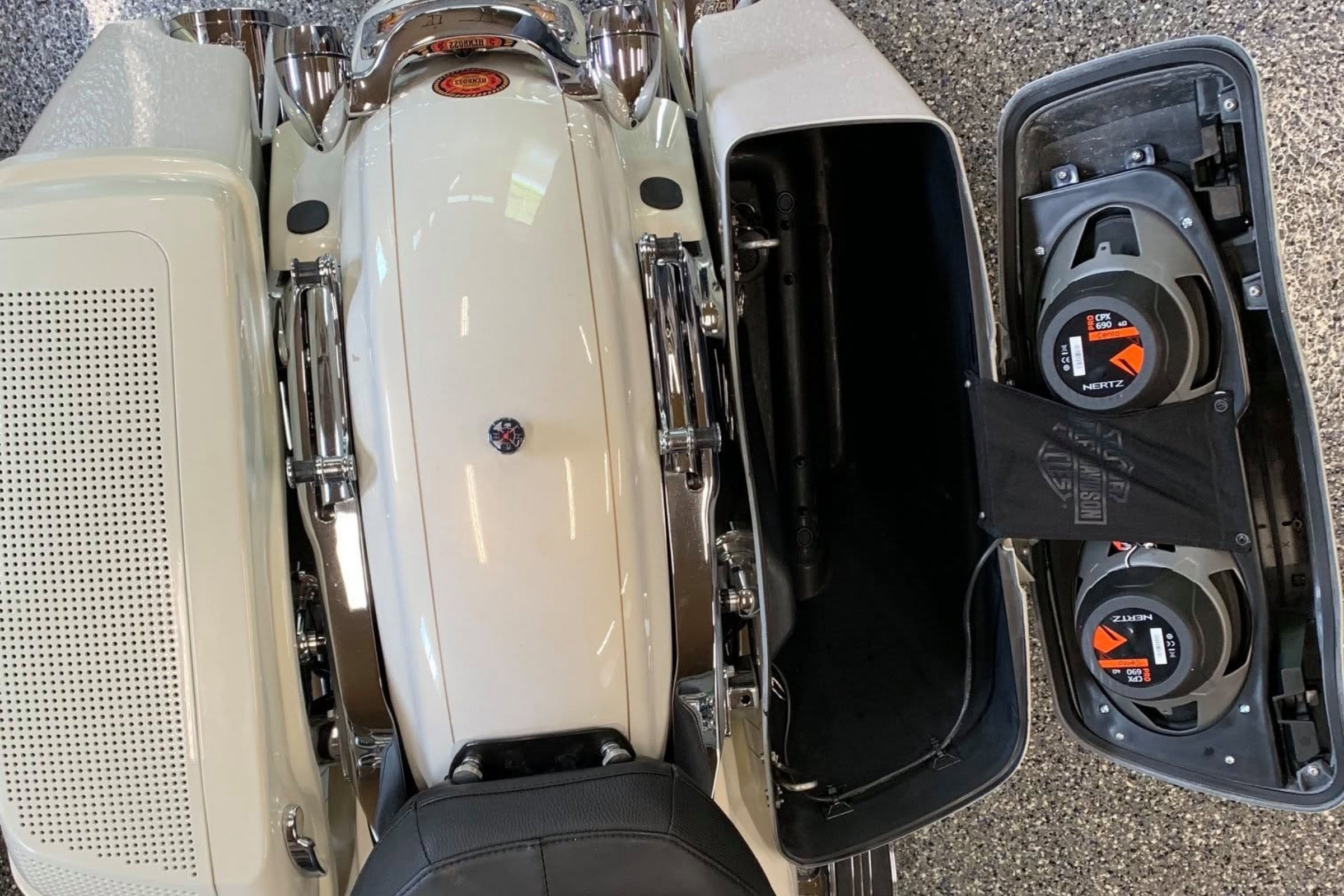
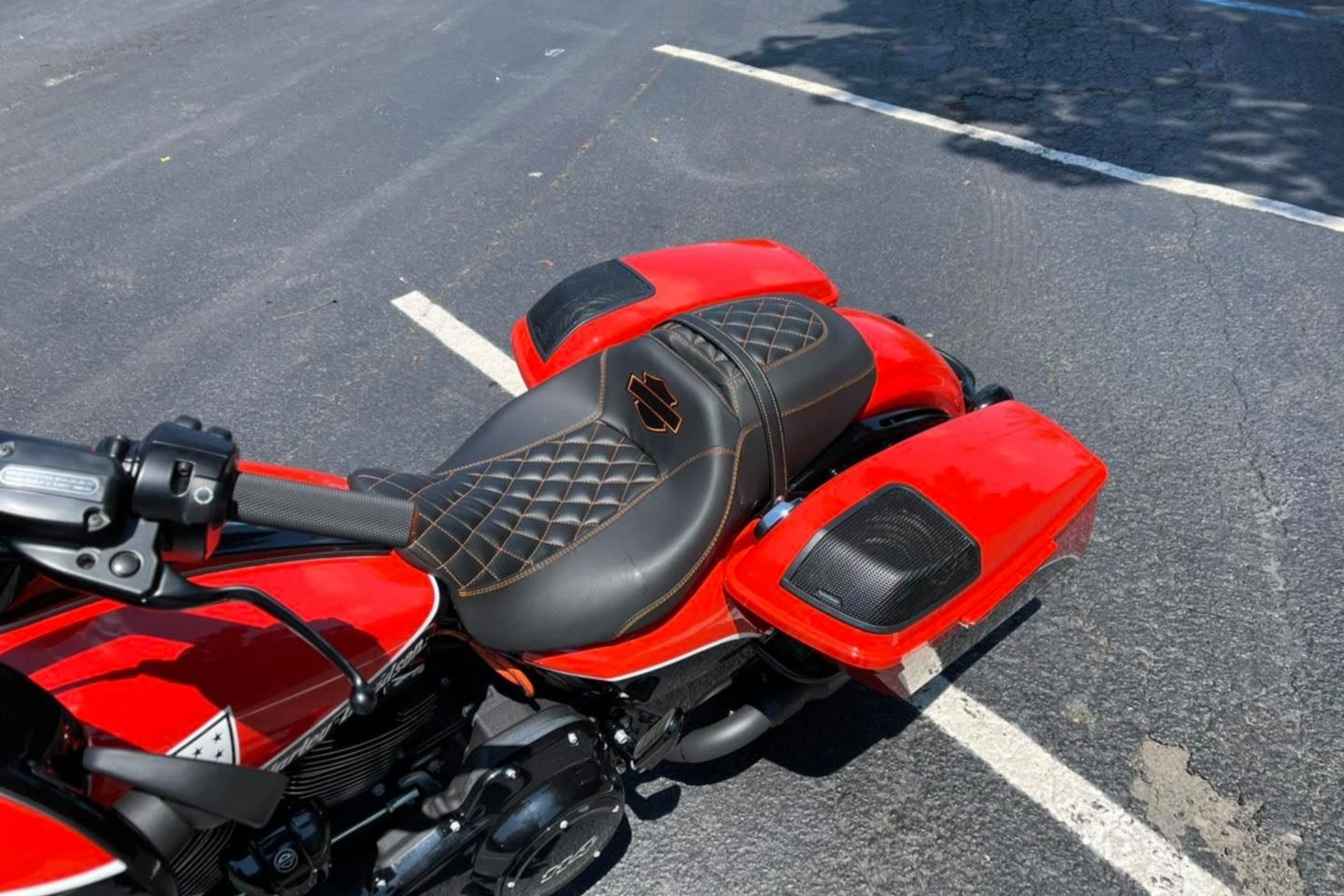
Saddlebag speakers fill in the audio behind the rider, support pillion-passenger listening, and balance the system’s overall sound stage on touring builds. We install lid-mounted speakers as the standard configuration — visible cutouts on the saddlebag lid with sealed mounting hardware — and internal-baffle installs for riders who want the system hidden or for premium builds where speaker pods sit inside the bag’s frame structure.
Two engineering constraints govern every saddlebag install. The first is vibration tolerance: saddlebag mount points transmit engine vibration through latches and brackets at frequencies that destroy car-grade speakers — Hertz Powersports drivers are engineered for this specifically, and isolation grommets at every mounting point reduce the load further. The second is weather: saddlebags experience direct rain, road spray, and trailer-transit exposure, so every cutout is sealed correctly, gaskets are selected for the speaker, and saddlebag latch integrity is verified after the install so the bag still closes tight and stays watertight. Touring and cruiser saddlebags get the same engineering attention; the differences are in mount-point geometry, not in standards.
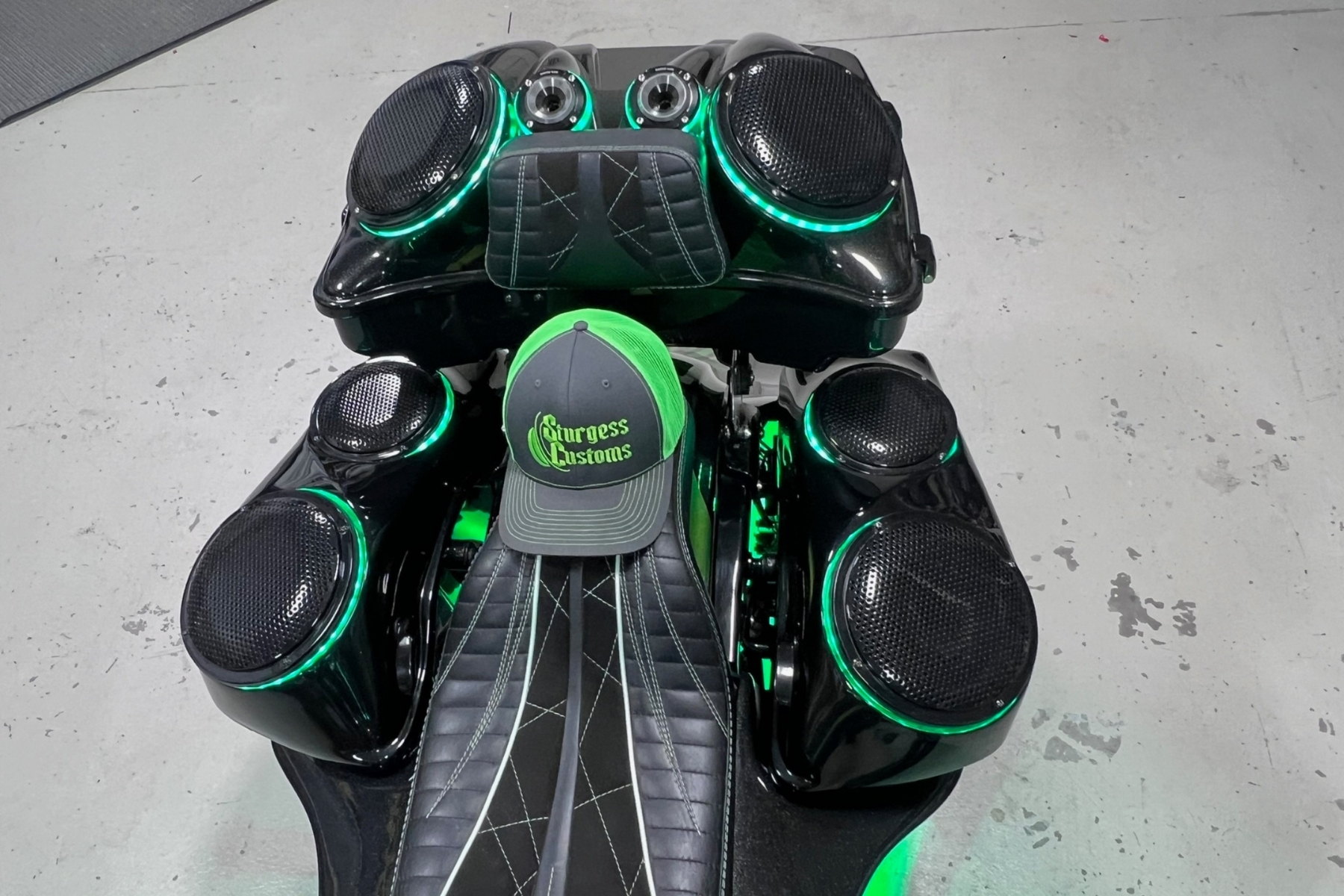
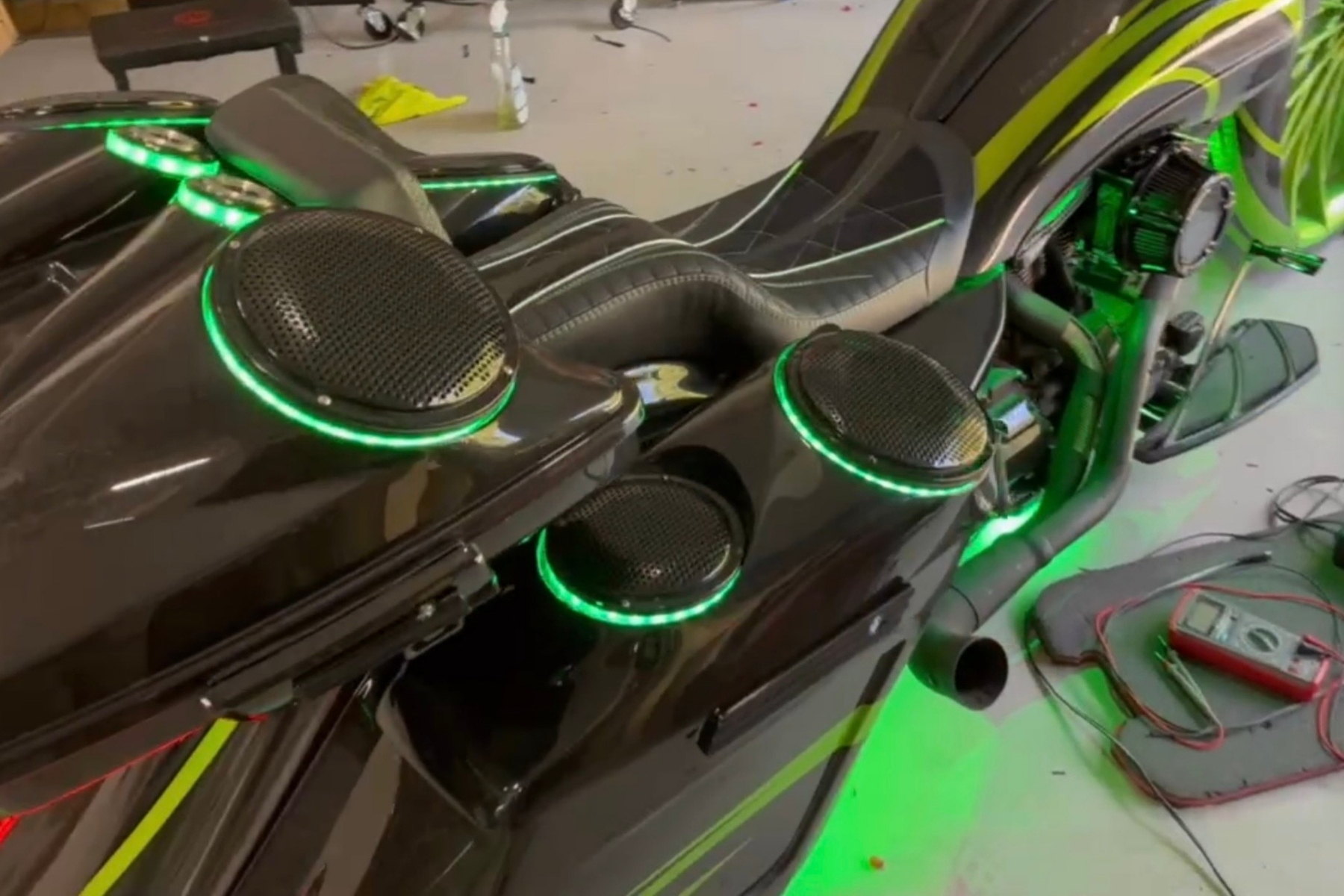
Tour-pak speakers complete the multi-zone audio system on touring builds and place audio directly behind the rider and passenger seats. Lid-mounted installs project audio forward toward the seating positions — the most common configuration. Internal-baffle installs project downward or rearward for builds where the lid stays clean and the speakers fire through the tour-pak’s interior structure. Either way, the tour-pak speakers complete the soundstage that fairing speakers start and saddlebag speakers fill in.
Two practical constraints shape tour-pak speaker work. Weight matters — Harley tour-pak lids have load tolerances for lid-mounted accessories, and speaker hardware, mounting baffles, and any associated wiring runs all count toward that budget. Weather exposure matters more here than anywhere else on the bike — tour-paks face full rain, sun, and trailer-transit exposure with no fairing or saddlebag shielding. Every cutout is weather-sealed, every speaker is spec’d for full marine-grade or powersports-grade exposure tolerance, and CVO and aftermarket tour-pak compatibility is verified before any modification work begins.
The cross-cutting engineering that separates a real Harley install from a “car install on a motorcycle” — applied on every build, regardless of speaker zone.
Highway-speed audibility is the design problem every Harley audio build solves for. The acoustic environment at 70 mph isn’t subtle: V-twin engine noise sits as a constant baseline, wind noise climbs roughly proportionally to speed and dominates above 50 mph, and helmet attenuation changes the picture again — full-face helmets cut high-frequency content the most, half-shells let more in, modulars sit somewhere between. None of those conditions exist in a driveway, and a system designed in a driveway will disappoint at speed.
We engineer for the moving target. High-output speaker selection (with peak SPL capability that matters more than RMS averages for rider use), real amplifier headroom (so the system isn’t constantly running at clip), and DSP tuning calibrated to rider head position and helmet acoustics. We tune for the bike, the rider’s helmet style when known, and the cruising speed the rider actually uses — not for the workbench. The honest standard is audio that sounds the same at 75 mph with a helmet on as it does at idle.
V-twin engines produce vibration profiles that destroy speakers not engineered for them. Mount points on fairings, saddlebags, and tour-paks all transmit those frequencies into speaker hardware — and car-grade drivers, designed for the relatively quiet engine bay of a passenger vehicle, develop cone fatigue, voice-coil rub, and premature driver failure when subjected to sustained Harley vibration. Riders who’ve installed car-grade speakers on previous bikes typically know exactly what this failure mode looks like.
The fix is specification, not workaround. Hertz Powersports and Hertz Marine lines are engineered for vibration profiles that overlap with marine engines and on-road Harley use — driver suspension design, cone-fatigue resistance, and voice-coil mounting are all spec’d for sustained vibration tolerance. The install adds anti-vibration mounting hardware throughout: isolation grommets at every speaker mount point, sealed mounting hardware appropriate to the saddlebag latch, tour-pak lid, or fairing geometry. The combination — vibration-tolerant drivers plus vibration-isolated mounting — is the difference between speakers that last multiple riding seasons and speakers that fail in year one. The full Hertz Marine and Powersports lines live on our authorized brands page.
Where the amplifier lives on a Harley is constrained by the bike’s compartment geometry, not just by performance. Touring bikes offer under-seat bays, tour-pak interiors, saddlebag interiors partitioned from gear storage, and fairing-internal compartments on some models. None of those spaces are designed for amplifiers; all of them have to accept one cleanly. Class D amplifiers, with their compact chassis and high efficiency, are the standard pick for Harley work because they fit the spatial constraint without compromising output.
Three install disciplines turn placement into a finished build. Heat management — confined motorcycle compartments don’t ventilate the way a car under-dash space does, so amp orientation, surrounding airflow, and distance from heat sources all factor into placement decisions. Weatherproof terminal protection — most on-bike compartments aren’t fully sealed, so terminal covers, dielectric grease at connections, and routing that avoids low points where water can pool all protect the install from a downpour or a salt-treated road. And wiring routing along frame channels, fairing-internal pathways, and saddlebag transit routes — motorcycle wiring runs are not car wiring runs; they require their own discipline.
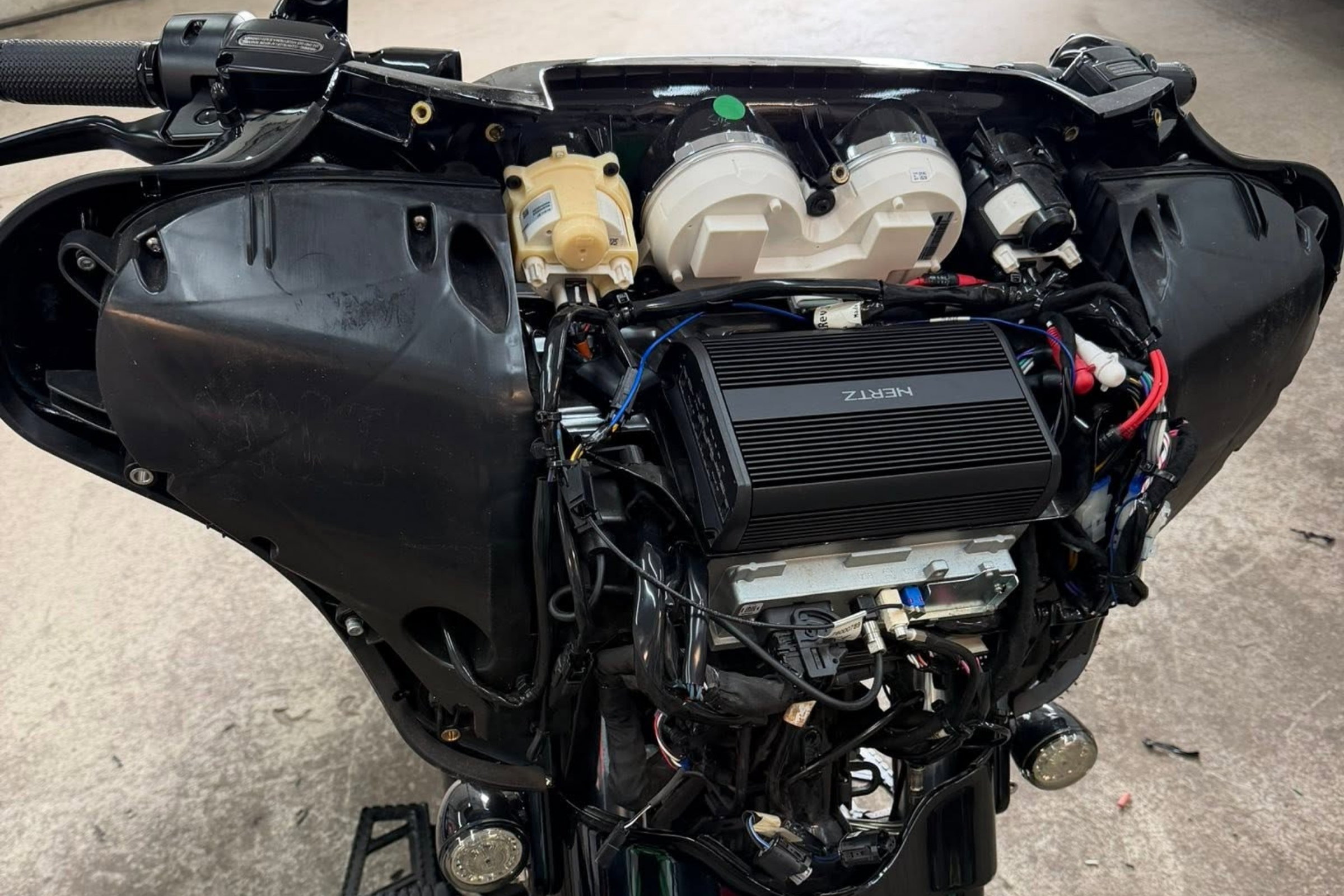
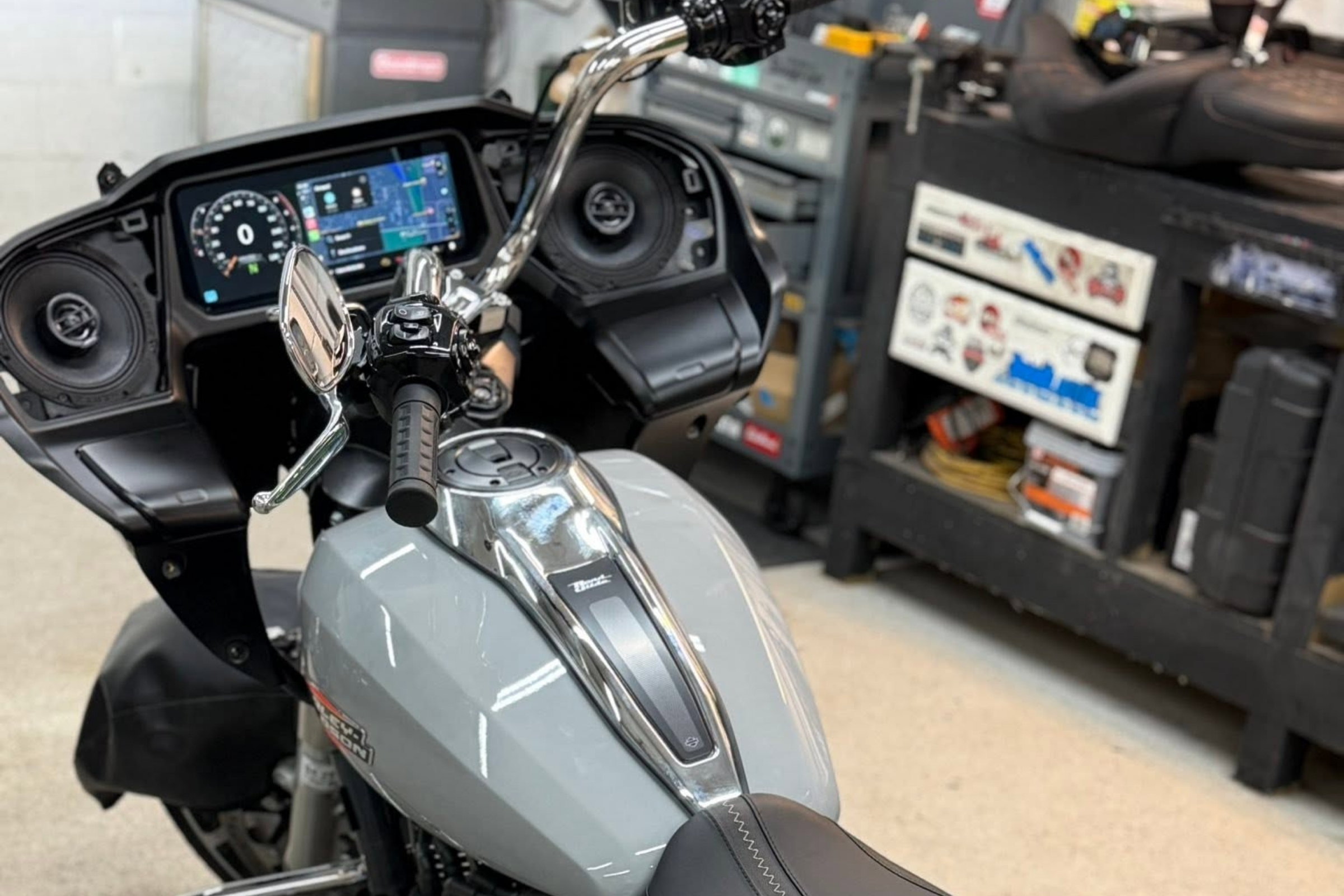
Modern Harleys aren’t simple radios. Boom! Box GT factory radios talk to the bike’s CAN-bus network, the handlebar control cluster, the factory speaker outputs, and on some platforms the helmet-headset and intercom systems through Cardo or Sena protocols. An upgrade that ignores any of those connections breaks something — factory fault codes, lost handlebar function, broken intercom audio, or in newer bikes warranty implications. We integrate; we don’t bypass.
The Boom! Box stays or goes case by case. When it stays, we upgrade speakers, add amplifier headroom, and tune the system around the factory head unit’s signal chain — handlebar controls, helmet-intercom audio source switching, and factory display source indication all remain functional. When it goes, we replace it with an aftermarket head unit that preserves the factory features riders actually use, integrate with the existing handlebar control logic where the new head unit supports it, and account for the bike’s known charging-output limits before adding significant power demand. The decision is rarely binary; we walk through the reasoning at the quote stage so you understand what’s changing and why.
Not every Harley carries every speaker zone, and the right install scope depends on the platform. We work across the five platform families below; each family has its own audio considerations, and we set realistic expectations at the quote stage based on what your specific bike supports.
The touring lineup is the most common Harley audio platform we install on, and for good reason: full speaker-zone availability (fairing, saddlebag, and tour-pak on most), generous compartment space for amplifier placement, and factory Boom! Box systems that respond well to upgrade work. Most Street Glide, Road Glide, Electra Glide, and Road King builds cover the full multi-zone scope.
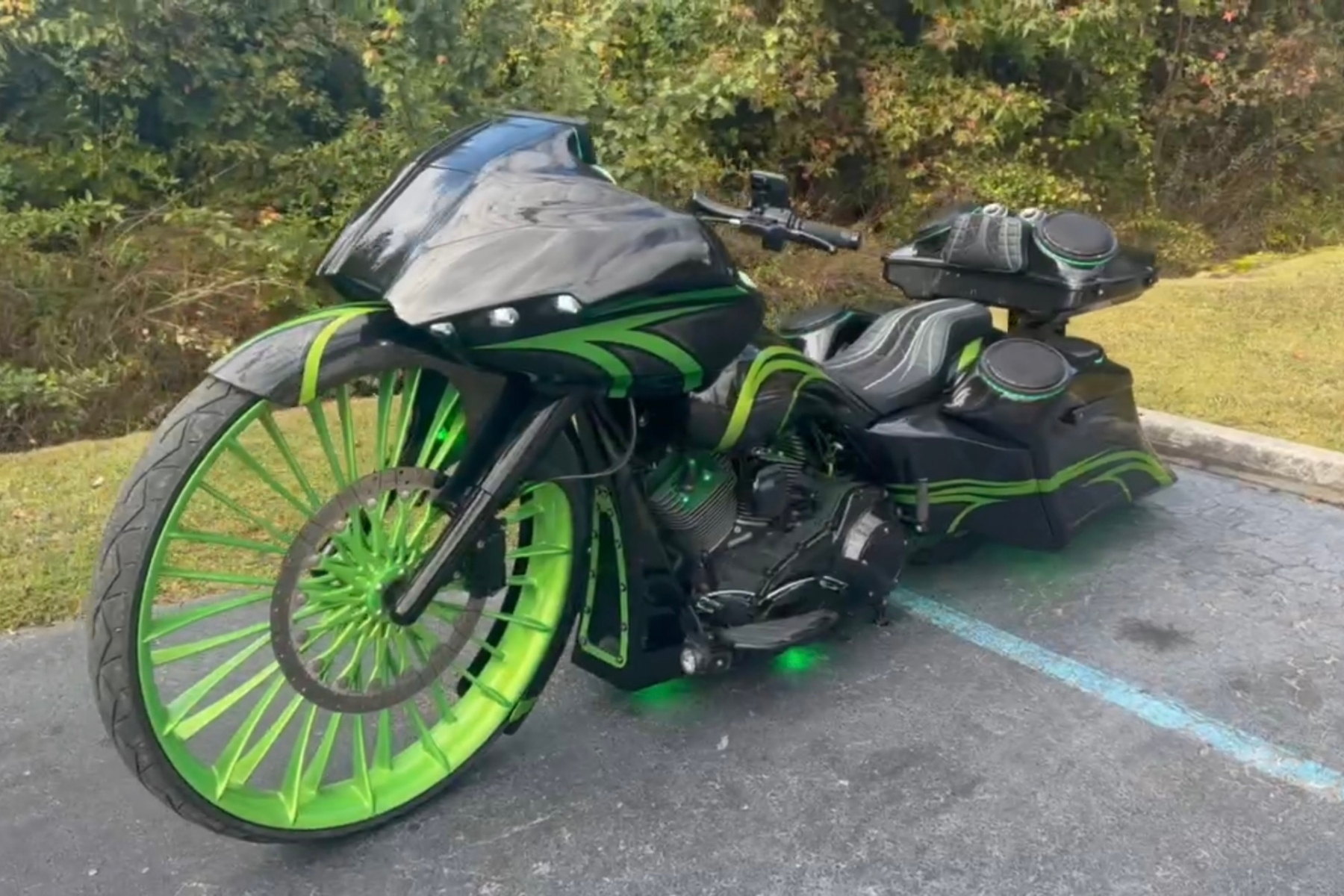
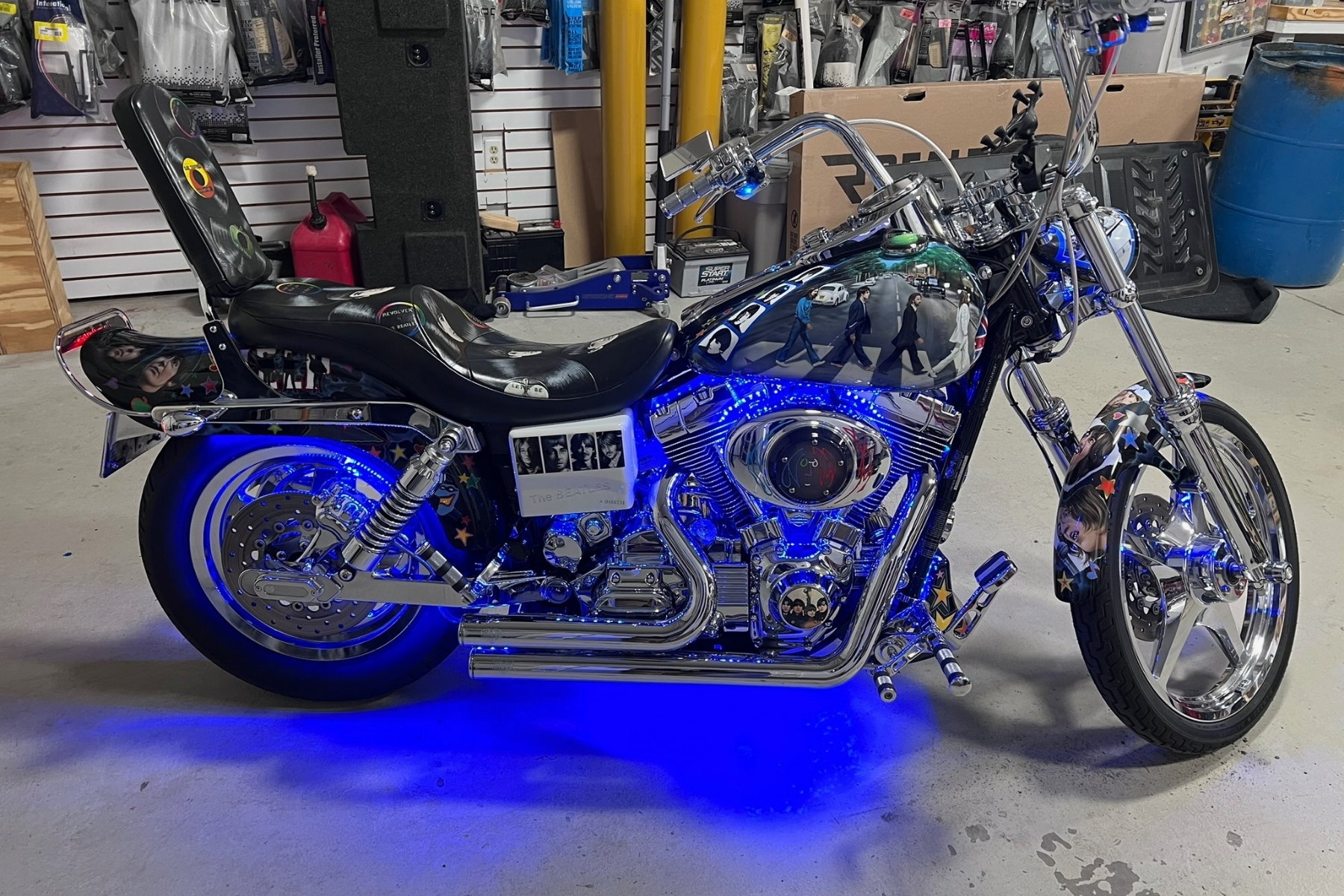
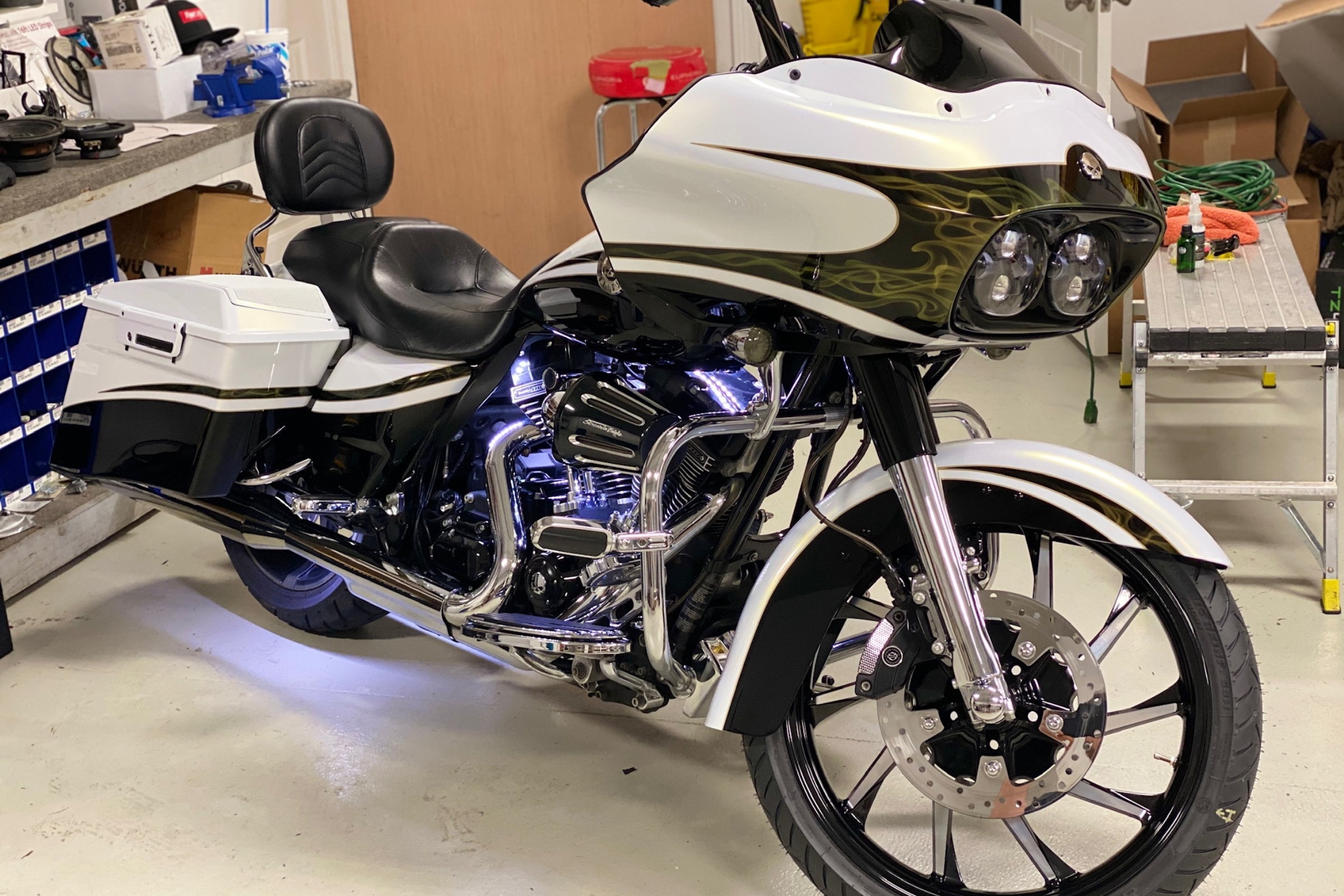
Custom baggers start with a touring platform and add aftermarket modifications — stretched bags, custom paint, suspension and wheel work, and very often custom lighting alongside the audio build. We design audio systems for these bikes with the broader build in mind.
Customers who add audio frequently combine it with our custom lighting builds for a coherent finished bike.
Trikes carry the same speaker-zone scope as touring bikes, often with a larger tour-pak and additional storage compartments that open up more amplifier-placement options. The customer profile typically leans premium, and full multi-zone builds are common.
CVO bikes ship from the factory with upgraded Boom! Box and premium speaker tier already in place. The right approach for these bikes is usually selective speaker-zone upgrade — replacing the fairing speakers with Hertz Mille Pro, adding subwoofer integration, or upgrading the saddlebag and tour-pak zones — rather than a full system replacement that throws out factory work that’s already good.
Softail and cruiser platforms have a narrower audio zone scope: most models don’t carry a factory fairing, so the install often centers on handlebar-mount or handlebar-fairing-windshield speaker pods rather than fairing-internal work. Saddlebag and tour-pak options are limited to models that carry that hardware. The build economics are different from touring builds; we set clear expectations at the quote stage for what makes sense on your platform.
Sturgess Customs is a Hertz Authorized Dealer — one of few South Carolina shops authorized as a Hertz Harley audio dealer. The full Hertz line authorizations (Mille Pro, Powersports, Marine) and our other manufacturer credentials are on our authorized brands page.
Fairing speaker upgrades, saddlebag and tour-pak installs, full touring builds, and custom bagger work from recent Harley projects.
That’s the central design problem the install solves for. We spec speakers with high-output peak capability, amplifier headroom that doesn’t run at clip during sustained highway use, and DSP tuning calibrated to rider head position and helmet attenuation. Specific outcomes depend on the speaker tier, the amplifier sizing, and your helmet style — we walk through realistic expectations at the quote stage so you know what to expect at your typical cruising speed.
Most modern Boom! Box GT factory radios are upgradeable in selective ways — speakers, amplifier, and DSP can all be added without replacing the head unit. Full head-unit replacement makes sense in some scenarios, particularly older bikes or builds with specific source-switching needs, but it isn’t always required. The decision is platform-by-platform and goal-by-goal; we make that call during the consultation.
Properly spec’d Hertz Powersports and Hertz Marine drivers are engineered for V-twin vibration profiles — that’s a significant part of what the Hertz authorization actually means for Harley work. Car-grade speakers fail prematurely on Harleys (cone fatigue, voice-coil rub, voice-coil opens) because they weren’t designed for sustained engine vibration. The install also adds vibration-isolated mounting hardware throughout. The combination is what makes the system reach its third riding season.
A properly spec’d build with marine-grade or powersports-grade Hertz components, vibration-isolated mounting, and weather-sealed cutouts lasts multiple riding seasons through real-world conditions — sun, rain, road spray, trailer transit, and full seasonal temperature swings. Shortcut builds (car-grade speakers, non-isolated mounting, unsealed cutouts) typically start showing problems within the first riding season. We cover expected lifespan and warranty terms at the quote stage based on the build tier.
The default is shop-based install at our Lexington location. Pickup and delivery scenarios for riders who can’t trailer the bike are case-by-case — we discuss the logistics during the consultation so the plan is clear before the work starts.
Hertz component warranties pass through directly from the manufacturer — each Hertz line carries its own terms. Installation workmanship is covered by the shop. We walk through specific warranty terms at the quote stage so you know exactly what’s covered before the build begins.
Have a Harley audio question we haven’t answered here? Reach out and we’ll work through it with you.
In-person consultations, consultative system design, and Hertz-authorized build standards from the first sketch through the final install. Bring the bike by the shop or send us the details and we’ll spec the system with you.